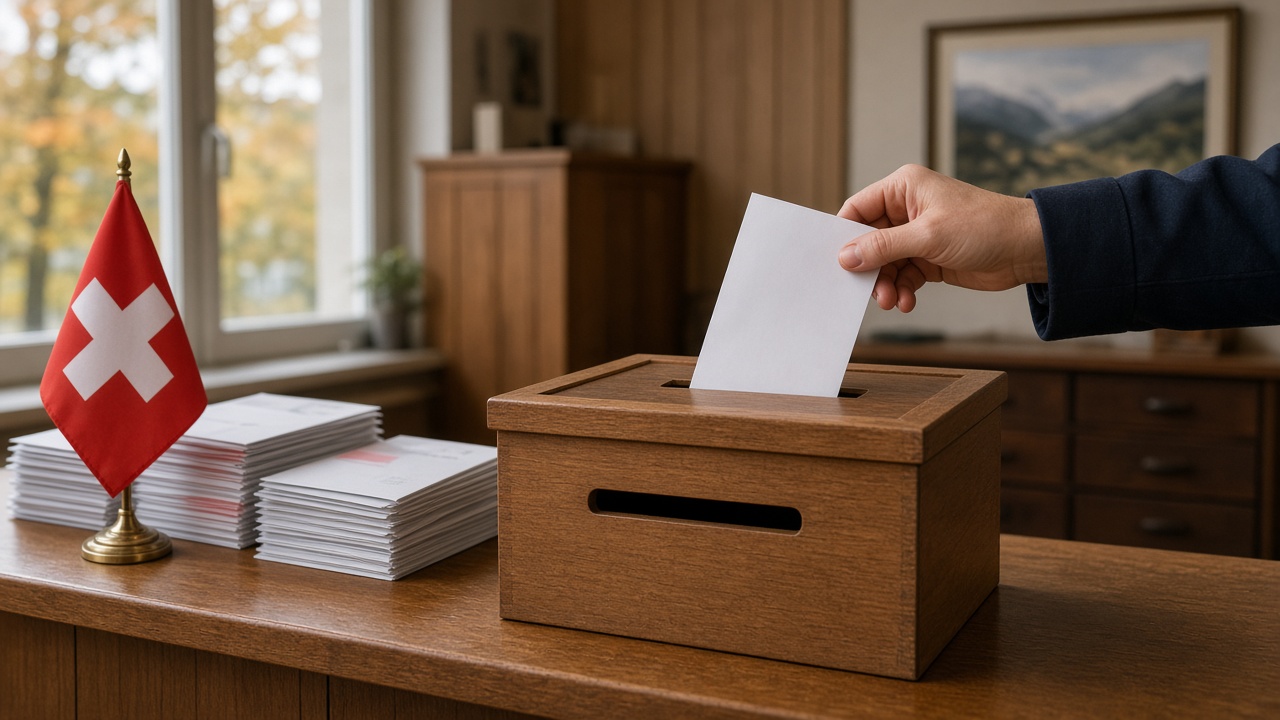
BERN. Four days before Switzerland votes, the campaign that remains visible has detached from the election that is actually happening. The closing rallies of the neutrality and food initiatives are booked for Friday evening and Saturday morning, the posters will hang until the legal deadline at midnight, and the committees will spend one last weekend shaking hands at markets from Schaffhausen to Sion. But in the only place that counts, the communal election office, the vote is already substantially over. Postal returns are running ahead of the June ballot in Zurich, Bern, Basel City, Aargau and St Gallen, and several cities report that a majority of expected ballots are already in the safe.
The numbers hanging over the weekend have not moved in ten days. The final SRG trend poll, conducted by gfs.bern and published last Wednesday, puts the neutrality initiative at 63 per cent against and 34 in favour. A parallel survey for the German language press by the LeeWas institute is harsher still, at 68 per cent against. The food security initiative trails 64 to 33. Barring a polling failure without modern precedent, Sunday will deliver two rejections, and the only open question is the size of each.
The Yes camp has begun to say so out loud. Christoph Blocher, the former federal councillor whose money and movement sit behind the neutrality initiative, conceded in a weekend interview that the vote is lost, and said he had put another CHF 1.8 million into the closing days anyway, to keep neutrality in the public debate whatever the result. It is the most expensive concession speech in the history of Swiss referendums, and also the most characteristic: the initiative, its backers insist, was always about the argument as much as the ballot.
The internal geography of the defeat is what will be studied on Monday. Only People’s Party voters still back the neutrality proposal clearly, by 77 per cent, and even that figure has slipped nine points in a month. Green Liberal voters reject it by 96 per cent, the most unified electorate measured in the campaign. The decisive shift came among voters without a party home: a majority of independents leant Yes in August and now break 59 per cent against, a swing the No committee attributes to a single argument, that writing a sanctions shy neutrality into the constitution would weaken the security cooperation Switzerland relies on.
The food initiative’s collapse is quieter and in its way more remarkable, because it began the summer in a dead heat. Fourteen points of support have evaporated in a month. Only Green voters remain firmly behind the 70 per cent self sufficiency target, and the Farmers’ Union, the constituency the proposal claims to defend, has campaigned against it with the phrase that stuck: a state mandated menu. Voters endorse the goals and refuse the target, the pollsters concluded, and nothing in the drought summer’s closing argument has changed that.
What happens on Sunday is choreographed. Polling stations close at noon. Communes may begin counting postal ballots from the morning, and the first municipal results arrive within the hour. The federal chancellery expects a reliable national picture by mid afternoon and final cantonal results by evening, with turnout projected just under 50 per cent, above the long term average for a September vote. The grey envelopes accumulating in communal safes this week are the reason the picture will form so quickly.
And then the machinery turns the page within hours. On Monday morning the Council of States opens its three day debate on the EU treaty package, a file whose politics become measurably simpler if neutrality has just been rejected by twenty points or more. The Yes committees will hold their post mortems before the posters come down. The No camp will claim a mandate for the government’s European course. Both will be reading the same Sunday evening result for different lessons.
The last weekend of a Swiss referendum campaign is a ritual the country performs whether or not anyone is still persuadable: the market stalls, the final newspaper advertisements, the volunteers with the last boxes of leaflets at the station exits. This year it is theatre performed over a verdict already delivered. The posters come down on Sunday night. The envelopes that decided everything have been arriving for a month.