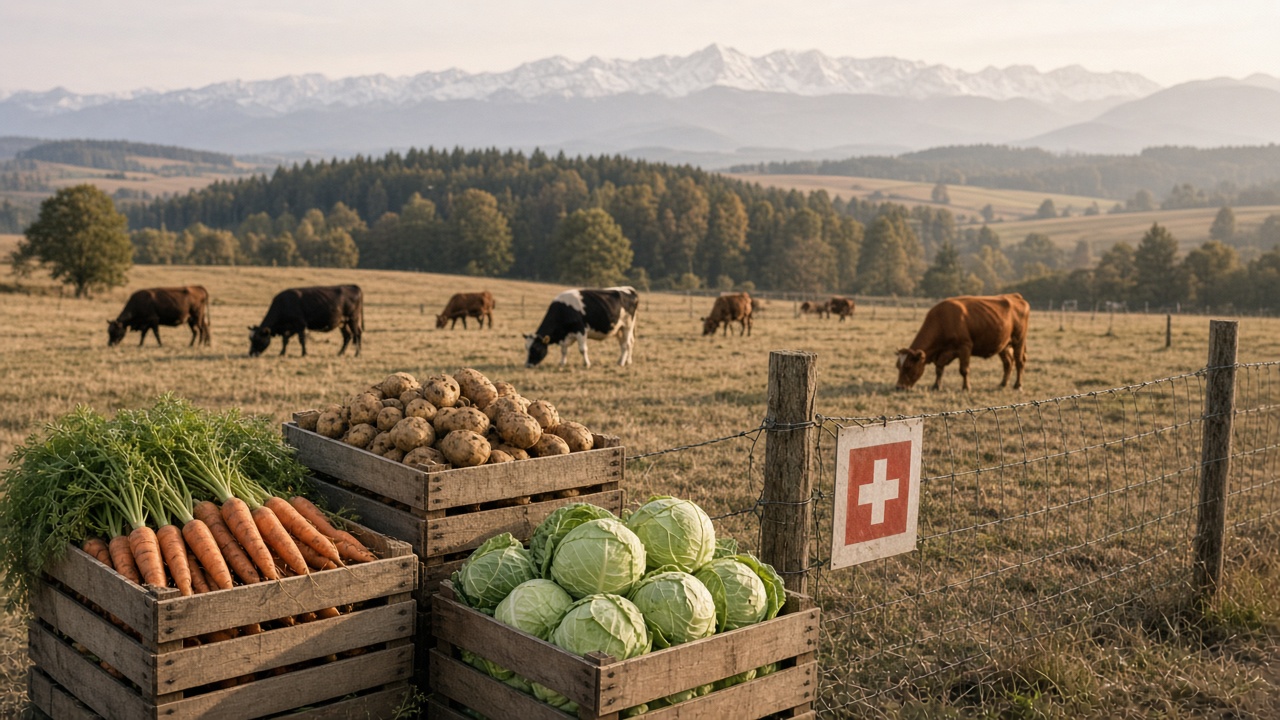
BERN. The second proposal on the 27 September ballot is collapsing. The food security initiative, which began the summer in a statistical dead heat, now trails by nearly two to one: the final SRG poll, published on Wednesday by gfs.bern, puts 64 per cent of voters against it and 33 per cent in favour, with 3 per cent undecided. The Yes share has fallen fourteen points in a month, one of the sharpest mid campaign declines recorded for a federal initiative in recent years.
The erosion is broad, and it has reached the camps that were supposed to hold. Only Green party supporters still back the proposal clearly, by 78 per cent, and even that figure is down six points. Social Democrat and Green Liberal sympathisers, who leant Yes in August, have tipped into the No column. The most supportive demographic left is the youngest group of voters, and even there support reaches only 39 per cent.
The firmness of opinion compounds the problem for backers. Seventy one per cent of respondents say their decision is made, up eleven points, and 86 per cent expect the initiative to be rejected, up ten. On average, voters estimate the final Yes share at 39.4 per cent. gfs.bern classes the state of opinion formation as only medium, which is the polite way of saying most voters have spent the campaign thinking about the other initiative on the ballot.
Underneath the rejection sits a paradox that will outlive the vote. The initiative’s goals remain genuinely popular: 78 per cent endorse stronger protection of drinking water, 71 per cent want greater food security, and 62 per cent see value for biodiversity and sustainable farming. What fails is the mechanism. Two thirds of voters say raising Swiss food self sufficiency from just under half to at least 70 per cent within ten years is simply unrealistic.
The initiative, formally titled for food security through sustainable domestic production, more plant based food and clean drinking water, would oblige the federal government to hit that target by shifting production away from animal products and toward plant based foods, with tighter rules on plant protection products and fertilisers. The Federal Council and a large majority of parliament recommend rejection. The Yes alliance runs from the Party of Labour through SwissVeg and the Klimaseniorinnen; the No alliance includes the farmers’ union, the retailers, the restaurant and hotel associations, the consumer forum and, awkwardly for the Yes camp, Pro Natura.
The farmers’ union has fought the proposal as a state mandated menu that would dictate what may be grown on Swiss fields in the name of feeding Switzerland. That line has cut through even after the driest summer on record pushed milk and potato prices up and handed the Yes campaign its strongest imagery. Backers argued the drought proved the vulnerability of import dependence. Voters, it turns out, drew the opposite lesson about cost.
Campaign dynamics have not helped. The initiative has lived almost entirely in the shadow of the neutrality vote, outspent and outshouted, with its poster budget a fraction of its rival’s. Lukas Golder, co director of gfs.bern, said on Wednesday he expects the No momentum to strengthen further in the final days, as late deciding voters break toward the status quo, as they usually do.
The Yes committee is not conceding. It notes that a third of the electorate still wants the state to secure the food supply more aggressively than the market does, that the young are with them, and that the debate over water and soil will return whatever happens on the 27th. All of that is true. None of it changes the arithmetic.
Both initiatives are decided on the same Sunday evening. The poll suggests Switzerland will reject one because it fears for the country’s safety, and the other because it fears for the shopping basket. Switzerland likes everything the initiative wants. It simply refuses the way the initiative wants it. Eleven days remain, and the pollsters believe the country has already decided twice.