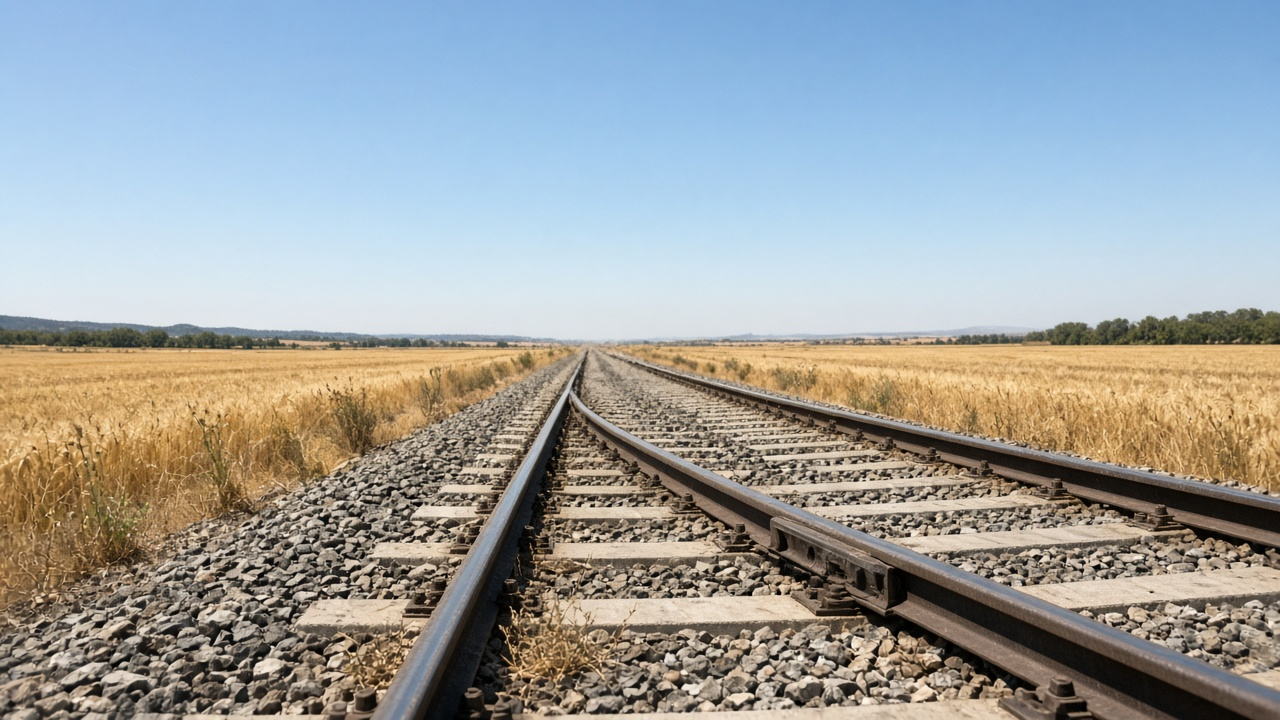
BERN. The hottest summer in Switzerland’s recorded history did not spare the railway. SBB registered 97 heat-related track buckles between June and August, roughly four times the number logged in last year’s merely hot summer, the SonntagsZeitung reported. The figure from the summer that broke every temperature record since 1864 has now landed in the debate about what the climate is doing to infrastructure built for another one.
The physics is unforgiving. Modern rails are continuously welded, with no expansion joints, so steel that wants to lengthen in the heat pushes against the sleepers and ballast that hold it in line. Rail temperature runs far above air temperature on a still afternoon, and when the restraint finally loses the argument, the track throws itself sideways in a buckle that can shift the running line within minutes.
SBB stresses that none of the 97 events injured anyone or derailed anything. Inspection trains and temperature monitoring catch most deformations early, speed restrictions go up automatically on hot afternoons, and buckled sections are cut out and rewelded, usually overnight. A task force set up during the summer is now reviewing the network’s weak points: tight curves, switches, bridge approaches and embankments where the ballast has settled.
White paint and other fixes
The countermeasures are part engineering, part experiment. Concrete sleepers hold their line better than old wooden ones; bonding the ballast stiffens the track bed; welding at higher so-called neutralisation temperatures builds heat tolerance into the rail itself. The most photographed trial, painting rails white to reflect the sun, cooled the steel by about 4.5 degrees at first, but the effect roughly halved after two years as the paint weathered and soiled. There is no cheap fix on the shelf.
That is what alarms the specialists. “Sooner or later something will go wrong,” Patrick Braess, an ETH professor who follows the issue, told the newspaper, pointing to the widening gap between the temperatures the network was designed for and the temperatures it now sees. The warning from abroad arrived in August, when a passenger train derailed near Lewes in southern England after a heat buckle. The injuries were minor, but the photographs of a twisted track under a modern train travelled through every operations centre in Europe.
Design limits meet a new climate
The deeper problem is arithmetic. Design temperatures for Swiss track were set decades ago around a climate that has since warmed by about two degrees, and every record summer narrows the margin between what the steel tolerates and what the sky delivers. SBB’s own planning now assumes more speed restrictions on hot days, higher maintenance bills and a slow re-engineering of the exposed sections. The railway that defines Swiss punctuality is learning that its most implacable source of delay is the sun.
The summer’s ledger keeps growing: a drought that October rain has not broken, groundwater maps that name the polluted communes, and now a fourfold rise in buckled rails. Each entry is survivable alone. Together they describe the infrastructure bill of a warmer country, arriving earlier than the infrastructure.