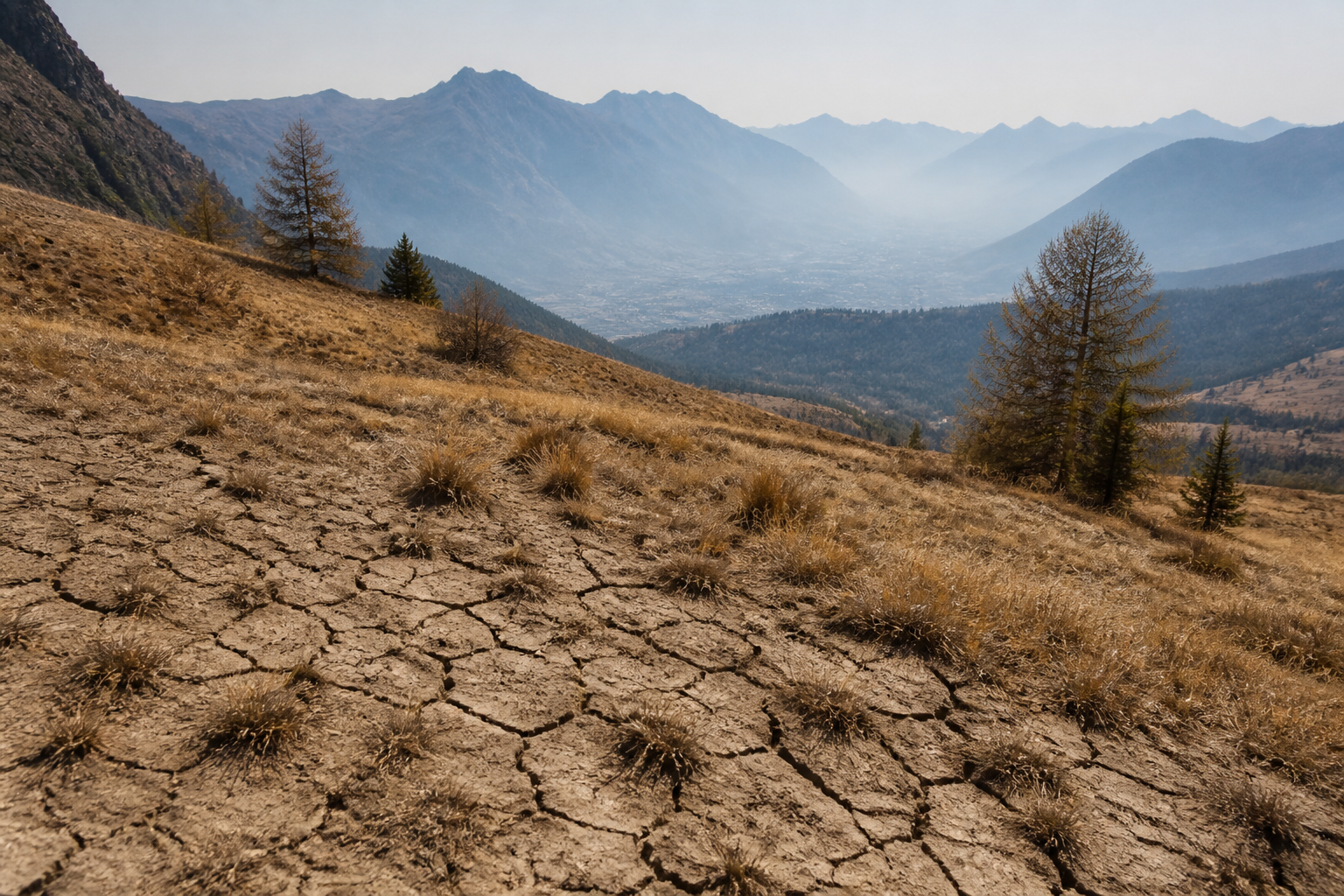
BERN. The heatwave that sealed the hottest Swiss summer since records began in 1864 ended on 20 August, when a southwest flow of moist, unstable air brought thunderstorms and a sharp drop in temperature. MeteoSwiss lifted its heat warnings the same morning. It did not lift the drought and forest fire alerts. Across large parts of the country the fire danger remains at level 4 or 5, and most cantons have banned open fires.
Meteonews reported earlier in the month that the summer of 2026 had already broken many of the temperature records set in 2003, previously the hottest since measurements began. The average so far has run about 0.7 degrees Celsius above that benchmark. Basel logged 45 hot days above 30 degrees, against 41 in the whole of summer 2003, and 17 very hot days above 35 degrees. Lugano recorded 50 tropical nights, three more than in 2003. Weather stations in Zurich, Basel and Lucerne set new all time temperature records.
The peak of the August heat arrived with high pressure over eastern Europe. On the Friday of the worst spell, daily maxima reached 35 to 38 degrees on the plateau. Basel/Binningen and Gösgen each measured 38.1 degrees, new August records for those stations. The day to night range was extreme: Wynau climbed from 14.0 degrees at dawn to 36.9 degrees, a swing of 22.9 degrees, itself a record. Kloten was barely cooler, at 22.8 degrees of amplitude.
MeteoSwiss attributes those wild swings to vegetation already stressed by weeks of drought. When plants stop transpiring, more of the sun’s energy heats the air rather than evaporating water, so afternoons overheat and nights, under clear skies, still cool quickly. It is a pattern more often seen in spring, before the canopy is fully out, and it has become a signature of this dry high summer.
The mountains were not spared. Meiringen, at 600 metres in the Bernese Oberland, reached 34.6 degrees, a local August record that edged past the 34.4 degrees of 2003. On the same Sunday, Säntis at 2,502 metres recorded 17 degrees, Engelberg 29 degrees and Davos 27 degrees, each a daily record. MeteoSwiss extended heat warnings to cover most of the country, including stations that rarely see them.
By 20 August the heat on the southern side of the Alps had also broken. The natural hazards bulletin that morning named a different threat: forest fire danger at the highest level across the Alps, Liechtenstein, the central plateau, the eastern Jura and the eastern Midlands, with level 4 along the northern Alpine slope. Cantonal fire bans, already in force in most of the country, remain the main tool until rain soaks the litter layer.
A nationwide drought warning is still in place. The federal dryness bulletin, updated each Thursday, shows soils and forest fuels still well below seasonal norms even after the first thunderstorms. Rain that ends a heatwave does not automatically end a fire season. Officials have warned hikers and farmers that a single discarded cigarette or a barbecue in a banned zone is enough.
The ecological bill will be counted later. Hydropower operators watched reservoir inflows shift earlier in the season. Vineyards on the Valais slopes took both a gift of sugar and a risk of sunburnt fruit. Insurers and cantonal foresters are already talking about the cost of a fire season that has not yet closed.
The political conversation is quieter than the mercury. Despite the records, surveys this month found that most Swiss consumers still say climate concerns do not strongly influence their spending or investment decisions. The gap between what the weather is doing and what households say they will change has become its own story of the summer.
The next natural hazards bulletin is due on 27 August. Until then the instruction from MeteoSwiss is simple. The heat has broken. The tinder has not. Leave the matches at home.