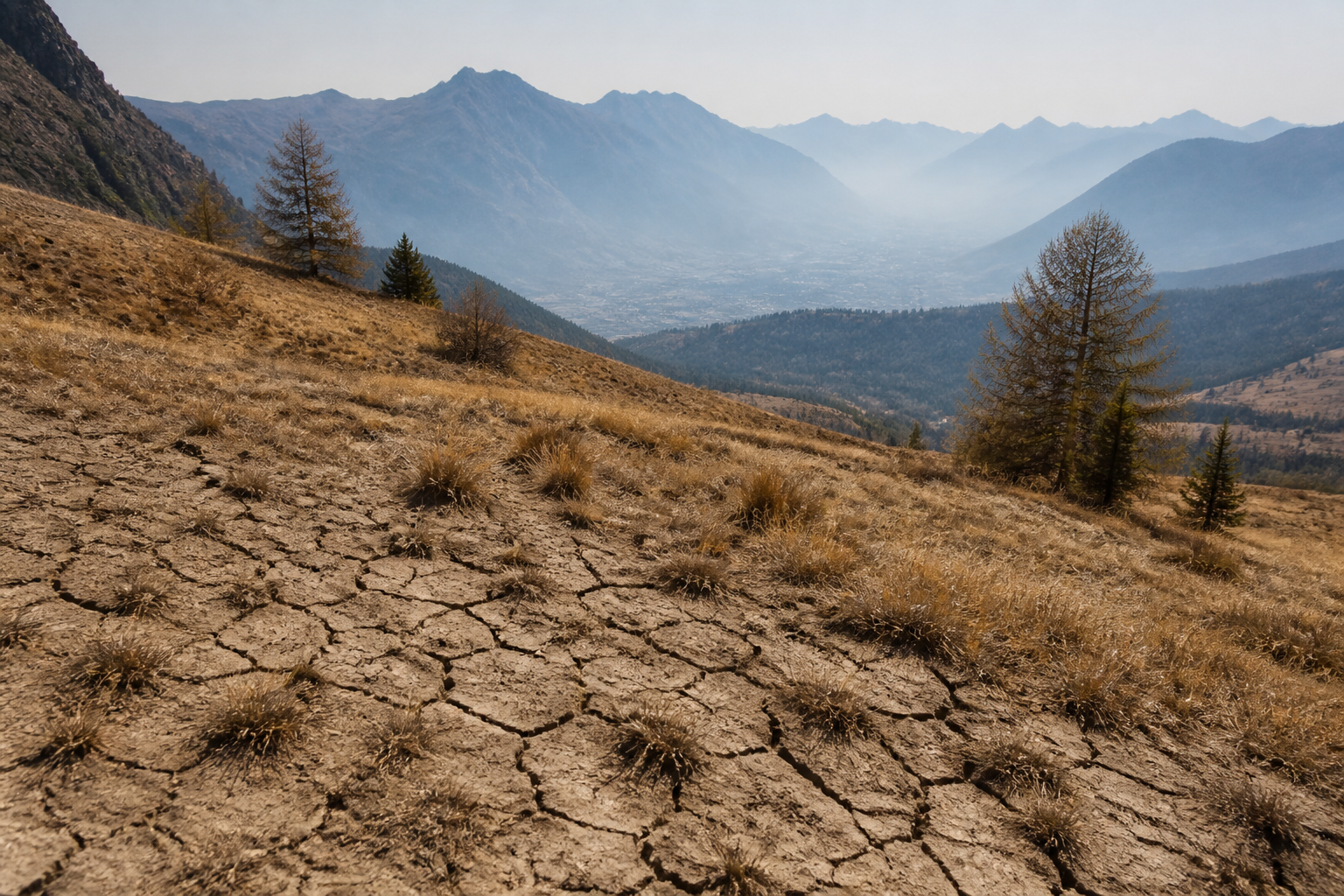
BERN. In the Valaisan commune of Grengiols, where fog can pool in the valley for weeks on end, voters have done something their grandparents would have found baffling. By a clear majority they approved a solar park on the open heights above the village, on ground where the sun shines hardest precisely when the lowlands sit in the dark.
The logic of altitude is physical rather than sentimental. Panels mounted above the fog line harvest winter sunshine that valley rooftops never see, cold air keeps the cells efficient, and snowfields bounce light back onto double-sided modules. Studies by the industry's research partners suggest a well-sited alpine panel can deliver several times the winter output of a lowland equivalent.
The engineering follows the terrain. Arrays stand on steeply tilted frames, often at 60 degrees or more, so that snow slides off rather than settling; foundations are pinned to bedrock with minimal concrete, and cables run down to the valley grid along existing tracks. Construction windows are short, fitted between the retreat of the snow and the first autumn storms.
The policy door opened with the federal parliament's urgent measures to expand solar power, which give special status to alpine installations that feed in meaningful quantities during winter. Plants producing at least ten gigawatt hours a year, a large share of it in the cold months, can claim federal contributions of up to 60 per cent of investment, a level of generosity the lowland market has never enjoyed.
Canton Valais has translated the opening into its own law, designating priority zones and requiring developers to show winter production, landscape care and local benefit before a project reaches the communal ballot. Graubünden and Bern have watched closely, and both are preparing designations of their own.
The communal assembly, not the cantonal office, remains the decisive institution. Proposals have now been carried in a string of mountain municipalities, often after developers offered ground rents, discounted electricity for local households and binding commitments to restore the terrain at the end of the plant's life. A handful of communes have voted no, and the industry treats each refusal as evidence that consent cannot be taken for granted.
The money is considerable but not fantastical. A park of the Grengiols type costs in the low tens of millions of francs and delivers enough electricity for a few thousand households; the larger schemes under study in Valais and Graubünden run to nine figures. The developers, including Axpo and municipal utilities such as Basel's IWB, carry the risk, cushioned by the federal contributions drawn from the national grid surcharge.
“The fog line used to be our curse; now it is our business model,” said the president of one mountain commune that approved a park this year. The sentence has been repeated at assemblies across the upper valleys, usually to laughter, and occasionally to ayes.
The environmental questions are real. High pastures host ptarmigan, gentian and thin soils that recover slowly from tyre tracks, and the cantons have answered with exclusion zones, seasonal construction bans and decommissioning bonds. Landscape organisations remain sceptical, and their appeals have already slowed two projects.
The next tests come quickly. More than a dozen proposals are due before communal assemblies this winter, and the first wave of the new generation of parks could be under construction next summer. The federal ordinance governing the contributions is meanwhile being revised, and developers want certainty before they order steel.
The significance reaches beyond the communes. Switzerland's weakness is winter electricity, when imports are costly and rivers run low, and every winter kilowatt hour produced above the fog relieves both the dams and the trading desks. Austria and France, with their own high valleys, are following the Swiss experiment with undisguised interest.
One mountain commune at a time, the map of Swiss generation is being redrawn. The new lines on it are drawn not in ink but in fog, at the altitude where the clouds stop.