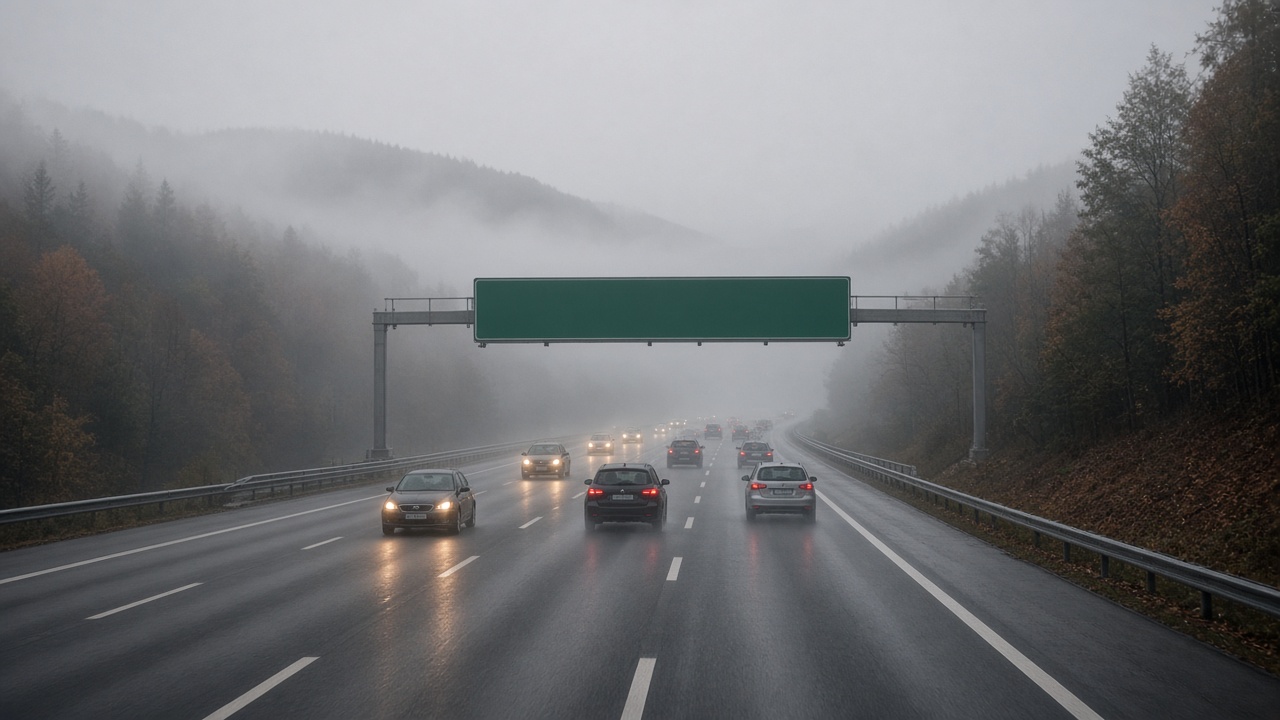
BERN. The Confederation is drawing up a plan to cut the motorway speed limit from 120 km/h to 80 km/h if the fuel shortage becomes severe. Nothing has been ordered. The Federal Office for National Economic Supply says the cut would be used only once compulsory stocks were already well drawn down, and only then.
Roland Pfister, the delegate for national economic supply, told Swiss public television that the measure would do two jobs at once: burn less fuel, and tell drivers the shortage was no longer theoretical. The Touring Club Switzerland estimates a nationwide 80 km/h limit could save as much as 13 million litres a month. Avenergy, the importers’ association, says about 6.01 billion litres of fuel were put into road transport in 2025. Thirteen million litres is not a new energy policy. It is a month of margin in a system that is already dipping into reserves.
Why the tanks are tight
The office has already stopped calling the diesel position merely tight. In its 21 October overview it called the diesel supply “very tight”. On 23 October it authorised withdrawals of up to 45,000 cubic metres of diesel, a little under 4 per cent of compulsory diesel stocks, from that day until 22 November. The immediate cause was delayed pumping of crude and finished products after heavy rain in southern France. Behind that sit two older problems: a low Rhine, which has restricted barge deliveries toward Basel for months, and an oil market strained since the start of the war in Iran. Those diesel withdrawals are already running.
Jet fuel stocks were opened too. A release authorised on 15 October, about 7 per cent of compulsory jet fuel, was still running into the start of November after Zurich airport faced a shortfall. Petrol and heating oil were still described as assured when the diesel release was announced. The speed plan is not a response to the price on a single forecourt. On Monday 26 October the Touring Club’s tracker put diesel at 1.98 francs in Domdidier, 2.32 in Lugano, 2.34 in Neuchâtel and 2.39 in Zurich. The office has said a limit should not be introduced as a precaution, and not because fuel is expensive. It would be a shortage tool.
Who is for it, and who is not
The Greens have supported a lower motorway limit since the spring and welcomed the scenario. The Swiss People’s Party has not. National councillor Didier Calame, from Neuchâtel, called an obligation to drive more slowly illiberal and said the public should take responsibility itself, including by leaving the car when the trip does not need one. The Touring Club, which published the savings figure, is also against relying on a speed cut and wants a plan that touches every sector that burns fuel, not only private cars.
The legal path is short if the Federal Council decides the test has been met. A temporary limit can be ordered quickly. Drivers would feel it on the A1, the A2 and the A3, and so would the transit traffic that crosses Switzerland for Italy and the alpine resorts. The German motorists’ club ADAC has already told its members the idea is under study. For the moment it is a file in Bern, next to a diesel reserve that has already been opened and a Rhine that is still too low to do the job it usually does. Low water has been a Swiss argument for years. This autumn it is also a fuel argument.