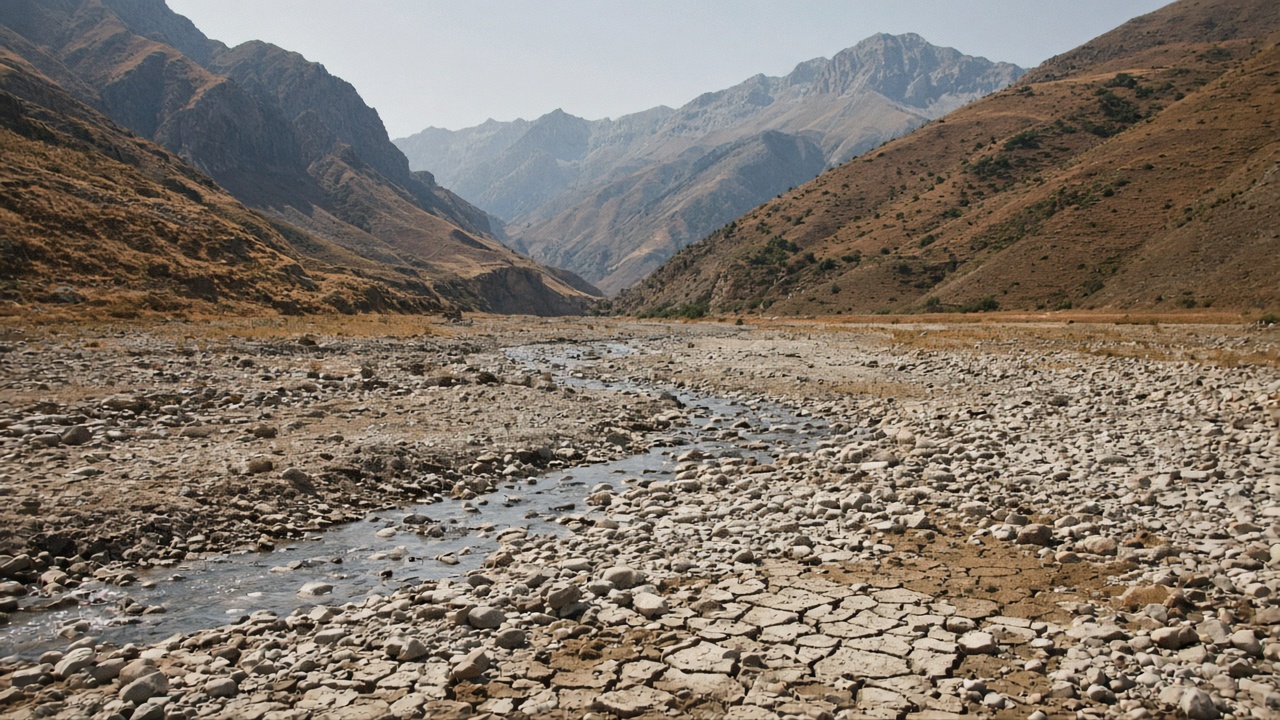
BERN. The Federal Council on Wednesday adopted a new strategy and action plan for adapting to climate change, covering 2026 to 2031. It sets 56 measures across 30 fields of action. Heat and drought are the centre of it, which is what the summer that has just ended made unavoidable. The same meeting also ordered tighter monitoring of heat and more protection for human and animal health.
This is a revision, not a first attempt. The original adaptation strategy dates from 2012. The new text, drawn up by the environment department with the interior, economics and defence departments, says what the Confederation is trying to do: reduce climate risks in advance, protect people, animals, property and natural resources, make society, the economy and the environment more resilient, and use whatever openings a warmer Switzerland might offer. Ten principles govern how that is supposed to happen. The action plan is the list of 56 things the federal government itself will do.
Heat is named as the largest health risk
The strategy rests on the 2025 climate risk analysis from the Federal Office for the Environment and on the 2025 climate scenarios from MeteoSwiss and ETH Zurich. Those scenarios describe heatwaves that are more frequent, longer and more intense, and droughts that return more often. The government’s own text calls the growing heat burden the largest climate-related risk to public health. Water management in dry spells is the second priority. Natural hazards, and the shift in habitats, species and landscapes, are the other fields it flags as urgent.
The health measures are the most concrete. The Confederation wants a competence centre for heat and climate-related health risks, and it wants that centre to record the deaths and hospital admissions that go with them. MeteoSwiss is to produce new national heat maps. A heat dashboard is part of the same push, so cantons and communes can see a hot week coming in a form they can act on. None of that lowers the temperature. It is meant to stop a hot week from becoming an uncounted one.
A drought platform that earned its place
The federal drought platform, running since 2025, is one of the few tools the government says has already proved itself. Early warning and a running judgment of how a dry spell was developing would not have been possible without it last summer, the Federal Council said. It is to be extended so users can see how drought hits each sector, not only how dry the country is in the abstract.
Farming is where that difference showed. On 17 September the environment and economics departments sat down with the cantons, associations and farming groups. Alpine farming was the focus: access tracks for moving water, and permits for water reservoirs. The discussion, Bern says, showed that responsibilities are basically clear, and that the Confederation still has unused room to make permits for farm tracks and reservoirs faster and simpler. The Federal Council is backing two parliamentary motions to that end.
The Adapt+ programme, which since 2025 has offered cantons, cities and communes money for projects that cut climate risk, is also under review. After this summer the environment department has been told to look at how the programme could be funded and organised so it can react faster. That is an admission that a five-year plan and a hot August do not run on the same clock.
What households will notice, and what they will not
Most of the 56 measures are foundations: data, maps, permits, coordination. Housing is the part people will ask about. The government’s line is that homes should stay bearable in a heatwave, and that air conditioning is a private choice rather than a federal programme. There is no new national rule in this package that retrofits every apartment. There is a decision to treat heat as a health risk the state will now count, map and, in the cantons that apply, plan for.
The politics sit just under the paper. Environment minister Albert Rösti spent part of the hot summer arguing, on SRF, that 35 degrees was not a reason to declare catastrophe scenarios, and telling the Tages-Anzeiger that a heatwave did not require a crisis meeting of the Federal Council. The criticism was loud. Wednesday’s package is the meeting, two months after the worst of it, and it is an adaptation plan rather than a new emissions law. The glaciers lost 5.5 per cent of their ice in a single year. The hottest summer since 1864 is the reason the action plan exists. Whether 56 measures change the next July depends on which of them are funded, and how quickly the cantons pick them up. The strategy runs to 2031. The next heatwave will not wait for the last of them.