BERN. Parliament has started to pick apart the federal plan for heat and drought, days after the Federal Council adopted it. The package, 56 measures for 2026 to 2031, expands the Adapt+ programme, extends a national drought platform, orders new heat maps and sets up a competence centre to protect people from heat. Some members call that too little. Others say it still is not a plan to cut the emissions that made the summer so hot. The sharpest line on Friday came from the Green Liberals, who want the country to store water, not only to study it.
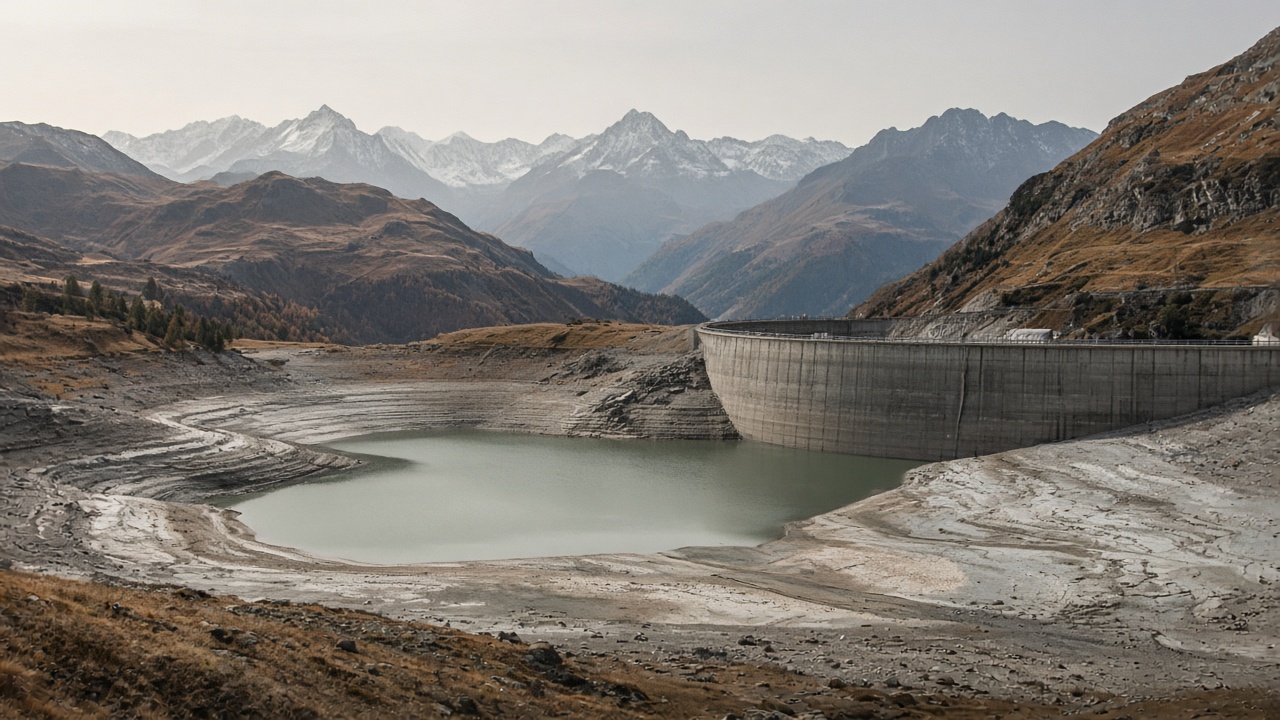
Jürg Grossen, the party’s president, said most of what the heat summer did to Switzerland had one cause: a shortage of water. He wants the job of the reservoirs rethought. In a dry year they should no longer serve above all as stores of energy. They should also be stores of water, and he wants more of them built. He described the government’s response as symbolic politics and as treatment of the symptoms. The strategy adopted on Wednesday maps the risk, counts the harm and speeds some permits. It does not, on his reading, put water in a lake that does not yet exist.
What Bern adopted, and what it left out
The Wednesday decision is an adaptation strategy, revised from a 2012 original. Heat is named as the largest climate risk to health. Drought is the second priority. MeteoSwiss is to draw new national heat maps. A dashboard is meant to give cantons a hot week in a form they can use. Alpine farming was promised a faster path to tracks and small reservoirs. None of that is nothing. It is also not a new dam, and it is not a new climate law. Members who wanted emissions policy in the same envelope did not get it. Members who wanted engineering got a review of permits.
Grossen’s party has landed on water as the argument that joins the two complaints. A reservoir that keeps its water for a dry August is a different machine from a reservoir that is drawn down to make electricity when prices are high. Using the same lake for both means rules on who may take the water, and when, and those rules are currently written for power. Changing them is a fight with utilities, with cantons and with conservation groups that already resist new shorelines. The Green Liberals have picked that fight in public. The government has not.
The summer, measured again
The National Centre for Climate Services added its own evidence on Thursday, presenting results from the NCCS-Impacts research project. The work finds that heat, drought and extreme weather are already a burden on public health, on farming and on forests. It is the scientific companion to a political row: the damage is no longer a scenario in a strategy paper. Households lived it. Forests and pastures are still showing it.
The glaciers lost 5.5 per cent of their ice in a single year, and the adaptation plan runs to 2031. Between those two facts sits the question Grossen is forcing into the open. Adaptation can mean maps, warnings and a competence centre. It can also mean a lake that is allowed to stay full in a year when the rain does not come. Parliament has not chosen. It has, this week, refused to treat the government’s list as the end of the discussion.