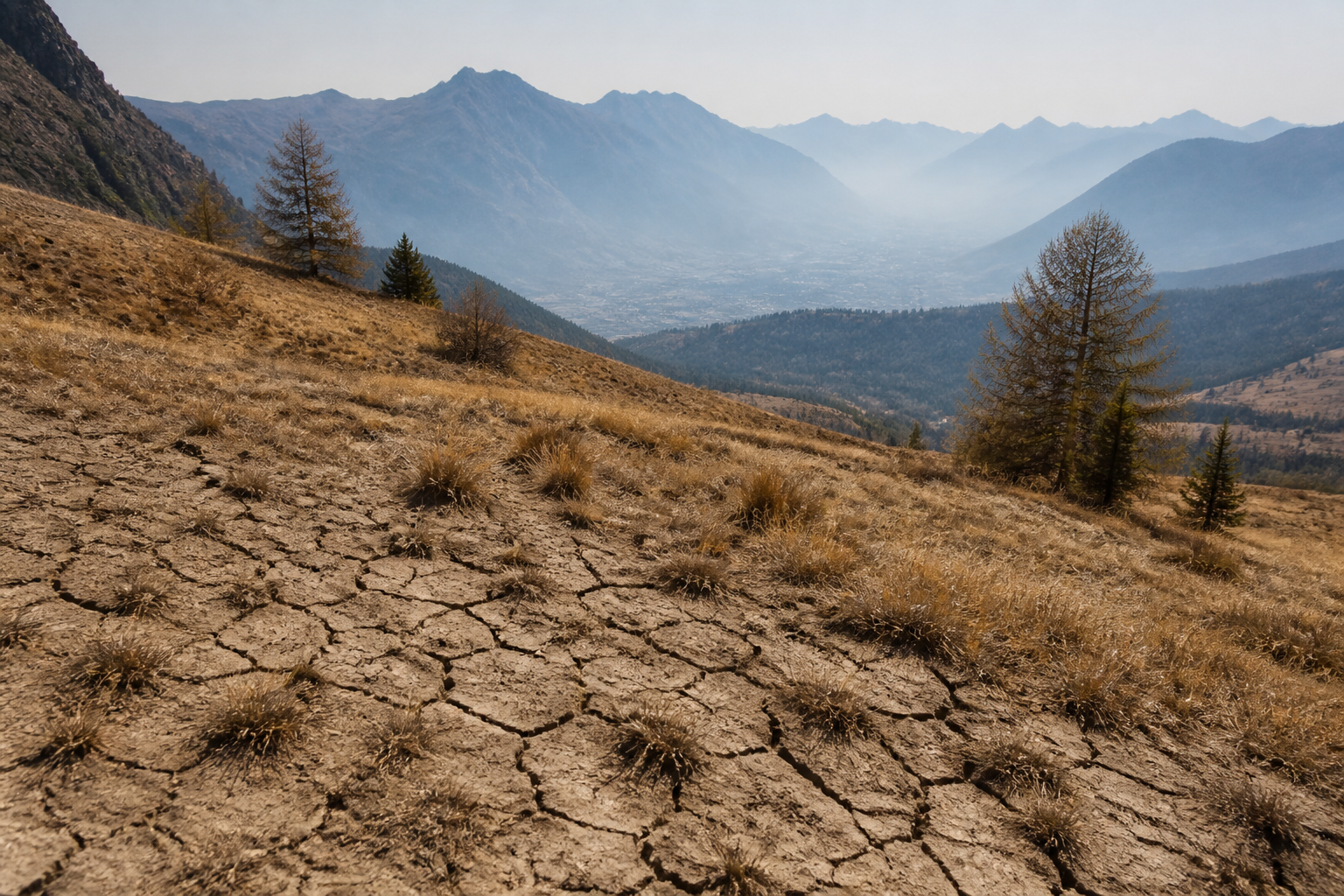
BERN. When the Rhine at Basel shrinks in August to a warm, clear thread between the gravel banks, two debates that Switzerland prefers to conduct separately collide in public view: how to cool the country's nuclear power stations, and how to keep its oldest working river alive.
The immediate facts are hydrological. The hot, dry summers of 2018, 2022 and 2025 each pushed the Rhine and the Aare to flows low enough and temperatures high enough to force the riverside reactors towards curtailment, and the projections suggest such summers will be routine by the 2030s rather than exceptional. The Aare, which carries the outflow of the Bernese lakes past two of the plants, fell this August to levels the gauges at Brugg have rarely recorded.
The engineering constraint is thermal. The reactors at Beznau, Leibstadt and Gösgen reject their waste heat to river water, and their concessions cap both the volume they may draw and the temperature of what they return; cooling towers shrink the dependence but do not abolish it, since towers themselves consume water to evaporation. When the river runs low and warm at once, the arithmetic closes in from both sides.
The rules being argued over are older than the plants' current licences. Swiss water protection law sets temperature ceilings for discharges, the cantons grant the water use concessions, and the federal inspectorate ENSI supervises the safety side. All three layers are now being re-examined against climate projections that the original authors did not have.
The politics pull in several directions at once. Aargau and the Basel region weigh energy security against river ecology; the shipping interest, for which the Rhine below Kembs is a freight artery to Rotterdam, wants whatever water remains kept navigable; and the fishing associations point out that grayling and trout begin to die at temperatures the reactors are still permitted to approach.
The costs arrive in several currencies. A hot summer's worth of curtailed output is measured in tens of gigawatt hours and millions of francs of replacement power; the retrofits on the table, larger towers or hybrid dry cooling, run into the hundreds of millions per site. The operators note, reasonably, that the bill lands just as the plants are also being asked to run longer than planned.
The ecological stakes extend downstream. The Rhine's salmon programme, which has spent decades reopening spawning grounds from Basel to the North Sea, is built on temperature assumptions that low water summers are shredding. A river too warm for salmon is also a river under legal and reputational pressure that no utility needs. Upstream, the Aare's own restoration projects face the same thermal ceiling, and canton Bern has joined the discharge review as an interested party.
“We are asking the same litre of river to cool a reactor, carry a barge and keep a trout alive, all in the same week,” said a river ecologist advising the cantonal authorities. The river, the ecologist added, was not consulted on the arrangement.
The security dimension is equally pointed. Switzerland's supply gap is a winter problem, but a fleet that must throttle in heatwaves loses output precisely when demand for cooling peaks, and France's enforced reductions in the summer of 2022 are studied in Bern as a warning rather than a curiosity.
What happens next is procedural and slow. ENSI's review of thermal discharge under future climate conditions runs into next year, several water concessions come up for renewal this decade, and the cantons have commissioned joint studies on allocation during extreme low flow. Nothing will be settled quickly, and the river will not wait.
The Rhine is Europe's artery, and what happens to it in Switzerland does not stay in Switzerland. The International Commission for the Protection of the Rhine, through which the riparian states coordinate, has put low water and temperature on its standing agenda, with Swiss data central to the discussion.
An old argument has returned to the Rhine, and it has brought new numbers with it. The debate about river cooling was never really settled; it was merely waiting for the weather to change.