BERN. Along the valley road from Brig up into the Goms, the mountainside tells its story without words: pale grey patches where spruce once stood, and between them young plantations of fir, larch and broadleaf saplings behind protective mesh. The spruce monoculture, for a century the default crop of Swiss forestry, is in orderly retreat.
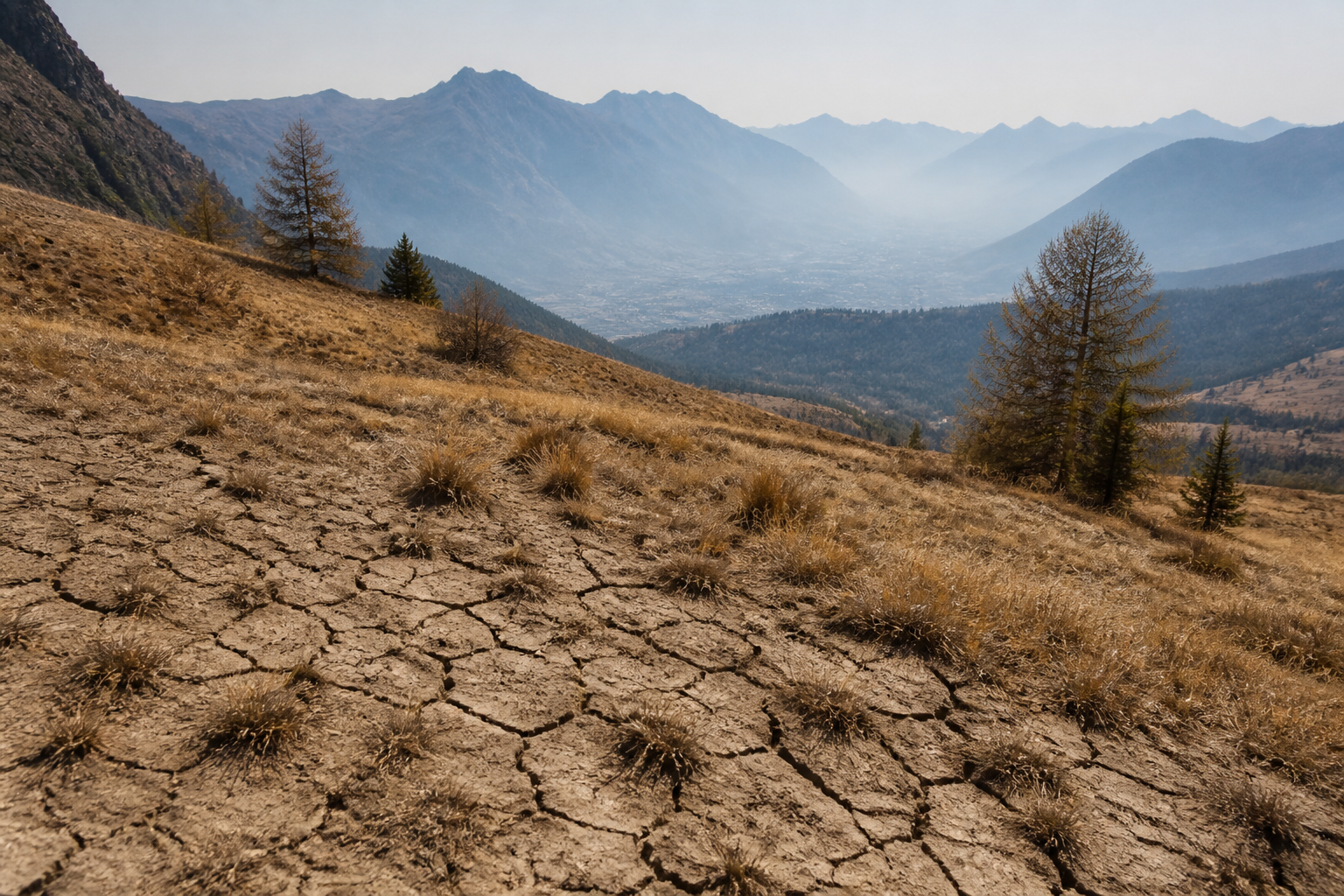
The trigger was a run of dry years. The drought summers since 2018 weakened the shallow-rooted spruce stands, bark beetles found them defenceless and completed extra generations in the warmth, and the volume of damaged timber across the country multiplied. Salvage logging glutted the sawmills, and the price of spruce, the industry's staple, has not fully recovered since. In some Valaisan districts the damaged volume exceeded a decade's normal harvest within three summers.
The science behind the response is risk spreading. Mixed stands of fir, beech, sycamore and oak root at different depths, shade one another's soils and present the beetle with no continuous feast; a mixed forest loses a fraction of its value in a bad decade where a monoculture can lose all of it. The lesson of storm Lothar in 1999, which flattened spruce by the cubic kilometre, was the same one, taught by wind rather than by insect.
The policy instrument is the subsidy. Cantonal forest development plans, supported by the federal climate programme for forests, now tie replanting grants to species diversity minimums, and a landowner who replants pure spruce on an affected site increasingly pays for the privilege out of pocket.
Nowhere does the shift matter more than in the protection forests. Around half of the mountain woodland in Valais and Graubünden exists to shield settlements, roads and railways from avalanches and rockfall, and a dying spruce slope is a failing public defence. The two cantons, which hold the largest share of such forest, are leading the replanting drive with federal co-financing. Communes vote on their share of the protection budget annually, and in the affected valleys the item passes with little debate.
The economics cut against the ecology, and the cantons know it. Spruce is the sawmill's bread: fast, straight and white. Mixed woodland asks the industry to handle hardwoods and silver fir at scale, and mills are investing cautiously in new lines while arguing for premiums on certified, climate-fit timber.
The costs are counted per hectare and per decade. Fencing against deer, planting and three rounds of tending run to between 5,000 and 15,000 francs per hectare before the new stand can look after itself; nationwide, the upkeep of protection forests already runs to roughly 200 million francs a year, shared between Bern, the cantons and the communes.
“We are not planting for ourselves but for grandchildren who will need the slope to hold,” said a cantonal forester overseeing replanting in the Valais. It is the sort of sentence forestry produces, and it happens to be precise.
The obstacles have hooves. Deer and chamois browse young broadleaves with enthusiasm, and the cantons have tightened game management plans in step with the planting. Where browsing pressure stays high, the mesh stays up, and the bill with it. Where hunting quotas fail to bring numbers down, cantonal gamekeepers are authorised to intervene, a remedy nobody praises and everybody funds.
The next milestones are mapped. Updated cantonal forest plans run to 2035, seed orchards are being established for drought-tolerant provenances, and the national forest inventory will read out the verdict plot by plot. Nobody in the sector expects quick applause.
The same conversion is under way in Bavaria, Austria and the French Alps, and foresters now swap provenance data across borders as routinely as they once swapped saw blades. The alpine forest's protective function is, in effect, a piece of shared European infrastructure that happens to be alive.
Forestry works on the longest clock in public policy. The mixed woodland the cantons are buying now is a decision taken in this decade on behalf of the one after next.