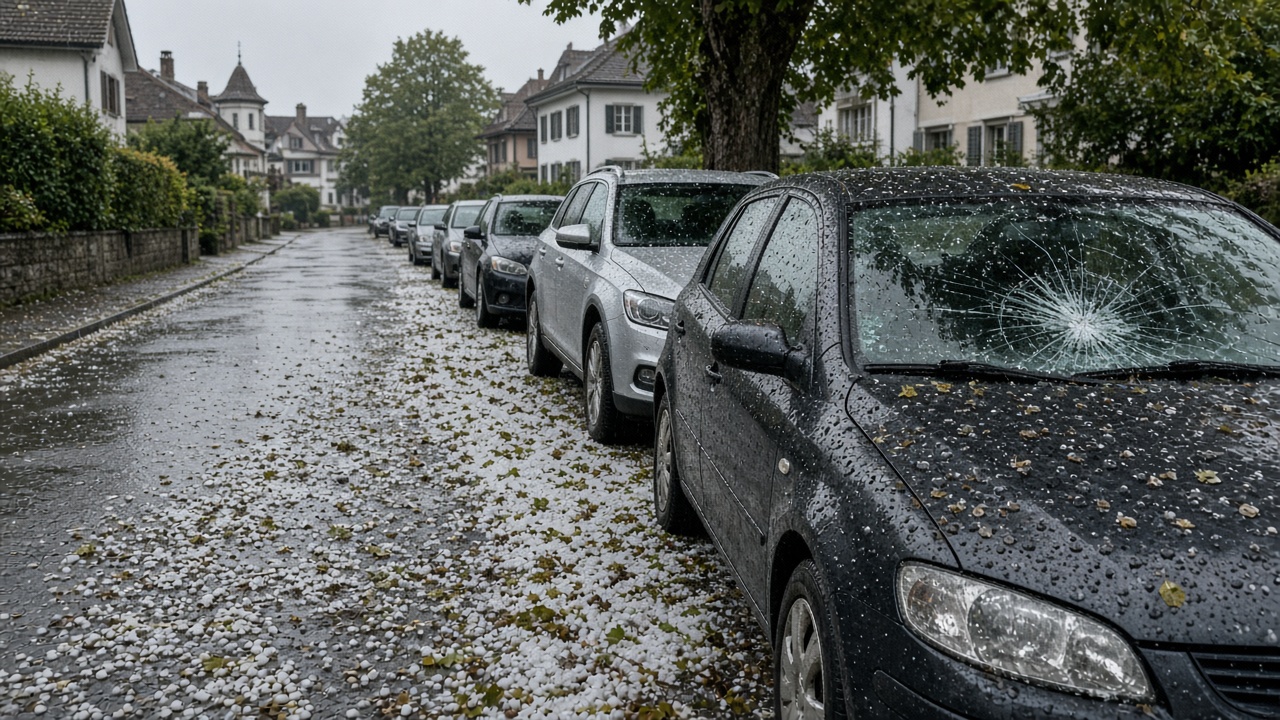
ZURICH. Two weeks after the worst hail day of the year, the bill is still climbing. Mobiliar, the country’s largest property insurer, has received around 18,000 claims from the storm of 28 August, 14,300 of them for damaged vehicles. Allianz Suisse counts more than 11,000 motor claims and says the figure continues to rise. A survey of the big non-life insurers puts the total cost well into three figures of millions.
The storm itself was over in hours. A violent thunderstorm front crossed the northern plateau on the Friday morning, dropping large hail from Solothurn to Zurich and tearing through the cantons of Aargau and Bern with hurricane force gusts. Several people were injured by falling trees and hailstones; a woman in Solothurn was seriously hurt. It was, the insurers agree, by far the most damaging hailstorm of the year.
The pattern of the claims tells the story of a modern hail bill. Cars dominate, followed by facades, roofs, cellars and gardens. In the 19 cantons with public building insurance, the cantonal schemes carry most of the property damage; in the rest, private insurers do. Motor claims fall on comprehensive casco policies, which is why the big motor insurers are publishing numbers first.
A summer written in claims
The hailstorm closed the most thunderous August in recent memory. The Meteorage network counted 22,158 cloud to ground strikes this summer, with 27 thunderstorm days in August alone and 1,886 strikes on the day of the storm. For claims departments, 2026 was already an expensive year before the hail arrived.
The economics of hail are changing faster than the weather. Repair costs have climbed with every generation of vehicles: sensors in bumpers, cameras in windscreens and aluminium panels all raise the price of a dent. Insurers say a hailstorm that cost CHF 80 million a decade ago costs double that today with the same stones falling on the same streets.
Climate attribution is moving in the same direction. Warmer air holds more moisture, and the conditions for large hail north of the Alps are becoming more frequent, a trend the cantonal building insurers, which cannot easily refuse cover, are watching with particular attention. Premium reviews for next year were already under way before 28 August. They will now be revised.
What policyholders should know
The insurers’ advice is unglamorous and worth repeating. Photograph damage before moving anything, report claims within the policy deadline, and expect longer waits at repair shops than after a normal storm. Leasing companies must be told about hail damage even when the car still drives. Most comprehensive policies cover hail in full, without a deductible applying to glass in many cases.
For farmers, the storm landed on a harvest already broken by the drought. Hail shredded what the heat had spared in parts of the Plateau, adding a local insult to a national loss the Farmers’ Union already prices at CHF 522 million.
A final tally is expected in October, when the repair invoices and the cantonal building insurers report. The early estimates already place 28 August among the five costliest summer storms of the decade. The storm lasted a morning. The paperwork will last until Christmas.