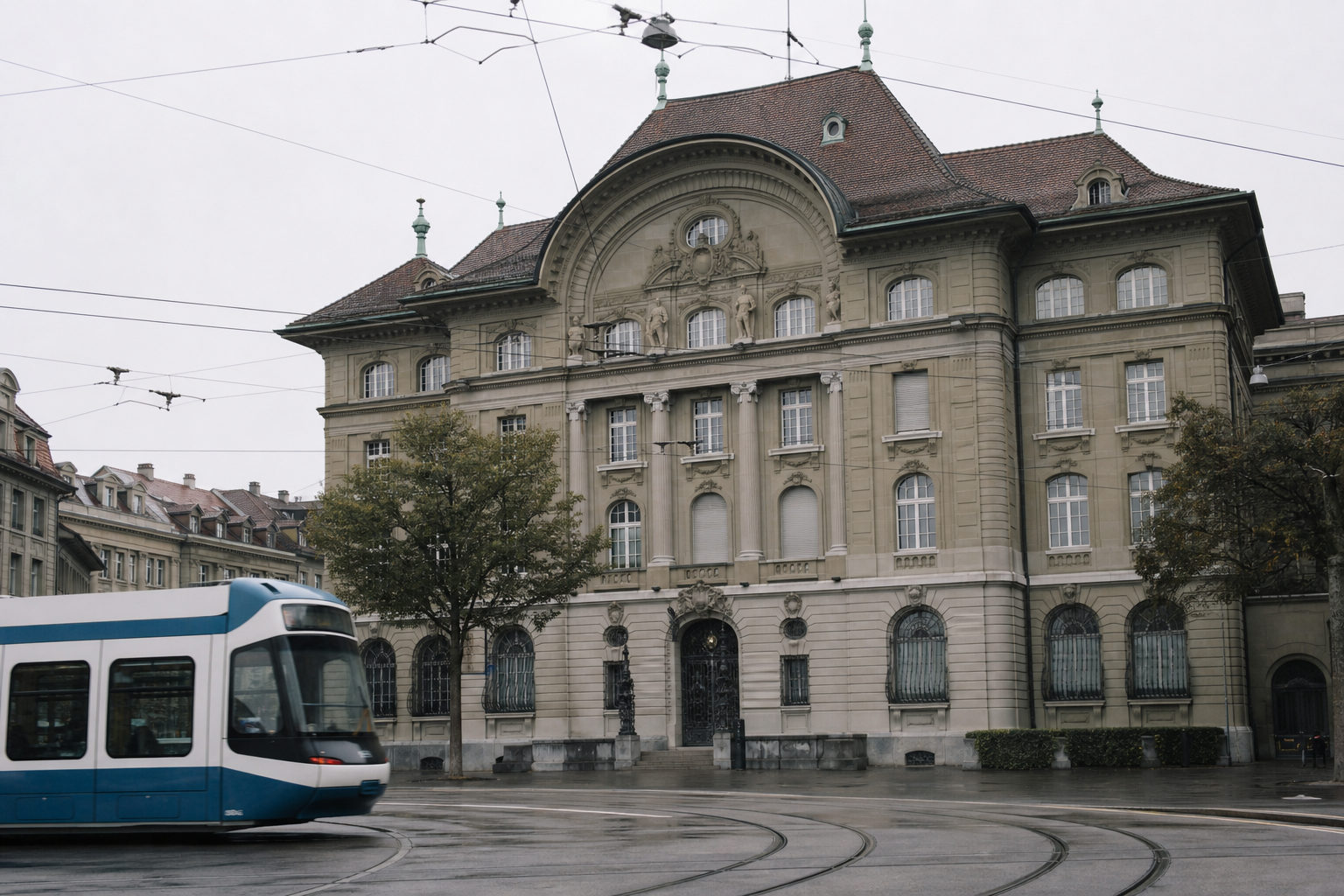
ZURICH. The Swiss franc has climbed to its strongest level against the euro in ten years, and the institution best placed to do something about it is signalling that it is in no hurry. After cutting its policy rate earlier than any major peer, the Swiss National Bank appears content to let the currency's strength do part of its anti-inflation work, even as exporters along the Jura arc count the cost.
The euro briefly traded below CHF 0.94 this week, a level last seen when the currency floor was still in place, before recovering slightly. Inflation, meanwhile, has been running at 0.6 per cent, comfortably inside the central bank's target band, which gives the governing board room to wait. Money markets now price no change at the next two quarterly assessments.
The franc's latest leg higher reflects forces mostly beyond Zurich's control. Weak industrial data from Germany and political uncertainty in France have revived the currency's old safe haven role, while the European Central Bank's faster easing has widened the rate gap in the franc's favour. The SNB spent much of the past decade fighting appreciation with negative rates and interventions; today it fights from a position of relative comfort.
Comfort is not the word used in the watch corridor of the Jura arc or in the machine halls of the Mittelland. A machinery maker exporting at prices set in euros loses margin with every centime the franc gains, and firms that hedged twelve months out are now watching those hedges expire. Tourism operators face the mirror image: Swiss holidays have become dearer for guests from the eurozone just as Alpine resorts invested in new lifts.
Households are the quiet winners. Imported goods, foreign holidays and fuel are all cheaper in franc terms, which flatters purchasing power and helps explain why consumer sentiment has held up despite gloomier headlines from industry. The squeezed include not only exporters but also the federal treasury, whose projections assumed modestly stronger nominal growth than a hard currency is likely to deliver.
Industry has begun to grumble, though more softly than in past episodes. A spokesperson for Swissmem said member firms had adapted through productivity and pricing, but warned that patience would run out if the euro slid further. Economiesuisse has stopped short of demanding intervention, mindful that the central bank's independence is one of the few doctrines that unites the business lobby.
“The exchange rate is a price, not a policy error,” said a chief economist at a Zurich bank. “The SNB will act if inflation undershoots, not because exporters are uncomfortable.” That distinction, repeated often in Zurich this week, is doing little to calm the factory floor.
The bank's independence faces its periodic test in parliament, where motions calling for a weaker franc resurface whenever the currency appreciates. None has ever come close to binding the institution, but they shape the atmosphere in which the governing board explains itself. The bank's leadership has been careful to acknowledge the pain in export regions while insisting that its mandate runs to price stability, not competitiveness.
Attention now turns to the data calendar. The next inflation print lands days before the SNB's September assessment, and the bank's own survey of corporate pricing intentions will be read for signs that the strong franc is squeezing margins into deflationary behaviour. A further slide toward CHF 0.90 would test the board's patience far more than the current level does.
The episode is a reminder that Switzerland's monetary policy is made partly in Frankfurt. As long as the eurozone's economy stumbles, the franc will attract capital, and the SNB will face the same trilemma it has managed for fifteen years: an open capital account, an independent rate policy and a currency the world wants to hold.
For now, patience is the policy, and it is cheaper than the alternatives. Intervention buys time at the cost of a bloated balance sheet; rate cuts risk reigniting the housing market the bank has spent two years calming. The governing board can afford to wait. Whether exporters can is the question that will fill its inbox until the autumn.