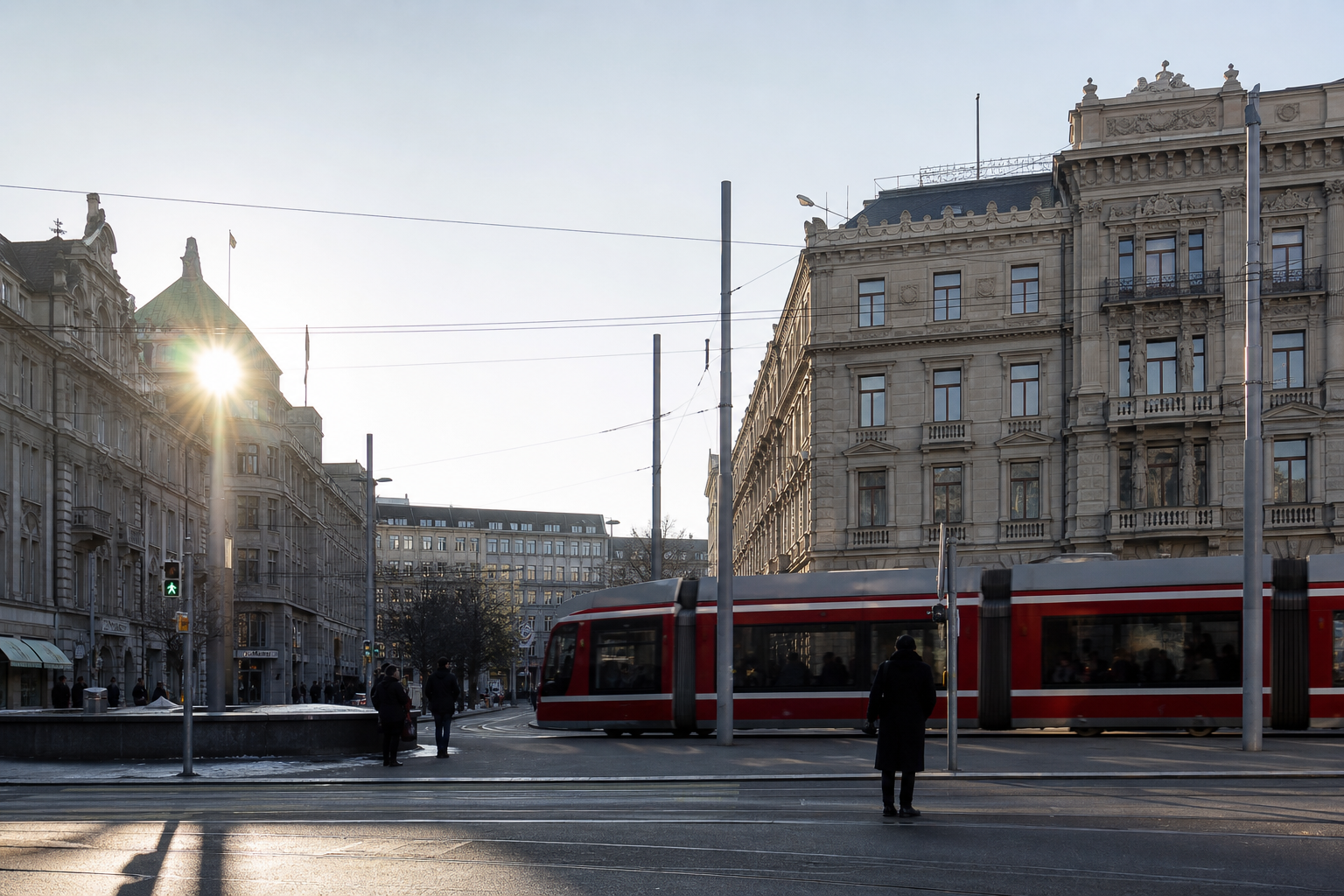
ZURICH. Two years after the emergency takeover that redrew the map of Swiss finance, the argument over how safe this country's banking hub ought to be has moved from the crisis bunker to the conference room. What was settled in a single frantic weekend is now being re-examined line by line, and the outcome will determine how much capital the country's largest bank must hold and how much freedom it has to deploy it.
The federal banking commission and the financial markets authority have each sketched proposals that would lift core capital requirements for the biggest institutions by several percentage points, with estimates in Zurich putting the additional buffer at between CHF 15 billion and CHF 25 billion. Bank executives counter that every extra franc locked away is a franc not lent to the mid-sized exporters that power the economy.
The backdrop is well known. When Credit Suisse unravelled in a matter of days, the state brokered its absorption by UBS and underwrote the deal with guarantees that briefly exceeded CHF 200 billion, a sum equal to roughly a quarter of national output. The rescue worked, but it left Switzerland with a single universal bank whose balance sheet now stands at about twice the size of the economy.
Inside the industry, the debate has split into two camps. Wealth managers point out that the combined group earns most of its money abroad and argue that capital rules should reflect where risks are booked, not where the headquarters stands. Retail and corporate bankers on Paradeplatz worry more quietly that a harder rulebook will push them out of lending businesses that smaller cantonal banks cannot easily absorb.
The clearest beneficiaries so far have been bondholders and rival private banks, which picked up clients during the turmoil and have held on to many of them. Those feeling the squeeze include shareholders facing years of buyback restraint, and the treasury officials in Bern who must explain to voters why the state still carries contingent liabilities on behalf of an institution it does not control.
Business lobbies have chosen their words carefully. Economiesuisse has warned against what it calls gold plating, arguing that Switzerland should not impose capital demands beyond international standards while competitors in London and Singapore hold back. The bankers' association has floated a compromise in which higher buffers are paired with a credible plan to wind down parts of the group in a crisis, rather than rescuing it whole.
Academics remain the loudest voices for tougher rules. “A bank of that size cannot fail, so it must be made boring; the question is whether politics has the patience to keep it boring,” said a professor of banking at a Zurich university who has advised parliament. Few in the industry dispute the logic, though many dispute the arithmetic.
In Bern, the politics cut across party lines. The centre right defends the financial centre's competitiveness but cannot be seen to coddle a bank that needed rescuing; the left wants structural separation and has collected signatures for stricter rules. The government, caught between the two, has promised a package that is tough enough to be credible and light enough to keep the headquarters in Zurich.
The next milestones are fixed. Parliament's finance committees will hold hearings through the autumn, the Federal Council is expected to send its capital ordinance into consultation before year end, and the central bank will publish its own assessment of resolvability alongside its next stability report. Lobbyists on both sides expect the final arithmetic to land somewhere between the industry's floor and the academics' ceiling.
What happens here matters beyond the Limmat. Switzerland is testing whether a small country can host a global bank without underwriting it, a question that regulators from Toronto to Singapore are watching with professional interest. If Bern finds a workable formula, it will be copied; if it flinches, the lesson will be copied too.
For now, Paradeplatz has its quiet back. The queues and the cameras are gone, the branches are being rebranded, and the integration numbers are ahead of plan. But the calm on Paradeplatz is rented, not owned, and the next two years of rulemaking will decide how long the lease runs.