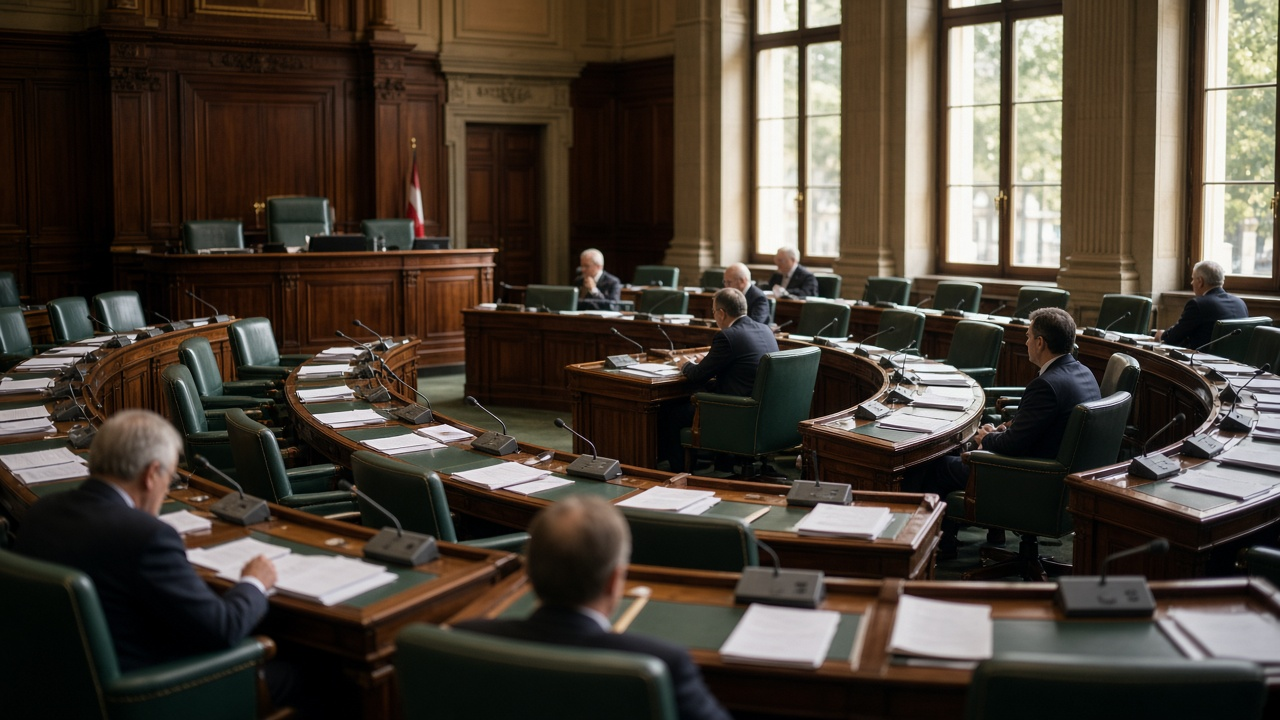
BERN. The Council of States has chosen the number UBS spent the autumn trying to avoid. On Wednesday the upper house voted 29 to 16 for an amendment, tabled by Peter Hegglin of the Centre party, that would require the bank to back its foreign subsidiaries with high quality CET1 capital up to 90 per cent of their value. The remaining 10 per cent could be met more flexibly. The government’s demand for 100 per cent CET1 failed by a single vote, 23 to 22. The bill as a whole then passed by 33 to 10. It now goes to the National Council.
What the bank says it would cost
UBS answered within hours. If the Senate’s decision is confirmed at the end of the parliamentary process, the bank said, backing foreign participations with 90 per cent CET1 would require UBS AG to hold about $16 billion of additional core capital. That sits on top of about $2 billion from ordinance measures announced earlier this year, and about $15 billion already required under existing rules after the Credit Suisse takeover. The running total, on the bank’s own arithmetic, is about $33 billion of extra CET1 since the rescue. UBS also said the ordinance changes would remove an estimated $4 billion of CET1 at group level, and put the annual cost of the acquisition’s regulatory aftermath at about $2.5 billion.
The statement dropped the language of compromise. The Senate outcome, UBS said, would be a further excessive tightening of Swiss capital requirements that are already among the strictest in the world, and would not fix the failures exposed by the Credit Suisse collapse. Chief executive Sergio Ermotti and chairman Colm Kelleher had put their weight behind a different model: half the new backing in CET1 and up to half in reworked AT1 bonds, the convertible debt that turns into equity in a crisis. That 50-50 design had a majority in the Senate’s economic affairs committee. The full chamber threw it out.
Finance minister Karin Keller-Sutter did not get the 100 per cent line she has argued for two years, the rule meant to make foreign businesses sellable in a crisis without another weekend rescue. She did get something close. Current law requires 60 per cent backing of foreign units, and a quarter of that can be AT1. The government has said that proved too thin in 2023. A 90 per cent equity rule is a modest trim of her proposal and a large step up from the committee text the bank wanted. Bloomberg described it as an interim victory for the finance minister. UBS described it as a result it will keep fighting.
The National Council, and possibly a vote
The lower house is next, and the calendar is slow. Reuters reported that a final decision is unlikely before the end of this year and more likely in 2027. If the chambers disagree, the bill shuttles between them until a common text emerges. A referendum is not excluded. Switzerland has a habit of letting the country have the last word on rules that touch the country’s last global bank, and opponents of tighter capital have already shown they can organise. Five business associations warned lawmakers last week that a package drawn up for one bank would be paid for by the wider economy.
The political split does not follow the usual left and right seam. Hegglin’s amendment drew votes from several parties. The left wanted the government’s full 100 per cent. The business wing of the centre right wanted the AT1 compromise that the committee had backed on 1 September. Wednesday’s 29 to 16 is a coalition of people who agree on a number and disagree on almost everything else, including whether 90 per cent is prudence or punishment.
The stake is not abstract. UBS is the last Swiss institution with a global investment bank, the largest wealth manager in the world, and a balance sheet roughly twice the size of the Swiss economy. Capital held against foreign subsidiaries is capital that cannot be lent, returned or used to compete with banks in New York, London and Singapore. The government’s answer has not changed since the rescue: the cost of equity is visible, and the cost of another collapse is not.
Nothing in Wednesday’s vote is law yet. The National Council can reopen the 50, the 90 and the 100. Until it does, the Senate has priced the argument, and the bank has priced the Senate. Ninety per cent is a defeat for UBS, a near miss for the Federal Council, and the number the lower house now has to live with or replace.