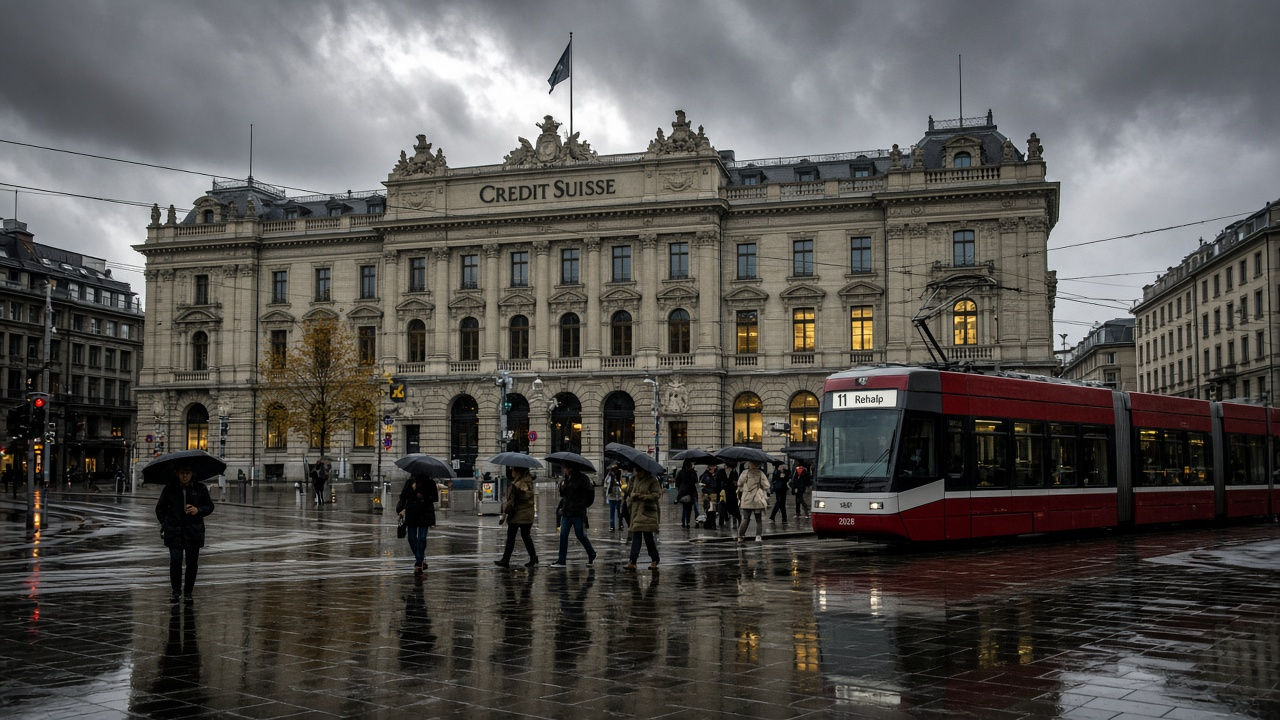
ZURICH. Three and a half years after the state orchestrated rescue of Credit Suisse, Switzerland’s biggest bank is confronting the question the rescue was supposed to postpone: its future in Switzerland. Senior figures around UBS have accepted that parliament will impose billions of francs in additional capital on the bank’s foreign business. “Switzerland has spoken,” said one person close to the leadership.
The defeat came in the Council of States, which voted 29 to 16 to make UBS back its foreign units with 90 per cent core equity. On the bank’s own arithmetic that means about 16 billion dollars of additional CET1 capital; the government’s original 100 per cent plan would have meant 20 billion. Bern puts the true gap far lower, at five to nine billion dollars, and welcomed the Senate’s line as close enough to its own.
Three Options, None of Them Good
What remains for UBS is a choice among unattractive options. It can retain the capital, building the buffer over several years at the cost of buybacks and dividends. It can shrink, cutting the international businesses, above all in the Americas, that generate the requirement. Or it can consider the nuclear choice: leaving Switzerland altogether.
None is costless. Retention reprices the equity story that has carried the shares since 2023. Shrinking surrenders the global wealth management scale that justified absorbing Credit Suisse. Relocation threats have circled since the rescue without ever landing, and every government from Bern to Washington knows it, which is precisely why the threat is made and why it is doubted.
Inside the bank, people describe resignation rather than shock. The political fight over the Lex UBS has been running since the spring, and the Senate’s answer came despite a concerted push by the business lobby. Zurich’s own liberals warned this week that the 90 per cent rule goes too far.
December in the National Council
The last parliamentary stop is the National Council. Its economics committee drafts a recommendation on 26 and 27 October and again on 23 and 24 November, with a floor vote possible in December. A compromise at 75 per cent is already circulating among centre right parliamentarians.
Even then the matter may not close. The Social Democrats have said they will seek the 50,000 signatures for a referendum if the final law looks like a UBS win, which would push the decision to voters and the uncertainty into 2027. Finma, which would supervise the result, has kept its silence.
For the bank, the calculus has inverted since March 2023: the rescue made UBS the only global bank in a small country, and small countries write rules their biggest firms must live under. The era in which UBS hoped gratitude for absorbing Credit Suisse would be repaid in regulatory forbearance is over.