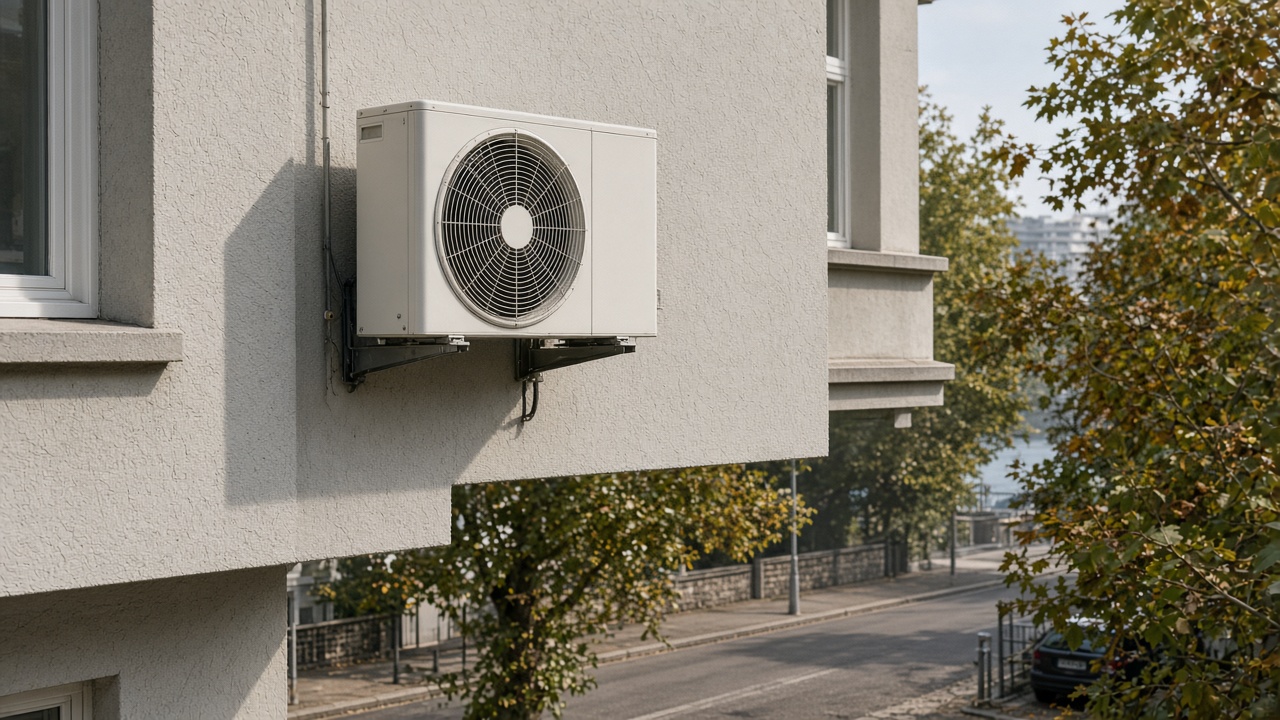
BERN. Split air conditioners, the fixed units with a machine outdoors and a machine indoors, should be installable anywhere in Switzerland without a building permit. A narrow majority of the National Council’s environment committee voted for that on Tuesday, and for scrapping the national limit on how much cooling a room may have. The Council of States committee has not voted. Until it does, a permit is still a permit.
The parliamentary initiative comes from Thomas Burgherr, an SVP councillor from Aargau, and he filed it during the heat of summer 2026. His case is practical. He says the economy suffers in rooms that cannot be cooled, that photovoltaic power is there to run the machines, and that modern units are no longer harmful by definition, because the refrigerants can be chosen. He also wants the cap of 12 watts of cooling per square metre of floor area abolished. The Federal Council would be allowed to write exceptions into an ordinance. The committee backed him by 12 votes to 10, with three abstentions. Parliamentary services published the result on Tuesday afternoon.
Why the majority prefers a split unit
The majority’s comparison is with the machines people buy when a permit is too slow. Portable air conditioners can be purchased without authorisation. They are, the committee noted, inefficient and heavy on electricity. A split system does the same job with less waste. Noise is the objection the majority did not dismiss. More outdoor units will mean more noise for neighbours, it said, which is why today’s noise rules should stay in force. On power, the majority argued that cooling demand arrives in the same hours as solar production, so the extra load sits on the part of the day when the panels are working. That is an argument about timing, not a claim that the electricity is free.
The minority wants the cantons left in charge. Air conditioning rules are a building matter, and cantons are already looking for their own answers after a summer hot enough to force a federal adaptation plan. A national permission, on this view, flattens differences between a dense street in Basel and a chalet that does not need the same machine. The 12 to 10 vote leaves that argument intact. A committee majority of two votes is an invitation to redraft, not a settled federal code.
What still has to happen
The next vote is in the Council of States committee. If that committee also says yes, the National Council committee can write a law. If it says no, the initiative stops. Nothing in Tuesday’s decision lets a homeowner book an installer this month and skip the commune. The 12 watt rule remains. So does the permit. Burgherr’s text would change both, and would leave the Federal Council a valve for cases an ordinance needs to catch.
The political context is the summer, not a sudden fondness for compressors. Households that could not get a fixed unit bought the portable ones the committee now calls wasteful. Firms said uncooled rooms were a business problem. Conservation of electricity and conservation of sleep were on opposite sides of the same week. The committee has picked a side: a more efficient fixed machine, still bound by noise law, and no longer bound by a permit or by a watts-per-metre cap. The other chamber’s committee can refuse the trade. Until it accepts it, the portable unit in the window remains the one a household can buy without asking.