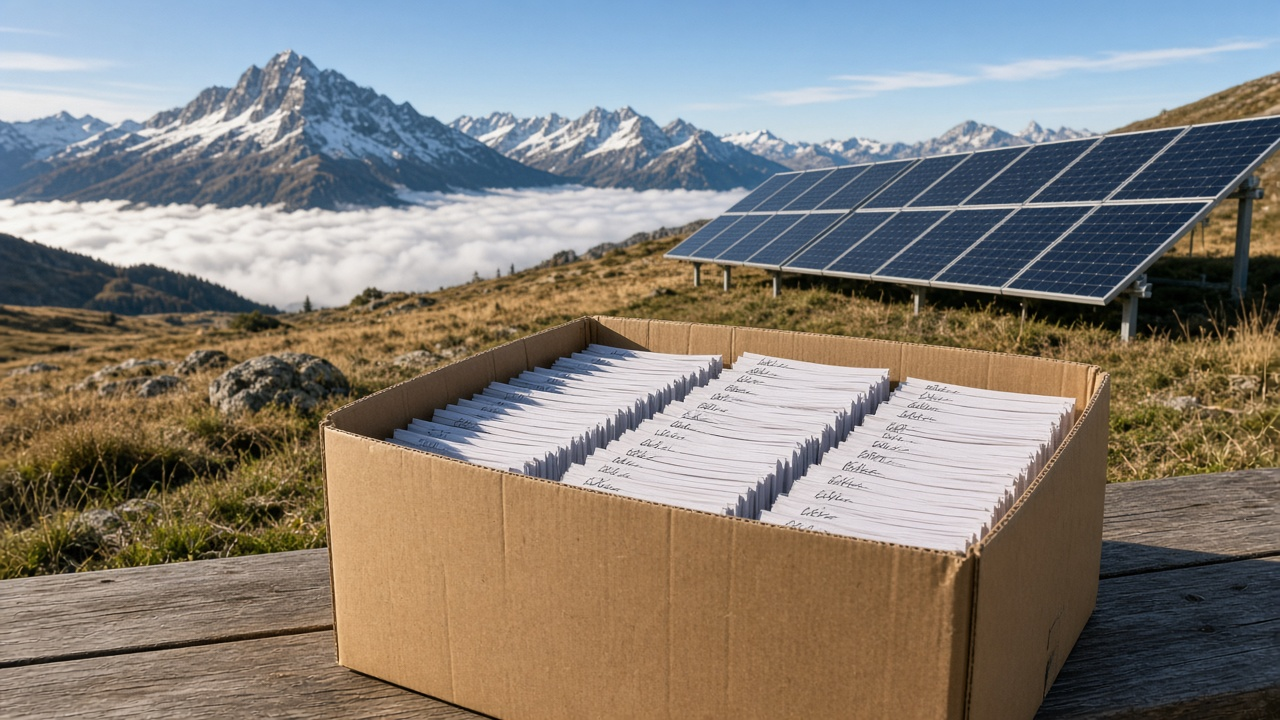
BERN. The popular initiative meant to fast track the planning of large solar power plants has failed before reaching the ballot. The Federal Chancellery confirmed on Friday that an unusually high number of the submitted signatures were ruled invalid by the communes, leaving the committee below the 100,000 valid names required for a national vote.
The initiative sought to strip planning hurdles from big solar installations, on alpine meadows and across the plateau: tighter deadlines for cantonal approvals, a presumption of overriding national interest for plants above a certain size, and limits on the objections that have tied projects up for years. Its backers called it the fastest available answer to the winter electricity gap.
Instead it has become a lesson in the mechanics of direct democracy. Signature sheets are verified by the communes, which check every name against the electoral register. Sheets were struck for duplicates, for signatures from people not registered to vote, for incomplete attestations and for names gathered in one commune and registered in another. The final valid count fell short by several thousand.
A Campaign Undone by Paperwork
The committee blames a mix of municipal processing differences and its own volunteer collectors, and says it will regroup and start again. That is not a small admission: collecting 100,000 valid signatures typically means gathering well over 120,000 raw names, an effort of months. The failure lands days after the anti-nuclear coalition delivered 131,800 signatures to Bern, a demonstration of what a disciplined collection machine looks like.
The solar industry, which had watched the initiative as a shortcut around its central frustration, took the news with public calm and private fury. Switzerland’s solar association says permitting, not technology or capital, remains the binding constraint on construction, and points to the same conclusion in the cantons’ own work on faster grid connection permits. Alpine projects that won communal votes one mountain at a time still wait years for final authorisation.
Opponents of the initiative, landscape protection groups prominent among them, expressed relief without triumph. Their objection was never to solar power, they say, but to a mechanism that would have overridden cantonal planning and weakened the protection of fragile alpine landscapes. The failure of the signature check, in their reading, spares parliament a bad compromise.
What Remains
The policy problem has not gone anywhere. Winter electricity security still depends on adding generation that can be permitted in years, not decades, and parliament is already working the legislative route: the same acceleration, achieved through amendments rather than an initiative, and with cantonal consent intact. Cantonal fast tracks continue in parallel, unevenly.
For the initiative’s backers, the path is simple to state and hard to walk: gather again, verify better, and hope the political window stays open while they do. Direct democracy gives second chances. It just charges full price for them.