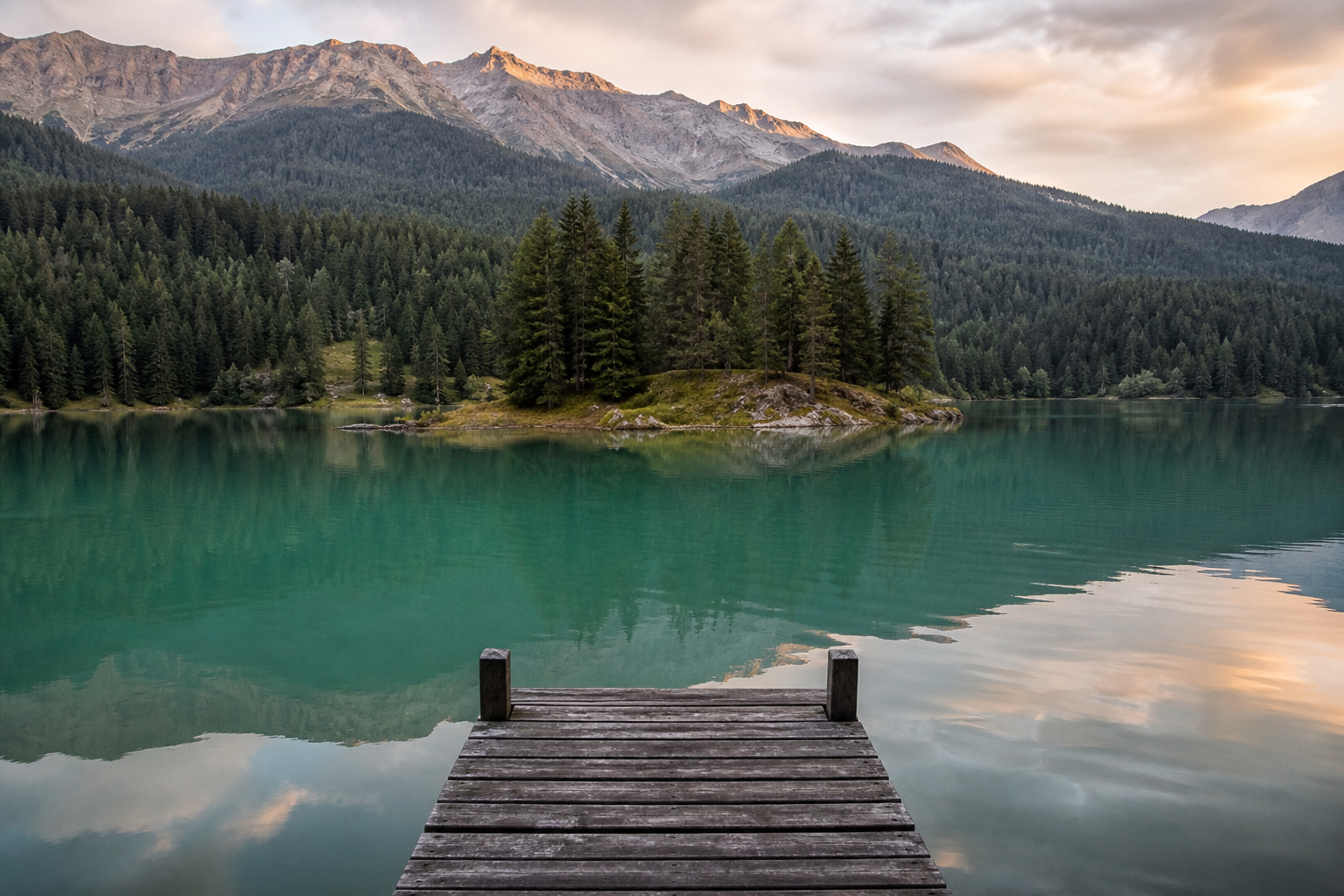
FLIMS. Lake Cauma has claimed a second life in four days. A 27 year old German man drowned in the turquoise lake near Flims on Sunday evening while trying to reach a colleague who had got into difficulty in the water, Graubünden cantonal police confirmed. The colleague survived. The rescuer did not.
The accident happened at around 7pm. The man, who was in the Surselva region for a summer course, swam from the shore toward the lake’s small wooded island after the other man ran into trouble. During the attempt he himself got into difficulty, and after several minutes was pulled from the water by other people at the scene, among them the man he had tried to save. Resuscitation began immediately. He died at the lakeside.
The deployment list records how quickly a quiet evening turned: a Rega helicopter crew, the Surselva rescue service, the Flims fire brigade, cantonal police and the Care Team Grischun, the unit that looks after survivors and witnesses. The public prosecutor’s office has opened an investigation, as it has for the death three days earlier.
That first victim was a 17 year old British tourist on holiday with his family, who got into difficulty on Thursday afternoon swimming between the island and the shore. Other bathers reached him with paddleboards, and medical professionals who happened to be at the lake began resuscitation before he was flown to the cantonal hospital in Chur. He died that evening.
The two deaths share a geography and a timing. Both happened in the stretch of water between the shore and the island, the swim every visitor to Lake Cauma wants to make, and both happened in the evening, after the supervised bathing area closes. There are no lifeguards on the lake outside those hours.
The island crossing deceives in two ways. The distance is short enough to invite and long enough to exhaust, and the water, even after the hottest summer since measurements began, turns cold a body’s depth below the surface. Tired swimmers cramp. Rescuers who reach a panicking person without a board or a buoy are routinely pulled under themselves, which is why lifesaving societies plead with bystanders to throw, reach or row rather than swim.
The context is a summer of unusual danger on Swiss water. The record heat has driven crowds to lakes and rivers for months, and lifesavers have reported a drowning toll running well above the long term average. With the high pressure system Thomas returning 30 degree air to the lowlands from Friday, the lakes will fill again this weekend.
The SLRG, the Swiss lifesaving society, repeats the same rules every heatwave because they are the ones being broken: never swim alone, never enter the water overheated, respect the cold below the surface, and keep away from open water after alcohol. To them it adds the hardest lesson of the Cauma week: a rescue attempt without flotation doubles the tragedy more often than it ends it.
For Flims, the deaths land on a place that lives from its image. Lake Cauma, the jewel of the destination’s summer marketing, is exactly as beautiful as the photographs promise. The police files now open on the lake say what the photographs cannot: that beauty and safety are different properties, and that the second one ends when the lifeguards go home.
The canton has not announced changes, and none may follow; Switzerland traditionally leaves its wild water unguarded and its swimmers responsible for themselves. The families of a 17 year old from Britain and a 27 year old from Germany will take home a more expensive lesson than the one the summer course and the family holiday were meant to teach.