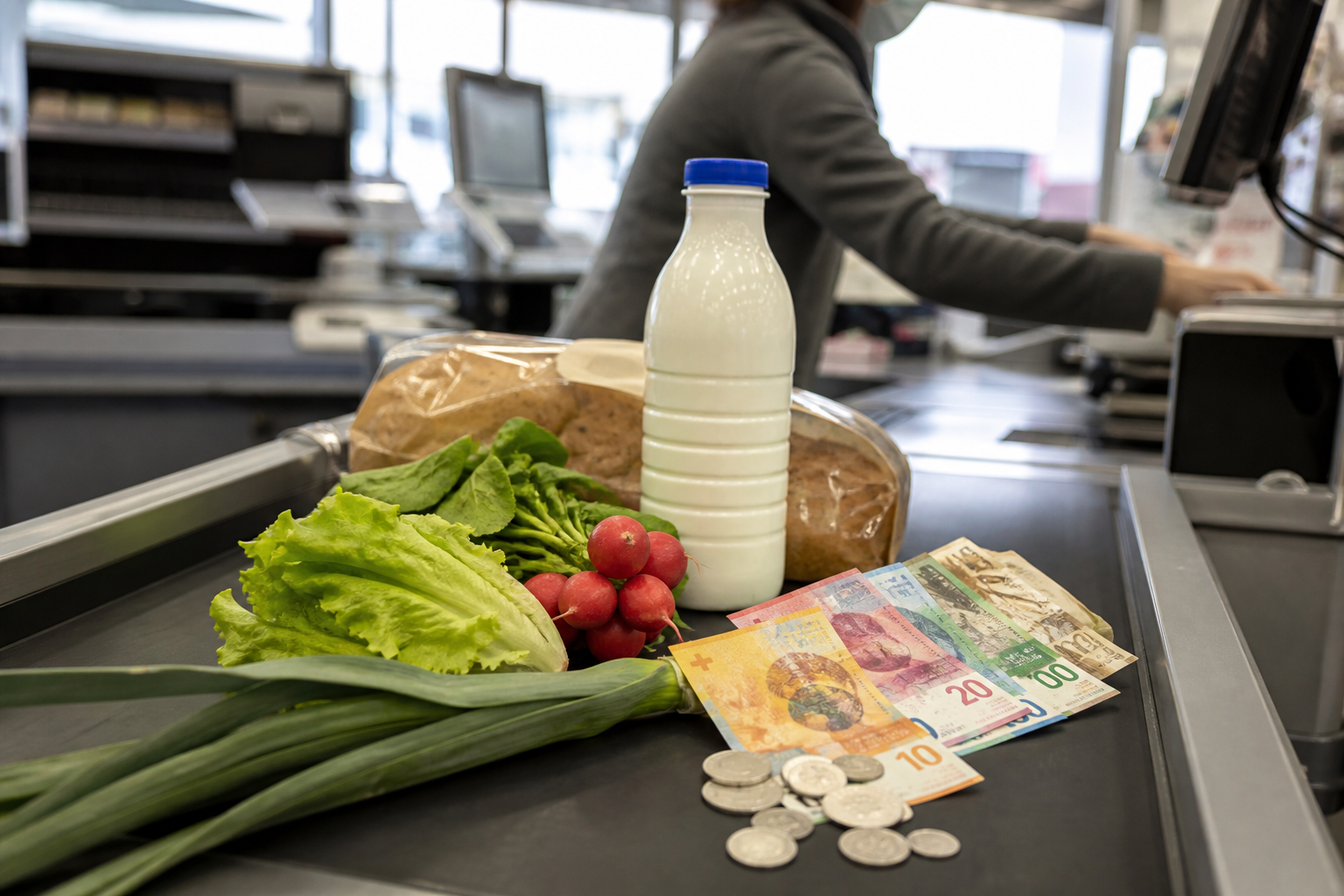
ZURICH. Swiss inflation doubled in August to 0.8 per cent, the fastest pace since September 2024 and well above the 0.5 per cent economists had forecast, the Federal Statistical Office reported on Thursday. The reading, the last before the Swiss National Bank’s rate decision on 24 September, lands as the franc trades near a one year low against the euro and as growth data point to the strongest quarterly expansion in almost five years.
The details matter more than the headline. Core inflation, which strips out volatile items such as energy, accelerated to 0.4 per cent from the 0.3 per cent reading that had held for four straight months, its first pickup this year. Petroleum products now cost about a quarter more than a year ago. For the first time in this cycle, imported products contributed more to the price rise than domestic ones, a sign that the softer franc is feeding through to what households actually pay.
The currency tells the same story from the other side. The euro briefly touched CHF 0.9435 midweek, the franc’s weakest level in a year, before the inflation surprise lifted it back toward 0.9385. A currency that slides gently imports a little inflation, and in Zurich that has long been regarded as tolerable, even useful. A currency that slides quickly starts to look like a policy problem.
All of which complicates a meeting that was supposed to be dull. The SNB has held its policy rate at zero since June, and a Swiss Bankers Association survey published last week found every respondent expecting the rate to stay there through the end of the year, with 60 per cent expecting no move through 2027 as well. Markets price a 97 per cent probability of a hold on 24 September, with the first rise fully priced only for June next year.
The bank’s own forecasts leave room for calm. In June it projected average inflation of 0.6 per cent for this year and next, with the quarterly average peaking at 0.8 per cent early in 2027, comfortably inside the 0 to 2 per cent band it defines as price stability. August’s figure reaches that peak several months early, which is precisely why the reading has caught attention.
“The number sits above the SNB’s third quarter forecast of 0.6 per cent, and the core rate firmed for the first time this year,” analysts at Brown Brothers Harriman noted after the release. “Neither forces a move, but both argue against the market’s most relaxed reading of the next two years.”
The growth figures point the same way. Second quarter output accelerated to its fastest pace in nearly five years, and the purchasing managers’ index for industry jumped to 57.1 in August, with factory employment growing for the first time since November. An economy that was flirting with stagnation in the spring now has momentum, and momentum is what turns a forecast miss into a policy debate.
The counterargument is equally familiar. Inflation at 0.8 per cent remains modest by any international comparison, and the biggest single driver is energy, a category monetary policy barely touches. Tightening into an oil price rise would squeeze households without lowering the bill at the pump, a trade the governing board has rejected before.
Officials also remember the spring. The war over Iran sent a flood of safe haven money into the franc, and the SNB intervened to stem an appreciation it judged excessive. The currency’s retreat since then has been orderly, and policymakers are reluctant to be seen chasing it in either direction. The threat of a return to negative rates, repeated as recently as August, remains on the shelf rather than in the bin.
What changes after Thursday is the burden of proof. Until now, the question put to the SNB was why it would ever move. After the highest inflation reading in almost two years, the strongest growth in five and a currency at a twelve month low, the question becomes what would make it wait. The answer, for most economists, is that one month is not a trend, and that the bank will say so on 24 September.
The franc, the oil price and the wage round now share the watch list. If autumn settlements begin to bake in faster price growth, the debate shifts from whether the SNB moves to when. For the moment, zero holds. But the room for surprise, priced at 3 per cent this week, is the widest it has been all year.