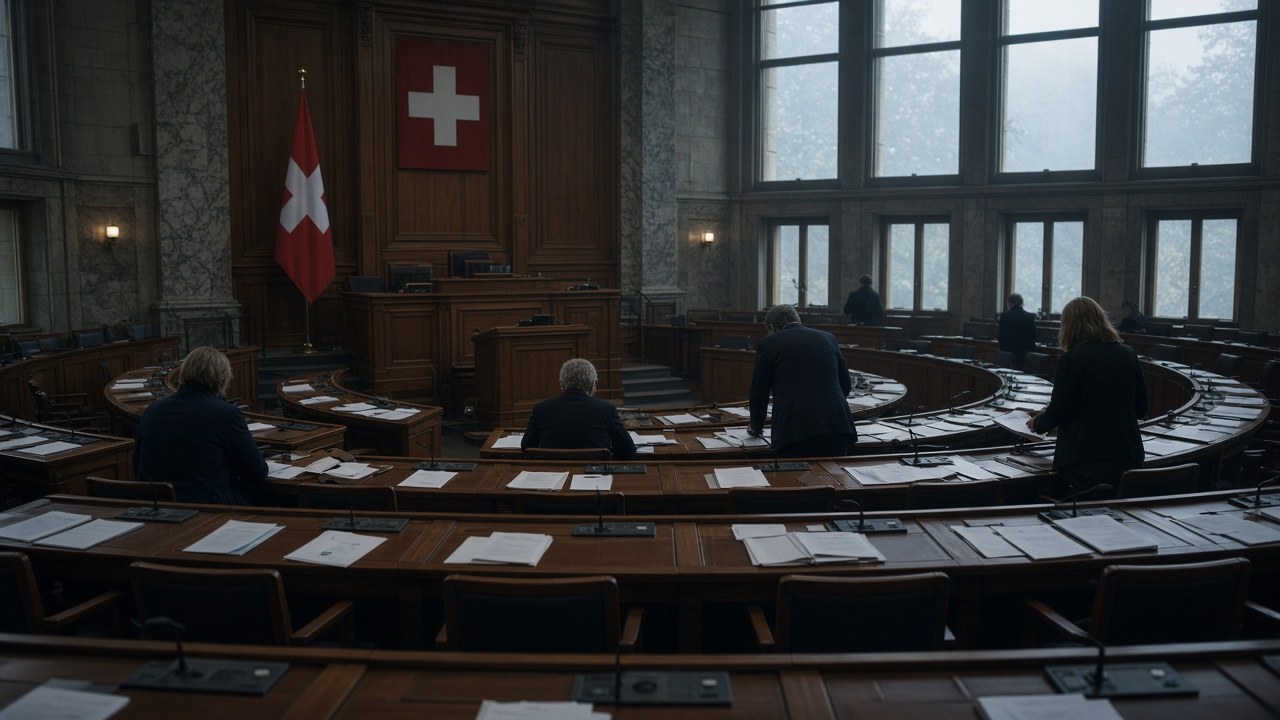
BERN. The Council of States brought its marathon debate on the EU treaty package to a close early on Thursday, approving the last resolution of the stabilisation part after some 22 hours at the lectern and sending the Bilaterals III package to the National Council. Three federal councillors had pleaded the government’s case in the chamber. The Senate’s answer, delivered in the small hours, was yes, but with the highest hurdle Swiss democracy offers attached.
The final vote of the night was the hardest fought. The commitment credit of CHF 193 million for Switzerland’s participation in the Erasmus+ education programme in 2027 passed by 23 votes to 19, with 2 abstentions, after the education committee had recommended approval by the narrowest of margins. With it, every resolution in the stabilisation package now goes to the House of Representatives.
People and cantons
The most consequential decision of the week was procedural. The Senate rejected the Federal Council’s proposal for an optional referendum, which would have required only a simple majority of voters, by 23 votes to 17 with 3 abstentions. In its place the chamber backed a mandatory sui generis referendum on the treaties: a majority of the people and a majority of the cantons will both be needed, without a constitutional amendment. A second proposal from the Commission on Political Institutions, which would secure the double majority through a constitutional amendment, was also approved. The House must now choose between the versions.
The argument that carried the chamber was legitimacy. Heidi Z’graggen of the Centre Party told senators the issue was so fundamental that a simple popular majority would not suffice. Petra Gössi of the Liberals pointed to the cantons: the package affects them directly, she said, so they should have a say, and a double majority would give the result greater legitimacy and stronger public confidence.
What is in the package
The stabilisation part anchors the existing bilateral agreements in a new institutional framework and ties Switzerland to the dynamic adoption of EU law in the covered areas, with an arbitration mechanism. The further development part adds new agreements: a common food safety area intended to identify risky products early, and a health security arrangement giving Switzerland access to the EU’s health security mechanisms and the European Centre for Disease Prevention and Control. Any harmonisation of agricultural policy remains explicitly ruled out. The electricity agreement, the most contested file of all, will follow later: the responsible Senate committee has not finished its work.
Interior Minister Elisabeth Baume-Schneider will oversee the provisional conclusion of the EU negotiations in the Senate before the dossier formally passes to the House. The government had argued throughout that the package stabilises Switzerland’s most important trading relationship at a moment when the American and Chinese alternatives both carry visible costs.
The vote in the small hours closes one phase of a fight that has run all year. The Senate agreed on Monday to take up the treaties by 29 votes to 15, rejecting the People’s Party call to walk away without debate. The detail debate then ran through three days and two nights, over wage protection, immigration safeguards and the referendum question that ended up dominating everything.
Reaction split along the lines drawn months ago. Business groups welcomed the approval and immediately warned that the double majority raises the bar for ratification. The People’s Party, which rejects what it calls a submission treaty outright, said the cantonal veto at least gives the country a real choice. Sunday’s landslide against the neutrality initiative hangs over the coming campaign: Brussels had warned openly about sanctions cooperation, and the electorate declined to tie Bern’s hands.
The National Council takes up the package next, with its own fight over the referendum question already scheduled. Only when both chambers agree on how Switzerland will vote can a date for that vote even be discussed. The Senate has answered for itself: yes to the treaties, and yes to asking the cantons as well as the people. The winter session will show whether the House agrees.