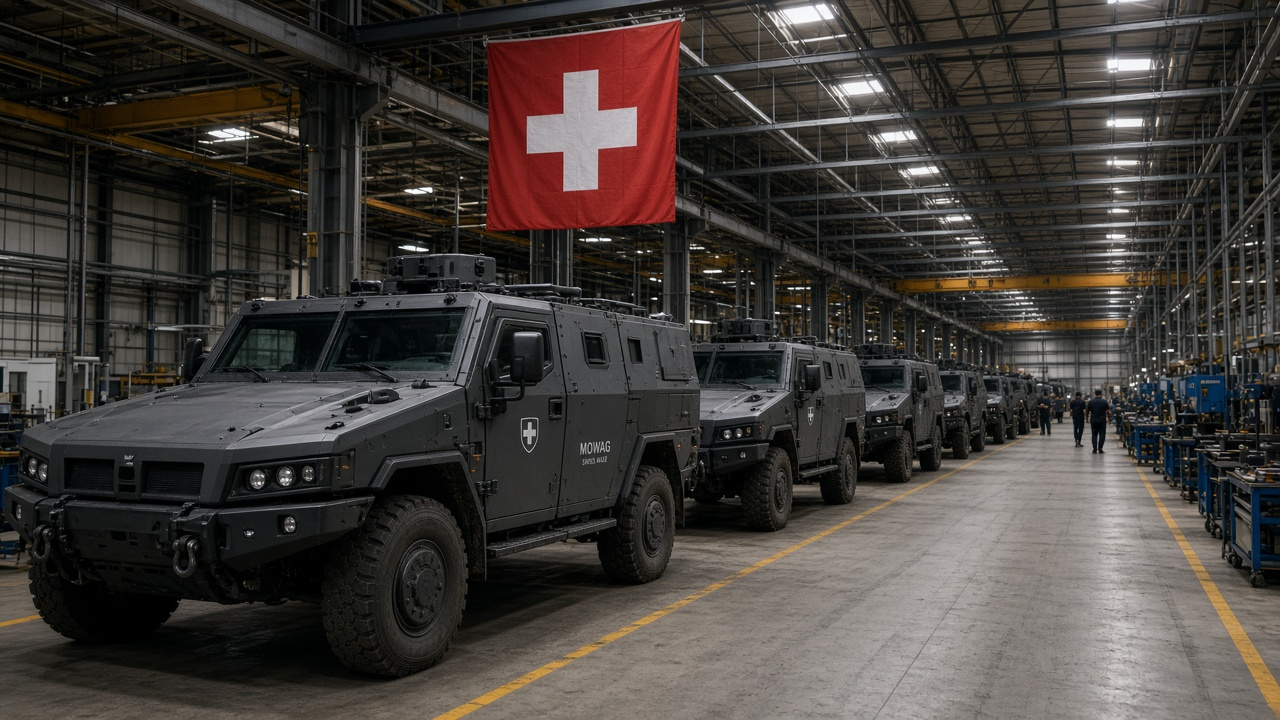
BERN. Swiss voters will decide on 29 November whether to loosen the export rules for war materiel, in a referendum that has been on the calendar since parliament passed the reform in December 2025 and a left and pacifist alliance answered it with 75,000 validated signatures. The ballots are printed. The campaign that begins in earnest this week is really about Ukraine, neutrality, and the price of being a small arms maker between large allies.
The reform has its roots in the refusals. Since Russia’s invasion of Ukraine, Bern has declined repeated requests from European partners to let Swiss-made war materiel travel onward to Kyiv, citing the neutrality law that bars deliveries into an armed conflict. Germany, Spain and Denmark all asked. All were refused, and several partners concluded that buying Swiss meant buying into somebody else’s veto.
Parliament’s answer, carried by the People’s Party, the Radical-Liberals and the Centre, went further than the government originally proposed. It lets the Federal Council grant exceptions to the re-export ban under defined conditions, and it eases licensing toward states with comparable control regimes. The arms industry, which says European orders have thinned as buyers switch to suppliers without Swiss strings, campaigned for the change openly.
The alliance against
The referendum was brought by the Social Democrats, the Greens, the Protestant Party, the Group for a Switzerland without an Army and a row of civil society organisations, who submitted their signatures to the Federal Chancellery on 17 April. Their case is that the reform writes a permanent loophole into the neutrality tradition: once Swiss weapons may travel onward with Bern’s blessing, they argue, the blessing itself becomes the product, and pressure from Washington, Brussels and Berlin will do the rest.
The government finds itself defending a middle position that fits awkwardly on a poster. It backs the law as industrial policy and alliance management, while insisting that the core of neutrality, no participation in wars between states, remains untouched. Seven weeks after the electorate rejected the initiative that would have written a stricter neutrality into the constitution, voters are now asked to loosen neutrality’s daily practice, and the symmetry between the two decisions is not obvious to everyone.
What the industry has at stake
The sector’s argument is arithmetic. Swiss defence firms and their suppliers employ thousands, many of them in rural cantons, and they warn that European procurement will route around Switzerland for a generation if the rules stay as they are. Opponents counter that an arms industry sized for neutrality is a choice, not a fate, and that the country’s reputation has historically been worth more than the export line.
The timing sharpens everything. With the reconstruction agreement with Ukraine freshly in force, Bern is deepening one kind of engagement with Kyiv while the referendum decides the other. Diplomats in European capitals are watching less for the result than for the margin: a narrow yes promises years of case-by-case argument, a clear no ends the conversation for a legislative term.
Polls open on 29 November, with most cantons counting postal ballots by midday. Whatever the outcome, the next request from a European capital to release Swiss ammunition will test what the vote actually settled. The answer will be read most carefully in Kyiv.