BERN. The driest summer in decades has arrived at the supermarket. Milk will rise by an indicative four centimes a litre after negotiations between producers and dairies, and potato growers have secured two centimes more per kilo from the major retailers. The increases, agreed this week, are the first visible bill for a season the Swiss Farmers’ Union now prices at CHF 522 million in losses.
That figure, the union says, matches 2003, the benchmark heatwave year in every farmer’s memory. The harvest numbers behind it are stark. Half of the grain maize harvest is lost, and 30 per cent of forage maize. Potatoes and sugar beet are down a fifth, soya, sunflowers and fresh vegetables a tenth, fresh fruit 5 per cent. Hay, the crop that feeds the cows through winter, has lost 40 per cent.
The potato figures are the most striking of all. According to the sector organisation Swisspatat, production in 2026 will be the lowest ever recorded, below anything in the five year comparison period. Switzerland, which eats more chips and rösti per head than almost any country in Europe, will import more potatoes this winter than ever before.
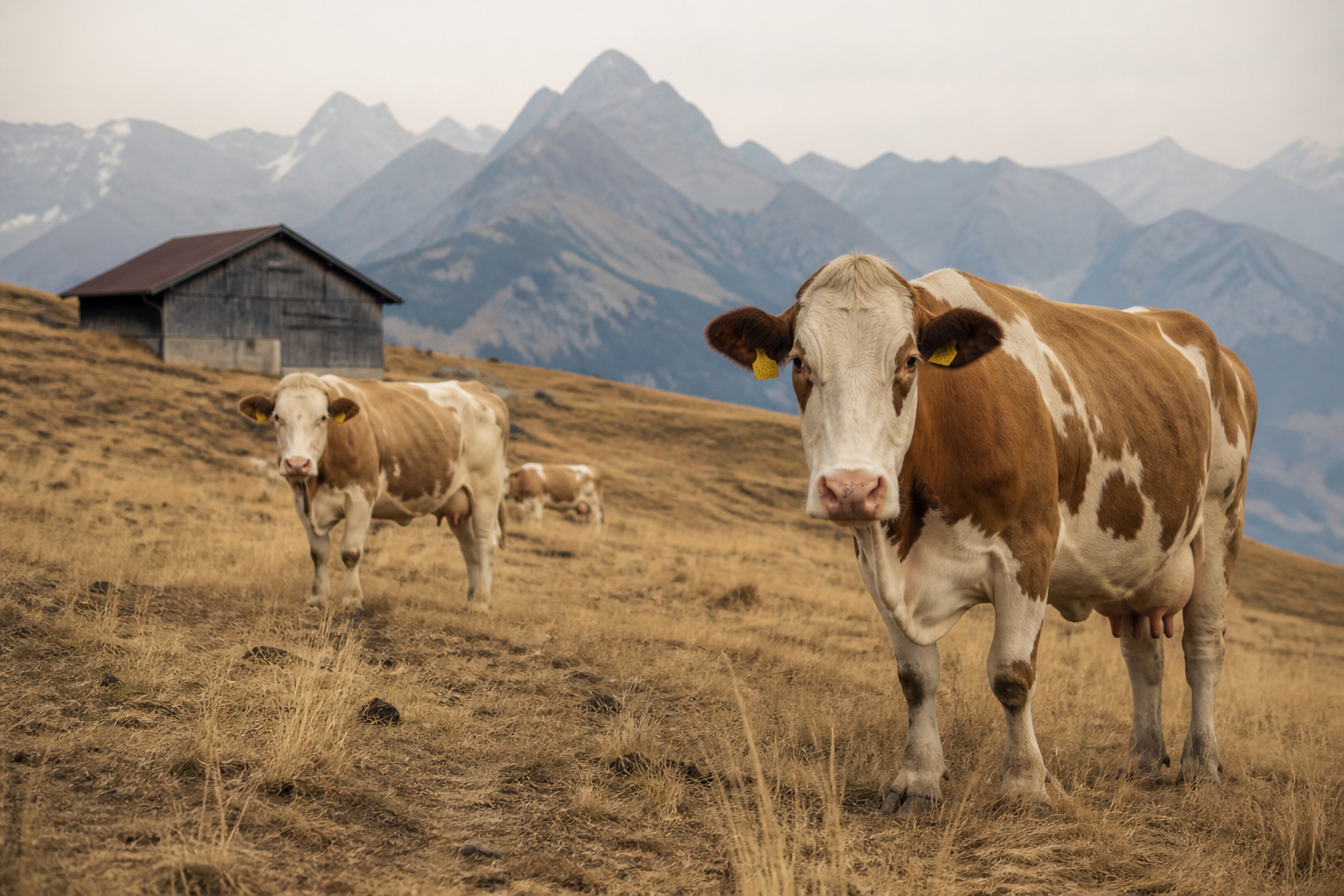
Milk tells a slower story with the same ending. The drought cut the grass, the grass cut the yield, and the cost of irrigation and bought-in feed did the rest. The four centime rise agreed this week is described as indicative, an industry word for negotiated but not yet everywhere applied, and the sector will ask the Confederation for a further four centimes a litre in emergency support.
The government moved first at the end of August, with a package worth more than CHF 70 million: a one-off increase of CHF 54 million in operating aid for affected farms and CHF 17.5 million a year more for climate adapted forests. Parliament must still approve the money, and the Federal Council will reassess the situation by the end of October, when the full harvest losses are counted.
Feed supply has its own emergency channel. Since 1 September, farms and mills may draw up to 20 per cent of the compulsory national reserves of protein rich fodder, some 16,000 tonnes, until the end of February. It is only the second such release ever, authorised because the low Rhine and Danube, the cheapest routes for imported feed, have spent the summer too shallow for full barges.
The meteorological backdrop is now official. The summer of 2026 was the hottest since records began in 1864, at 3.4 degrees above the norm, and among the driest, with parts of the northwest, the Jura and the Plateau receiving less than half their normal rainfall. More than 150 municipalities imposed water restrictions at the season’s peak. The first week of September has brought no relief: Geneva touched 33 degrees, Basel 31, and the lowlands stayed above 30.
Researchers at the federal institute WSL call the summer a possible eye-opener for society, a phrase chosen with care. Climate models have long projected that a summer like 2026 becomes the norm around 2070. The finding that now concentrates minds in Bern is that the impacts arrived forty years early, in the milk shed as much as on the glacier.
For consumers, the rises are modest and deliberate. Retailers accepted the potato and milk adjustments quickly, aware that empty shelves make worse headlines than higher prices. Whether the same calm holds for vegetables, beef and butter into the winter depends on the autumn rains that have not yet come.
The farmers’ union is already looking past this year. Its leaders argue that a CHF 522 million loss can be survived once, and noted that 2003 was survived. What cannot be survived, they say, is the new arithmetic in which such a summer is no longer the exception but, within a working lifetime, the average.