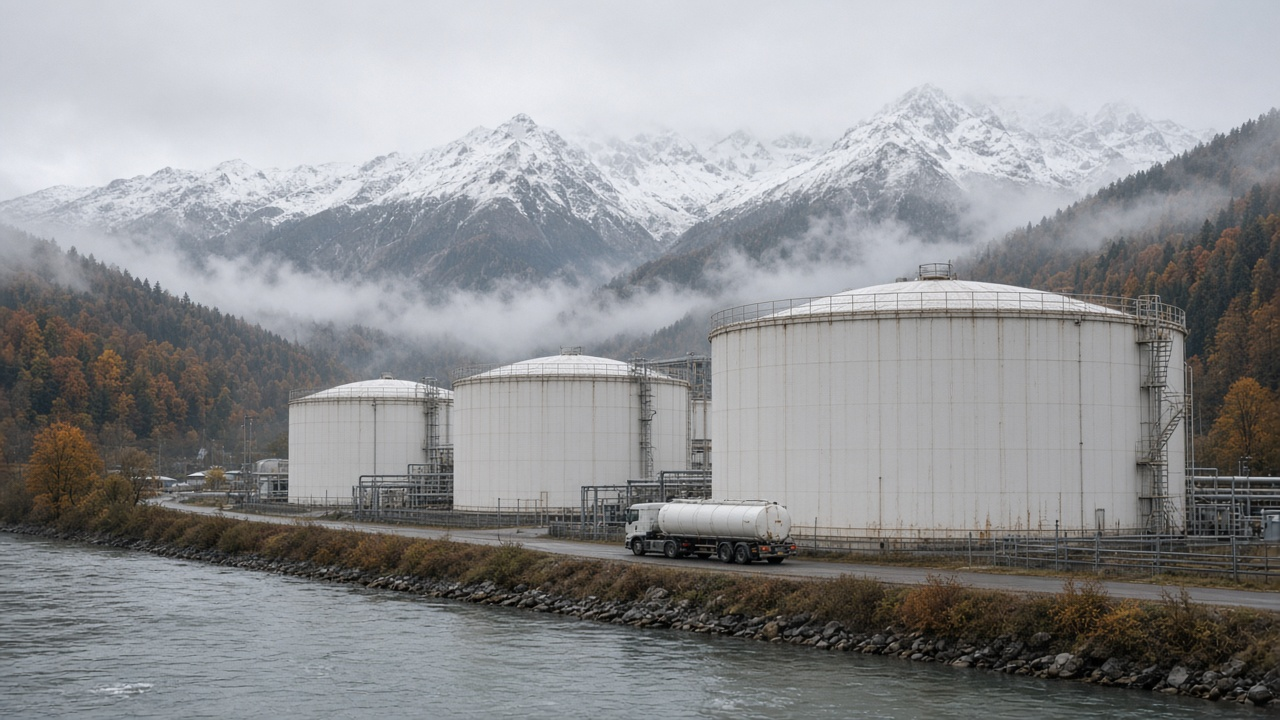
BERN. Roland Pfister has authorised withdrawals of up to 45,000 cubic metres of diesel, a little under 4 per cent of compulsory stocks, to bridge a gap left by stalled pipelines, a tight oil market and a low Rhine. The findings sharpen a debate that has run quietly for years and is now impossible to postpone.
Opposition comes from an unusual coalition: conservation groups protective of alpine landscapes and fiscal conservatives protective of public money. Both have slowed projects before.
The cantons most affected are also the most divided. Tourism economies want visible action; they also want invisible infrastructure.
What happens in the Alps rarely stays in the Alps. Rivers, reservoirs and power lines carry the consequences to the plateau within days.
Switzerland's energy system was built for a climate that is changing. Storage, transmission and demand patterns all assume conditions that no longer hold.
Opposition comes from an unusual coalition: conservation groups protective of alpine landscapes and fiscal conservatives protective of public money. Both have slowed projects before.