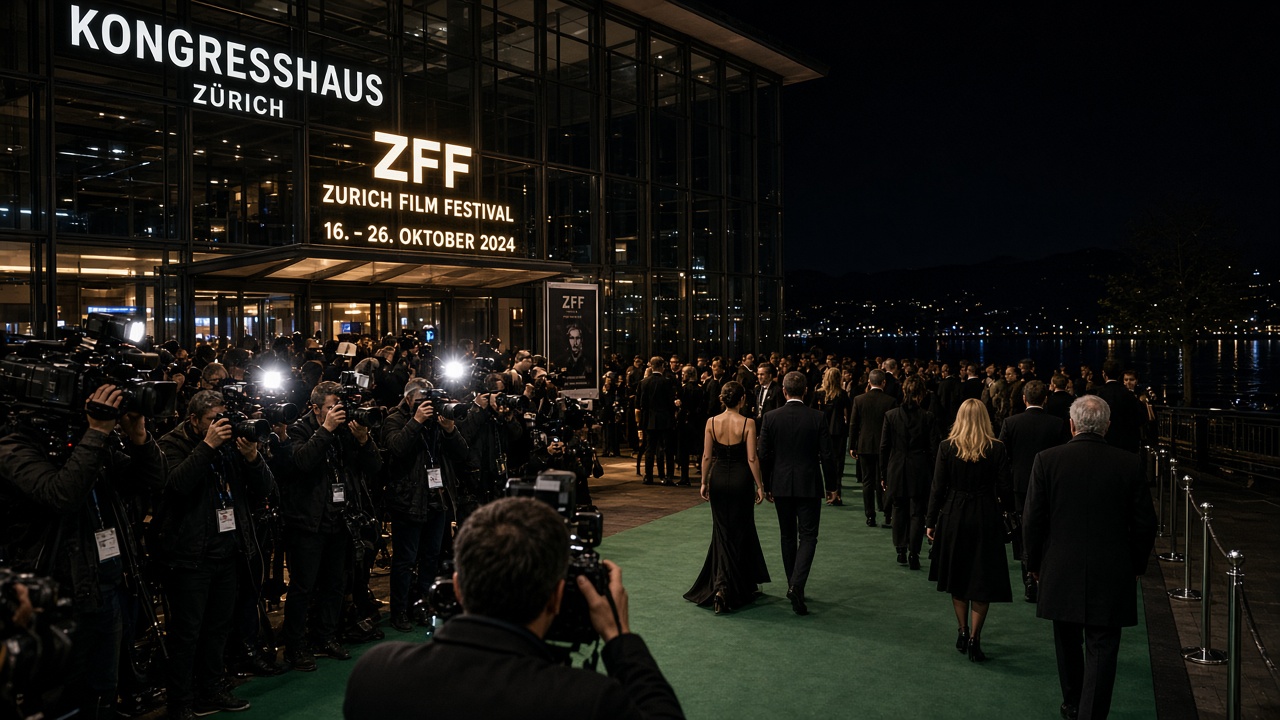
ZURICH. The 22nd Zurich Film Festival has completed its first weekend with the ceremony it plans all year for: Julianne Moore received the Golden Icon Award on Saturday evening, and accepted it in German. The American actress, honoured for a career that runs from independent cinema to the biggest stages in the industry, thanked the festival in carefully practised sentences that brought the Kongresshaus to its feet. It was the second major honour of the young edition, after Tom Hiddleston collected a Golden Eye at Thursday’s opening night.
Moore’s award anchors a weekend in which Zurich’s gamble on star power has paid off in full view. Hiddleston’s Golden Eye came with the European premiere of Tenzing, the Apple production about the 1953 ascent of Everest in which he plays Edmund Hillary opposite Genden Phuntsok’s Tenzing Norgay, with Willem Dafoe and director Jennifer Peedom on the green carpet beside him. The film reaches selected cinemas on 9 October and Apple TV a week later. Zurich got it first, which is the point of the exercise.
A week of honours still to come
The honours list for the remaining days is long even by this festival’s standards. John Turturro receives his Golden Eye this week, for his starring role in The Only Living Pickpocket in New York. Naomi Watts, French actress Leïla Bekhti and the Swiss actress Luna Wedler collect Golden Eyes of their own. Martin McDonagh is the subject of this year’s tribute, Richard Linklater receives a career achievement award with a retrospective of his work, and the composer Gabriel Yared and the founders of the Swiss distributor DCM take career honours of their own.
Beneath the ceremonies, the competitions are running. Fourteen fiction features and fourteen documentaries are contesting the Golden Eyes that carry CHF 25,000 each, with European co-productions thick on the ground in both strands. The edition screens 133 films in total, among them a record 21 Swiss productions, the largest home contingent the festival has fielded. For Swiss cinema the useful days are these middle ones, when buyers sit through the home titles and the industry strand tries to turn festival attention into distribution.
The second biggest stage in German
The festival likes to describe itself as the second largest film festival in the German speaking world, and this edition is built to prove it. The strategy is industrial as much as ceremonial: Zurich wants the people who open films in Venice and Toronto to treat the Limmat as a necessary stop, not a courtesy call. The presence of Moore, Hiddleston, Dafoe, Turturro and Watts inside four days suggests the courting is working. Festival director Christian Jungen tied the edition to the motto dream big, and the guest list has obliged.
The Swiss industry’s own week is quieter and arguably more consequential. Public funding still covers the part of a domestic budget that commercial money will not, and the festival’s Swiss programme is where that money is accounted for in public. The fourteen Swiss productions in the official sections include work from all four language regions, and the late night genre strand around Helvetiaplatz is aimed at an audience that never sees the galas. Ticket prices have been held for three seasons, a deliberate choice in a city where almost everything else has risen.
The timing remains very Zurich. The festival opened the night after the SNB’s rate decision, ran its first weekend while the country counted a referendum, and continues through the week the Senate debates the EU treaties three train stops away. A film festival that asks the political class for evening dress between those dates is making a claim about what a city is for, and the claim has never needed an apology here.
The edition runs until 4 October, with the competition winners announced at the closing weekend. Between now and then the carpets roll up each morning and out again each night. Moore’s German thank you is already the clip of the edition. The festival’s wager is that by Sunday, one of the 21 Swiss titles will have replaced it.