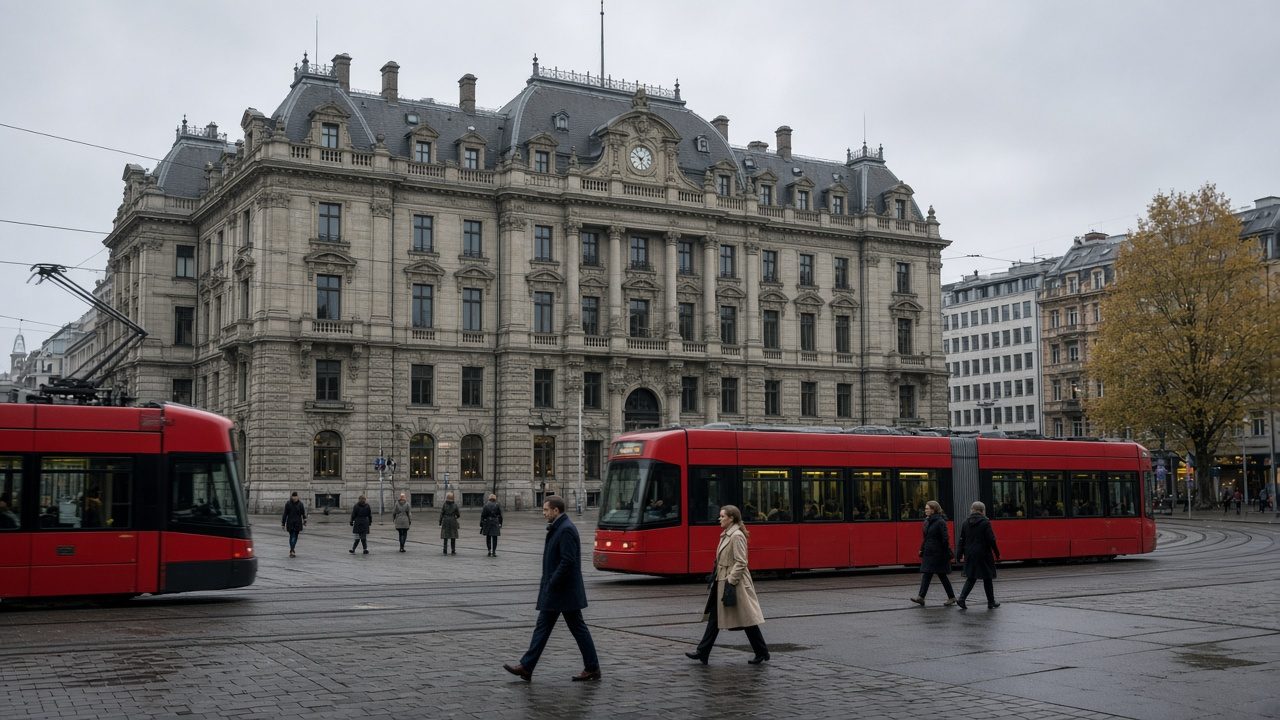
ZURICH. The political fight over how much capital UBS must hold has moved to Zurich, where the canton’s two most prominent Liberals have warned their own party in Bern that the Senate’s answer goes too far.
Carmen Walker Späh, the cantonal president and economics director, and Filippo Leutenegger, the president of the Zurich FDP, have written to the party’s federal councillors and its National Council group, the Neue Zürcher Zeitung reported on Thursday. The letter warns of serious consequences for Zurich as a business and financial centre if the capital requirements approved by the Council of States become law.
The 90 per cent question
At issue is the requirement that UBS back its foreign participations with 90 per cent hard core capital, the strictest version of the so-called Lex UBS that emerged from the Senate last month. The measure is the political legacy of the Credit Suisse collapse: a bank rescued by its rival in 2023, and a determination in Bern that the combined giant must never need rescuing again.
From Zurich’s perspective, the Senate’s approach creates significant competitive disadvantages. UBS competes for global clients against American and European rivals that operate under less demanding regimes, and the canton that hosts its headquarters fears paying for Swiss virtue with lost business, lost jobs and lost tax revenue.
Support inside the party
The letter is finding echoes in the parliamentary group. Andri Silberschmidt, a Zurich National Councillor, told the newspaper the Council of States had gone too far. Beat Walti, who sits on the economics committee that will shape the bill, called for moderation: the requirements on UBS will rise significantly in any case, he said, and the task is to stop before the line where the competitiveness of the location is jeopardised.
The National Council takes up the bill in November, and the lobbying has begun early because the arithmetic is open. The Senate’s 90 per cent is one pole; a compromise around 75 per cent has circulated for weeks, and the government’s own proposal sits lower still. The shape of a possible deal is already visible.
What Zurich’s intervention changes is the politics. The FDP holds the finance ministry and the economy ministry, and a public warning from its strongest cantonal branch lands directly on the desks of the two federal councillors who will have to sell any compromise. The letter is addressed to friends, which is precisely what makes it uncomfortable.