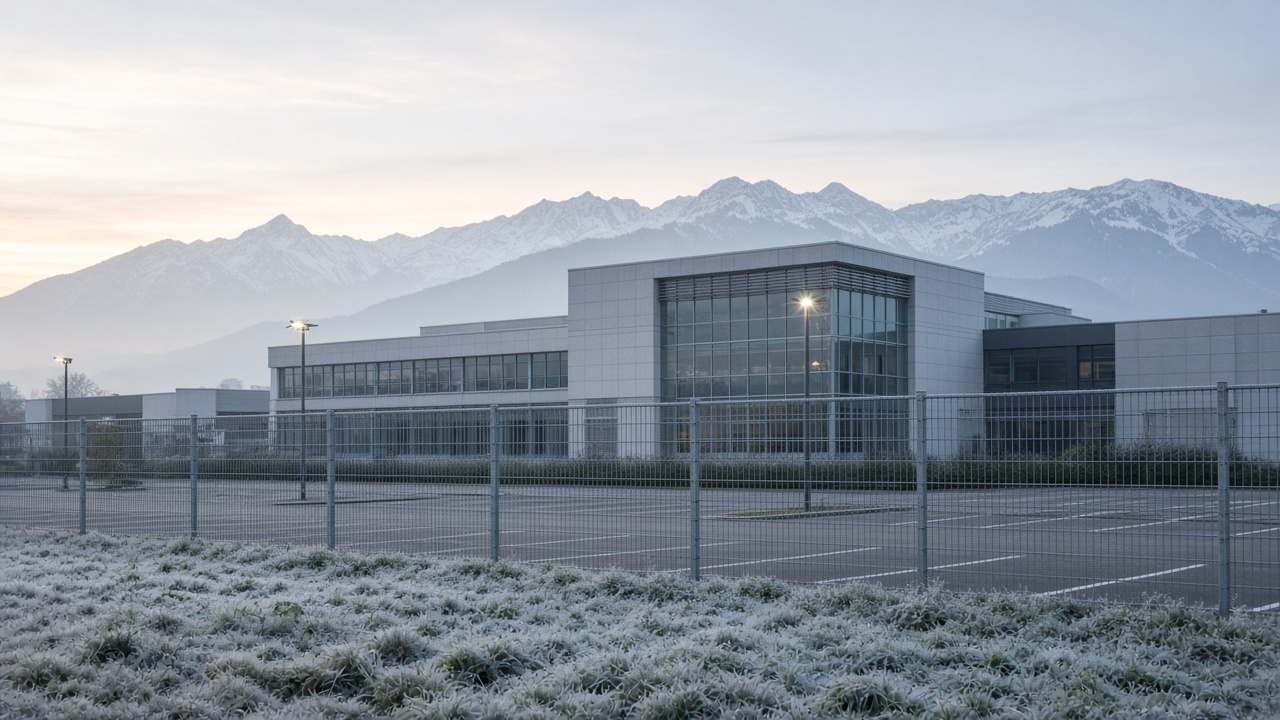
BERN. Security politicians spent the weekend arguing over a fire that began in the night of 29 October and has not been solved. The headquarters of B&T, the weapons and accessories maker in Thun, was badly burned. Bern cantonal police are treating arson as the leading line of inquiry. Nobody was hurt. Early estimates put the damage at CHF 12 million to CHF 20 million, and people involved in the clean-up say lost production could take it higher. The NZZ am Sonntag returned to the case on Sunday as one of a series of attacks on Swiss firms that has alarmed members of parliament.
The public record, which is all this article relies on, stops well short of a named suspect. Police have said they are investigating in every direction and are examining a video circulated afterwards by activist accounts in France and Switzerland. They have not confirmed who recorded it, and they have not said it identifies an offender. B&T’s chief executive, Karl Brügger, has said the firm is insured and that its survival is not in question. He has also said he will not be intimidated. Those are the company’s facts. The criminal facts belong to the prosecutors of the Bernese Oberland.
What parliamentarians are asking for
Reto Nause, a Centre party member of the National Council who works on security policy, told the NZZ the Thun fire was “almost terrorism” and that lives could have been at risk. Ammunition was stored in the building, which is why that sentence is not rhetoric only. Nause’s wider point, reported on Sunday, is that tools aimed at violent political groups need to be available quickly, not only after a factory has burned.
Franziska Roth, a Social Democrat in the Council of States, condemned the arson in the strongest terms and called for a harder official effort against extremism. The gap she named is a familiar one in Swiss security debates: too little money, too few staff, and authorities who do not share what they have in time. She did not, in the remarks reported on Sunday, propose a new criminal offence. She proposed that the ones already on the books be worked properly.
Thun is not the only file
The Sunday investigation sets the Thun fire next to an older one. On the night of 31 July 2025, vehicles and trailers were burned at a BKW site in Delémont. The energy firm has now put that loss at CHF 1.5 million. A claim of responsibility, posted on a radical platform, tied the fire to the Haute-Sorne geothermal project and said BKW was being punished for taking part. BKW’s actual role was narrower. It was not a partner in the drilling. It was obliged to connect the installation to the grid. The connection was enough to put its yard on a list.
That is the pattern the politicians are reacting to, and it is a pattern of target selection, not a pattern this newspaper is going to describe in any operational detail. Firms are being singled out because of what they sell, who they sell it to, or which public project they stand next to. Military suppliers are in the set. So is an electricity company whose offence, on the attackers’ own account, was a grid connection. A democracy can argue about arms exports, about Israel, and about geothermal drilling. Voters will argue about arms export rules on 29 November. Setting fire to a workplace is not a contribution to that argument. It is a crime, and it is unsolved.
What the firms can say, and what they cannot
B&T has said it was warned years ago that it appeared among possible targets in material circulating in radical circles, alongside other European arms firms. A warning of that kind is not a prediction, and it is not a substitute for a police inquiry. It does tell other boards that a mention in that world can precede a fire by years, and that the years in between are when alarms, insurance and staff briefings are either real or decorative.
None of that is a manual, and none of it needs to be. The useful public questions are the dull ones. Whether the Oberland prosecutors have a suspect. Whether the video stands up as evidence or only as propaganda. Whether BKW’s CHF 1.5 million is the last figure or a first one. And whether Nause’s call for faster tools, and Roth’s call for staff and cooperation, produce a bill, a budget line, or another Sunday article. The building in Thun is already a crime scene. The argument about what the state should do next has only just been put on paper.