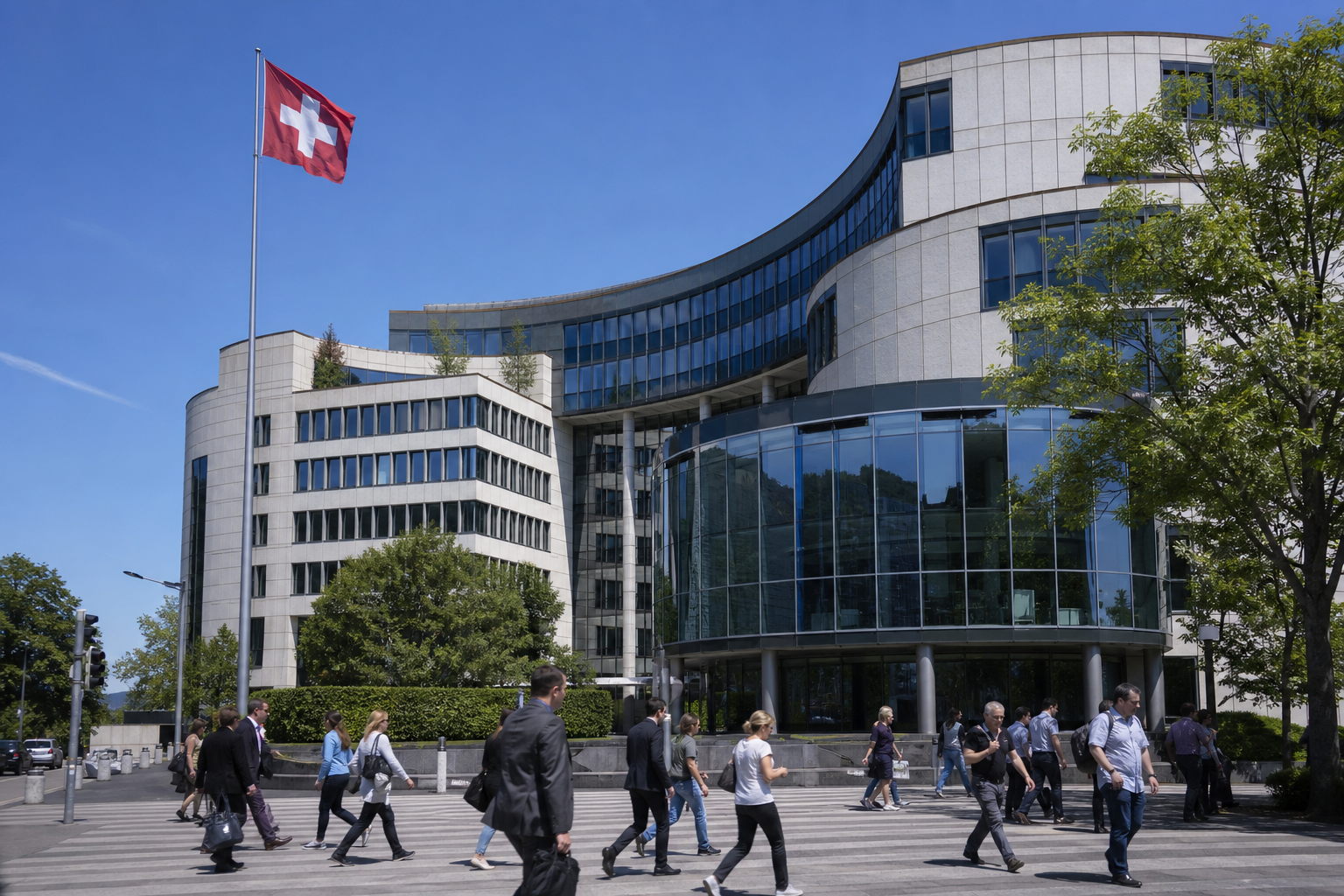
ZURICH. Swiss Life delivered a familiar corporate pairing on Tuesday morning: record results up front, job cuts in the small print. Switzerland’s largest life insurer said it would shed around 600 positions worldwide by the end of 2028, roughly 300 of them in its home market, even as it reported rising profits and promised shareholders a fresh CHF 250 million buyback.
The half year figures were, by the group’s standards, strong. Gross written premiums rose 3 per cent in local currencies to CHF 12.3 billion, driven by 7 per cent growth in the Swiss business. Net profit increased 8 per cent to CHF 649 million, the fee result climbed 11 per cent, and both cash remittance to the holding company and return on equity moved higher.
The reduction lands mainly through the back door. Chief executive Matthias Aellig framed the 600 positions as part of preparing the group for the years after its current Swiss Life 2027 strategy programme, citing efficiency and advancing digitalisation. Most of the cuts are to come through natural attrition: around 100 roles have already disappeared through the selective refilling of vacancies, and a further 100 redundancies are expected by the end of this year.
The split tells its own story about where the group sees the fat. Half of the reduction falls on Swiss Life in Switzerland, the domestic insurance operation, and half on Swiss Life Asset Managers, primarily at locations abroad. The company said affected employees would receive individual assistance and support in finding new roles.
Shareholders, meanwhile, are being compensated for the discipline. Having completed a CHF 750 million buyback at the end of May, the group starts a new CHF 250 million programme on 1 October, running to the end of March 2027. The message to the market is that cost cutting and capital returns now run on the same track.
The announcement fits a pattern across Swiss financial services this year. Insurers face the same arithmetic as the banks: flat or falling interest margins, rising technology bills, and investors who reward efficiency ratios more warmly than premium growth. Digitalisation, which the industry once described as an investment, is increasingly described as a substitute for headcount.
For the employees, the phrasing matters. Natural attrition in a company of Swiss Life’s size, with more than 10,000 staff worldwide, can absorb a large reduction without compulsory layoffs, and the group was careful to promise support for those affected. Unions will nonetheless watch the mix of attrition and redundancy closely as the programme develops.
The Zurich based insurer is not alone in cutting while profiting. The same morning brought record order books in manufacturing and a management reshuffle at Partners Group after a profit slump. The Swiss economy is creating and destroying white collar jobs simultaneously, sometimes in the same press release.
Aellig called the first half a reflection of disciplined execution and said the group was well on track to hit its 2027 financial targets. The new target is the day after: a leaner Swiss Life, built for a market in which growth is harder to buy and easier to automate.