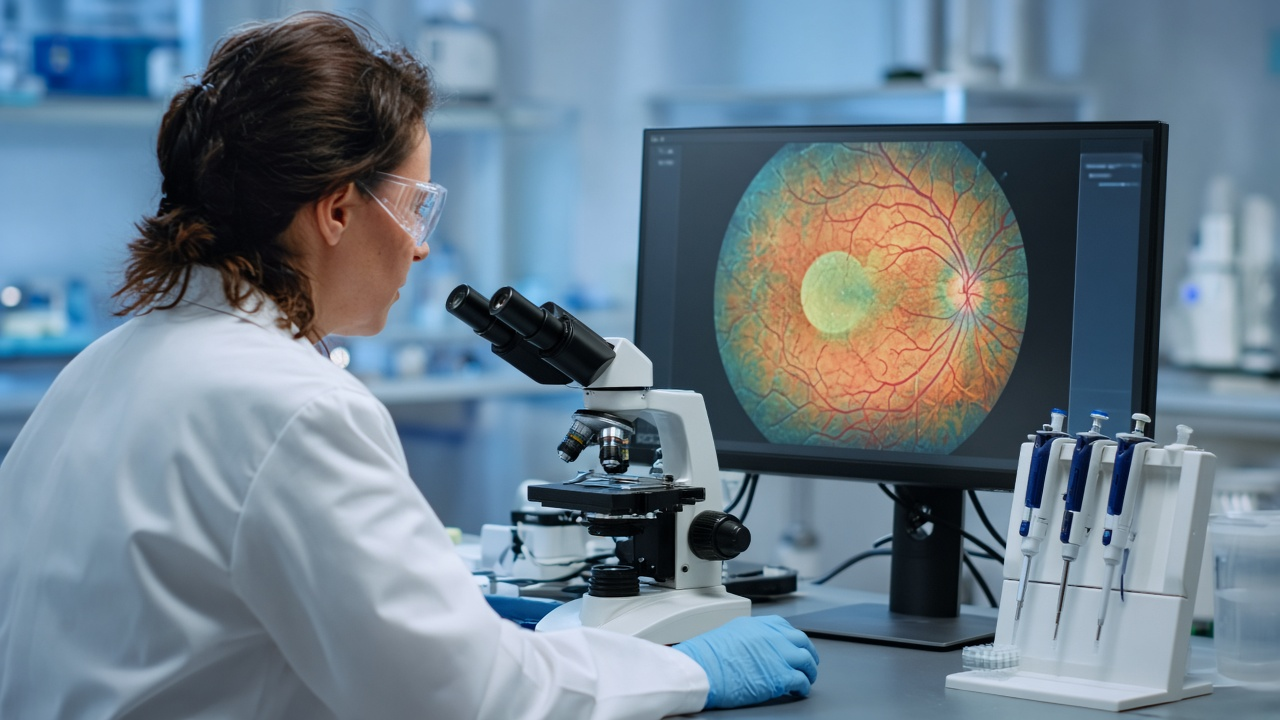
BASEL. Patients treated with a Swiss developed gene therapy for an inherited retinal disease have kept their improved vision for at least another year, researchers in Basel report. The follow-up data, the longest observation of the treated group so far, strengthens the case for a larger international trial and keeps Basel near the front of one of medicine’s most watched races.
The therapy targets a hereditary retinal dystrophy, a class of genetic conditions in which the light sensing cells at the back of the eye degenerate from childhood or early adulthood. Patients typically lose night vision first, then peripheral and finally central sight. Treatment options have been essentially nonexistent for most forms of the disease, which is why the field has attracted gene therapy’s pioneers for two decades.
The Basel approach uses an adeno-associated viral vector, a hollowed out virus repurposed as a delivery vehicle, to carry a working copy of the defective gene into retinal cells. It is administered as a single injection beneath the retina. The eye is considered favourable territory for such therapies: it is small, accessible, largely shielded from the immune system, and its responses can be measured with unusual precision.
What the Data Show
In the treated cohort, gains in light sensitivity and functional vision recorded after the first year have now been sustained through extended follow-up. Patients performed better on standardised measures, including low luminance mobility tests, and no serious treatment related adverse events have been reported. The numbers remain small, the researchers stress, and the therapy slows degeneration rather than restoring what is already lost.
Independent specialists describe the results as encouraging in the specific, limited sense the word carries in this field: durability. Earlier generations of retinal gene therapy showed improvements that faded within a few years. A treatment whose gains persist changes the conversation with regulators, with funders and, above all, with families deciding whether to enrol a child in a trial.
The work grows out of Basel’s dense biomedical ecosystem, where university research, the university hospital and the pharmaceutical industry share streets, staff and, increasingly, data. The city that built its reputation on chemistry and antibodies has become a serious address for genetic medicine, helped by Switzerland’s relatively predictable path through ethics review and authorisation.
The Road to a Larger Trial
The next step is a multicentre trial with more patients and sites outside Switzerland, the design that regulators require before any thought of approval. Manufacturing is its own obstacle: viral vectors are slow and expensive to produce to clinical grade, and capacity worldwide is booked out years ahead. The Basel team says production planning is already under way.
For the patients in the current cohort, the headlines matter less than the measurements. One participant, a young adult who asked not to be named, described navigating a train station at dusk for the first time in years without a companion’s arm. That is not a cure, the researchers are careful to say. It is a gain that has now lasted, and lasting, in this field, is the result everything else is built on.