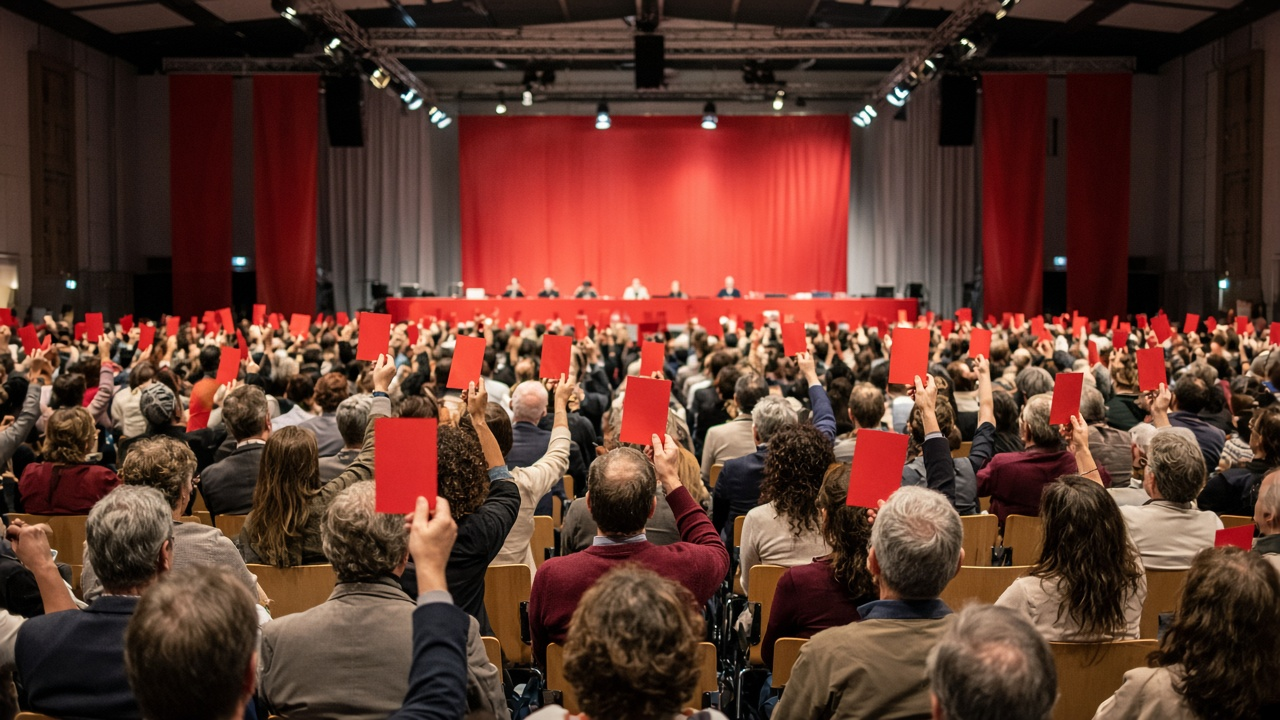
THUN. The Social Democrats opened the election season on Sunday by launching a national initiative against violence toward women, adopted unanimously by delegates on the first day of their two day congress in Thun. The text would write violence protection into the constitution and oblige the confederation and the cantons to spend at least CHF 500 million extra a year on the fight against gender based violence.
The initiative strengthens four areas at once: prevention, the protection of victims, criminal prosecution and the cooperation between the confederation, the cantons and the specialist services. Behind the demand sits a complaint any shelter worker will recognise: the help a woman receives in Switzerland today depends above all on where she lives, and progress against gender based violence has nearly stalled.
Federal Councillor Beat Jans put the weight of the government bench behind the launch. Men must not look away and must not stay silent, he told delegates, and domestic violence is not a private matter. Tamara Funiciello, co-president of the SP Women, spoke between rows of red shoes, the symbol for murdered women. The femicides, she said, are only the tip of the iceberg: 27 women were killed in Switzerland in 2025, and 18 have been killed so far this year. Rape, beatings, humiliation and discrimination fill the water below the tip.
Baume-Schneider sounds the AHV alarm
Elisabeth Baume-Schneider used the friendliest stage she will get this autumn to deliver a darker message. Without additional money for the 13th AHV pension, she warned, the pension fund threatens to slip into deficit still this year, and a deficit spiral after that. The warning doubles as campaign framing: six weeks before the 29 November referendum, the social affairs minister is defending the VAT rise that finances the 13th payment as a moderate compromise, and she needs her party to sell it door by door.
The compass for the election year
The delegates set the rest of the course with little debate. They recommended a Yes to the Democracy Initiative and a No to both the free trade agreement with Malaysia and parliament’s loosening of the nuclear plant ban, the law against which a left and green coalition forced a referendum in September. The No to the law that would let collective agreements undercut cantonal and communal minimum wages was equally brisk: co-president Cédric Wermuth called it an attack on the purchasing power of hard working people.
Wermuth and Mattea Meyer were confirmed in office, and the congress adopted the position paper “Good work for all”, demanding shorter working hours, higher wages and more co-determination. The signature collection for the violence protection initiative now begins, with eighteen months to gather 100,000 valid names. The campaign, like everything the party did in Thun this weekend, is aimed openly at the federal elections of October 2027.