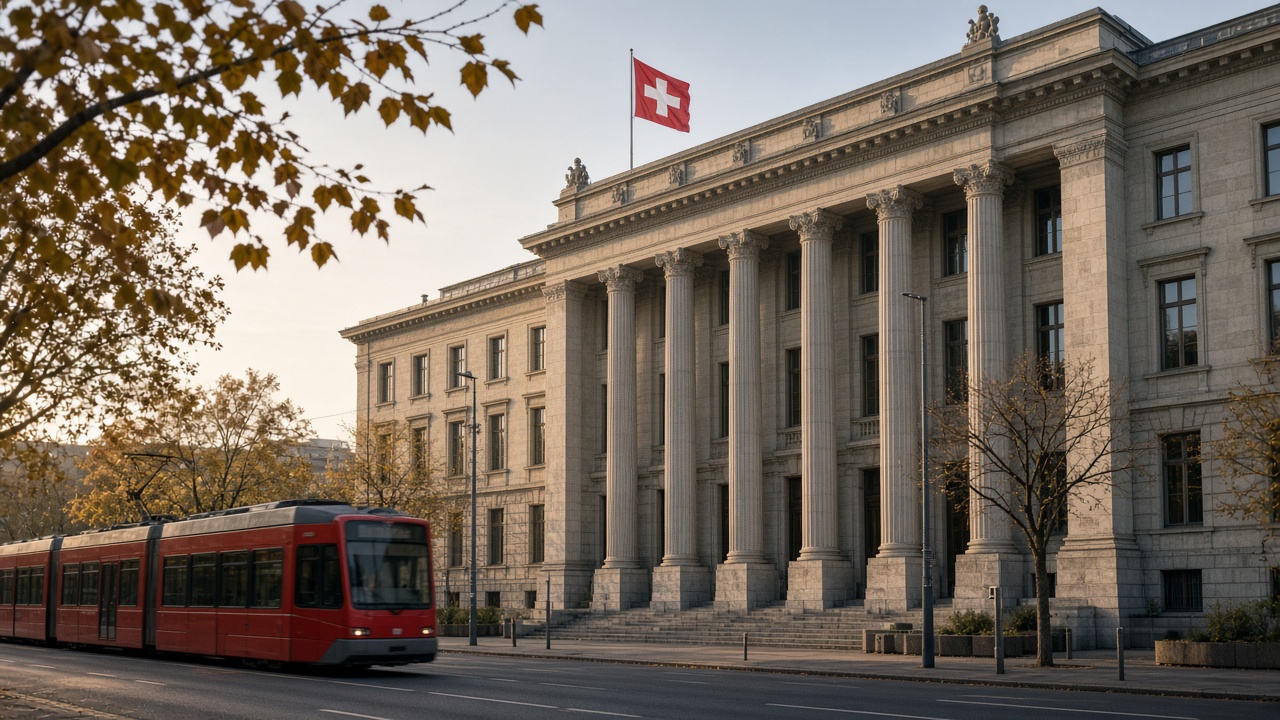
ZURICH. The Swiss National Bank delivers its quarterly monetary policy assessment on Thursday at 9.30am, and the least surprising sentence in Swiss finance is the one it is expected to repeat: the policy rate stays at zero. The rate has stood there since June 2025, through four consecutive assessments, and not one of the major bank previews published this week argues for a change. The phrase doing the rounds in Zurich research notes is the same in three languages: no reason to move.
The case for holding is built on two numbers that refuse to misbehave. Inflation has spent the year close to zero, ticking up only modestly in August, and the SNB’s June forecast put it at 0.6 per cent for both 2026 and 2027 and 0.7 per cent for 2028, comfortably inside the bank’s definition of price stability. Growth, meanwhile, has surprised on the upside: the economy is on course for about 1 per cent this year and 1.5 per cent next, resilient enough that neither a cut nor a hike finds a constituency among forecasters.
Thursday’s statement will update the conditional inflation forecast, and that table is where any news hides. A downward revision for 2027 would revive talk that the next move is still down, and that negative rates, parked rather than retired, remain the live contingency. An upward nudge would feed the minority view in markets that has at times priced a first hike as early as March 2027. Most Swiss economists regard both readings as overreactions to a forecast the SNB itself warns is not a promise.
The genuine variable is the franc. The currency has firmed again through the late summer, buoyed by Middle East tensions and by the simple arithmetic that Switzerland’s inflation runs two points below the euro area’s, a gap the bank’s own research attributes mostly to goods prices. The June assessment paired its hold with a signal that has grown louder since: a greater readiness to intervene in foreign exchange markets if the appreciation runs too fast. Watch the verb. A shift from monitoring to willingness, or from willingness to emphasis, moves the exchange rate before any trade is placed.
Chairman Martin Schlegel fronts the news conference at 10am, and his problem is communicative rather than monetary. A central bank at zero with calm inflation and decent growth has nothing to announce and everything to preserve: credibility that it would cut below zero if deflation threatened, that it would buy foreign currency if the franc spiked, and that it will not be hurried by either the hawks in the comment pages or the exporters’ associations. The exporters, for the record, have gone quiet since the franc stabilised, which is its own kind of data point.
The external risks are listed in every preview and controlled by no one in Zurich: American trade policy, energy prices, and the safe haven flows that arrive uninvited whenever the world’s nerves fray. The SNB’s answer to all three is the same toolkit it has described all year, patience on rates, optionality on intervention, and a balance sheet that remains available.
Markets will trade the nuance for an hour and then move on, which is precisely the outcome the Governing Board wants. The December assessment brings fresh forecasts and the year’s last chance for drama. Until then, Swiss monetary policy is scheduled to remain what it has been since the summer of 2025: boring by design, and defended as such. A central bank that expects to do nothing, and says so clearly, is doing something.