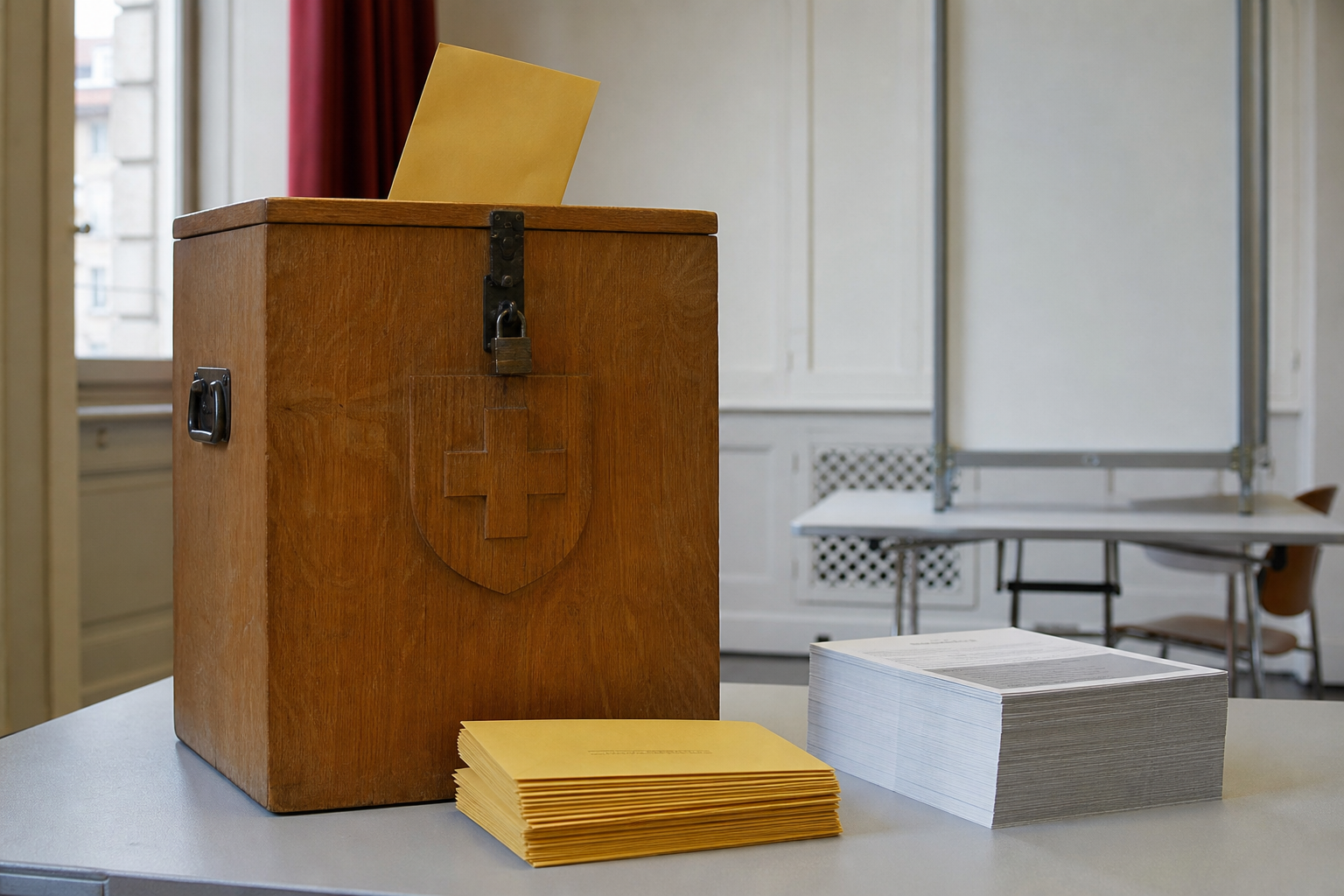
BERN. For the first time in a generation, no member of the Federal Council is expected to step down this year, and the unusual calm has itself become a subject of analysis in Bern. Stability, long the governing virtue of the Swiss executive, has hardened into something closer to stasis, and the political class is unsure whether to celebrate or worry.
The seven seat council has governed Switzerland since 1848, its composition since 1959 guided by the informal formula that distributes seats among the largest parties. The system has no constitutional basis, no alternation and no opposition in the Westminster sense. Governments are not voted in or out; they accumulate, and occasionally they are rebalanced.
The formula has survived its obituaries before. It bent in 2003, when the composition shifted to reflect electoral strength, and it held through the financial crisis, the pandemic and the emergency takeover of Credit Suisse. Each shock was absorbed by the same method: collective responsibility, a rotating presidency, and decisions announced without theatre.
The current council's average tenure exceeds ten years, and five of its seven members have served through at least two national crises. Supporters see a repository of experience unavailable to countries that churn their cabinets; critics see a gerontocracy insulated from the electorate, with an average age over 60 and party strengths frozen in the arithmetic of a parliament three elections ago.
The parties manage the gap between their claims and the seats they hold with practised patience. The largest party in parliament holds two seats and demands no third; the Greens, absent from the council despite two decades of national relevance, press a formal claim each December and are politely refused each December. The smaller parties defend the status quo with the enthusiasm of incumbents everywhere.
Strategists privately concede that the arithmetic will only move after the 2027 general election, and then only if the party standings shift decisively. The mechanism for change is resignation: seats turn over when members choose to leave, and members choose to leave when their party's electoral position strengthens the argument for a successor. It is succession planning as statecraft.
The numbers behind the stability are striking. Since 1959 the average tenure has been around ten years, against under four for a German cabinet minister and under three for a British one. In the same period Switzerland has had fewer heads of department than Italy has had governments. Voters, when surveyed, profess boredom with the arrangement and overwhelming support for it.
The academic verdict matches the public one. “The system produces dull governments and good crisis management, and voters have learned to prefer both,” a professor of political science at the University of Bern said, noting that predictability is itself a governing asset.
The counterpoint deserves a hearing. Concordance blurs accountability, since no governing party can be punished out of office, and the lag between electoral change and executive change has stretched as tenures lengthen. Some constitutional scholars argue the formula now protects parties rather than representing voters, a criticism the parties answer by pointing to the stability the arrangement purchases.
The calendar offers the usual rituals and one real test. In December parliament will elect the federal president for next year, a rotation agreed in advance and decided without suspense. The genuine inflection points are the next resignation, whenever it comes, and the December 2027 renewal of the whole council by the newly elected parliament.
Abroad, the arrangement remains a curiosity that works. Coalition churn in Berlin and Paris, and the permanent campaign of presidential systems, have made Switzerland's slow ship an object of study rather than condescension. Stability, it turns out, compounds like interest: each uneventful year makes the next one easier to govern.
For now the seven chairs around the table in the Federal Palace stay filled, and the photographs on the wall stay current. In Bern, that passes for excitement, and most voters, to judge by the polls, are content to keep it that way. The next crack in the calm will come, as it always does, from a resignation no one has yet announced.