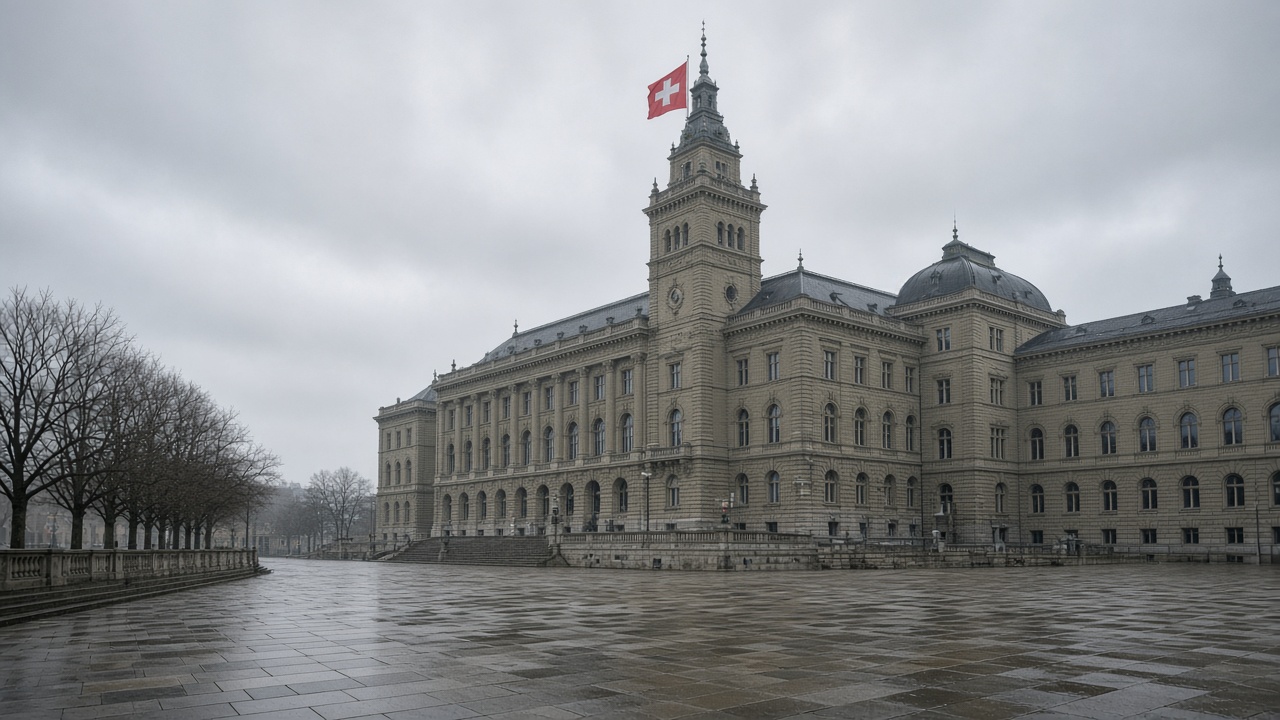
BERN. The sectoral measures in Switzerland’s adoption of the European Union’s 21st sanctions package against Russia and Belarus take effect on Thursday. The list changes landed earlier. They came into force at 23:00 on Wednesday, after the Federal Council decided on 4 November to follow Brussels, and after the economics department had updated the annexes the day before. The same update freezes 254 more people, companies and organisations, and takes several well-known names off.
The government’s press notice does not name the people removed. The amended annexes do. Reporting by finews, Deutsche Welle and TASS, reading those annexes, identifies Alisher Usmanov and Mikhail Fridman among six individuals and one company deleted from the Swiss lists. Also reported as removed are Andrei Falaleyev, a former rector of Crimean Federal University, and Redbird Corporate Services Ltd. Three further deletions are recorded because the people have died, among them the former Duma member Yury Shvytkin and the designer Alexander Leonov. Switzerland sanctioned Usmanov on 4 March 2022, in line with the EU. EU ambassadors agreed on 22 September to take him and Fridman off. Bern has now done the same, six weeks later.
What is added, from today and from last night
The 254 new listings bring asset freezes, a ban on making funds or economic resources available, and, for individuals, a ban on entry and transit. In the trade lists, 41 companies, some of them in third countries, face tighter export controls. Separately, Switzerland has banned transactions with 33 Russian banks, one bank in a third country, 17 financial institutions and crypto-service providers, five companies in third countries, four Russian airports and two Russian ports. A further 41 ships linked to the Russian shadow fleet are now covered by bans on purchase, sale and the provision of services.
The sectoral package, in force on Thursday, extends the export ban on goods that would strengthen Russia’s military and technological capacity, with a particular eye on aerospace and drones, and adds import restrictions on further goods that matter to the Russian economy. In energy, anyone selling or otherwise transferring an LNG tanker to a third country must report it, a step aimed at circumvention. An existing exemption for certain shipments of Russian crude to Japan, and for related services, runs on until 31 March 2028. In finance, the crypto rule is the sharp one: Russian nationals, and people resident in Russia, may no longer acquire an interest in a Swiss company that provides crypto-asset services, whatever those services are.
There is also a shield for Swiss companies and individuals against abusive rulings of Russian courts, and a longer set of exemptions so that firms still winding down operations in Russia can do it in order. Belarus is in the package as well. The EU adopted further Belarus measures alongside the 21st Russia package on 23 July, and the Federal Council adopted those too.
Where Bern did not copy Brussels line for line
The alignment is close, and it is not total. After weighing foreign policy against legal risk, Switzerland has for now left two Russian nationals off the list. Fourteen companies in a third country are not, for now, under the tighter export controls. The government has not named them. It says measures already in the 20th package are there to stop the trade restrictions being walked around. That is a familiar Swiss sentence: follow the EU, keep a written reservation, and argue that the reservation does not open a hole.
Usmanov’s removal is not the end of his legal traffic. Die Welt reported this week a decision of 21 October by Germany’s Federal Court of Justice which, according to finews, gives fresh momentum to his case against the EU Council. The Zurich public prosecutor’s office is still handling a mutual-assistance request from Munich in a German tax investigation, and it has already refused a wide trawl of banks as a fishing expedition. None of that is a finding of guilt. Coming off a sanctions list releases an asset freeze that existed only because of the list. It does not decide a tax case, and it does not decide what the EU courts will do with the challenge still in motion.
Why Thursday is the date that counts for firms
Compliance desks in Zug and Zurich have had the lists since late Wednesday night. Thursday is when the sectoral bans bind: the new trade lines, the LNG reporting duty, the crypto-ownership bar, the extra shadow-fleet ships. A bank that could still book a transaction on Wednesday afternoon cannot treat Thursday as a grace day. Commodity traders have lived with this rhythm since the early packages. The difference this time is the names coming off as well as the names going on. For Usmanov and Fridman, the Swiss freeze that began in 2022 is lifted because Brussels lifted it. For 254 others, it starts at the same hour.