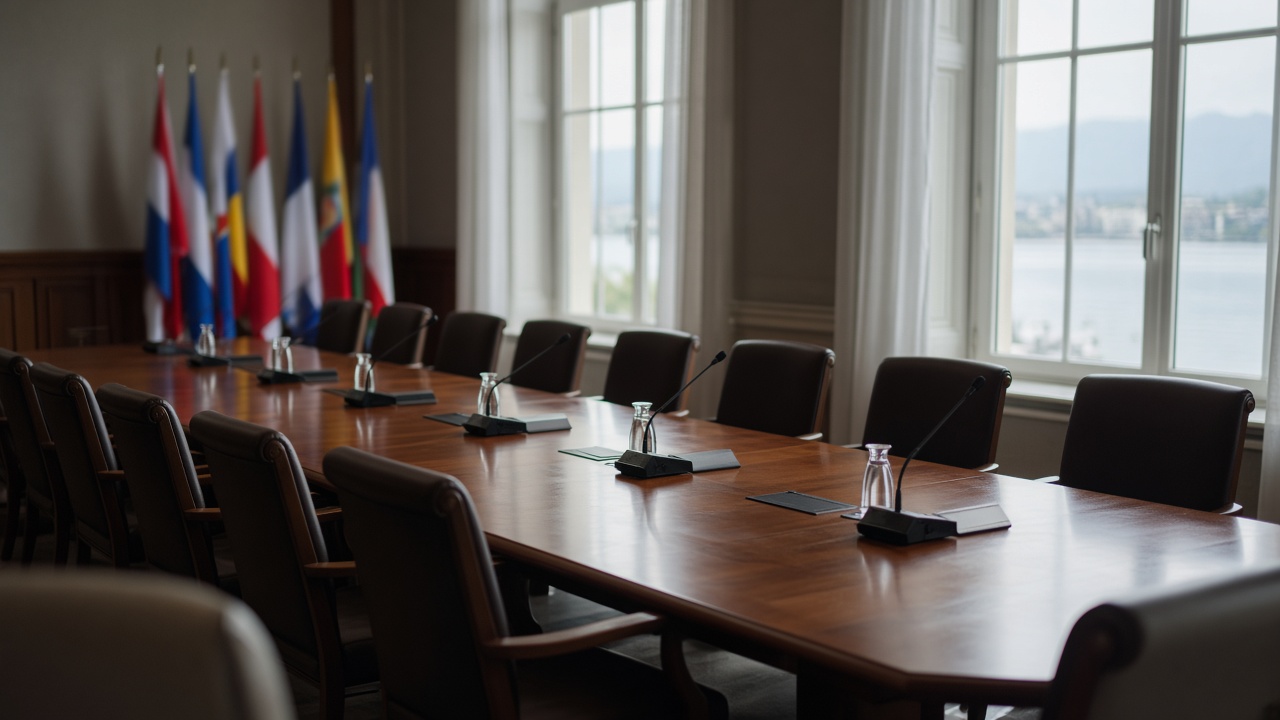
GENEVA. Switzerland and the International Committee of the Red Cross open two days of talks in Geneva on Tuesday on how states can make the laws of war work in practice. The Global IHL Dialogue is not a negotiation of a new treaty. It is a meeting about a body of law most of the world has already signed, and which civilians in more than 130 armed conflicts are living without.
The papers in front of the room were published ahead of the session. They come out of two years of consultations with more than 160 states. The guidance is practical and not binding. It is meant to turn a political promise into things a defence ministry, a foreign ministry or a commander can actually do. A high-level conference follows on 7 December in Jordan, called by King Abdullah II, for the leaders of the 127 states that have formally joined the Global IHL Initiative.
What the two days are for
Switzerland is in the chair for a structural reason. It is the depositary of the Geneva Conventions, the state that keeps the treaties. The ICRC is the guardian that watches how they are applied, and the institution that still gets into places governments often cannot. Together they launched the dialogue because the failure is no longer a shortage of rules. It is a shortage of compliance: hospitals hit, water and power cut, civilians described as if the law did not cover them.
The initiative itself started in 2024, backed at the outset by Brazil, China, France, Jordan, Kazakhstan and South Africa. It has since widened to 127 states. Israel, Russia and the United States have not formally joined, Geneva Solutions reported as the meeting opened. Their absence does not stop the talking. It does limit any claim that the room speaks for every army currently at war.
The practical steps on the table
The guidance groups the work into habits, not slogans. One block is about language and conduct: how armed forces refer to an enemy and to civilians, cultural briefings before troops operate in someone else’s country, limits on how militaries and public authorities use social media, and the teaching of humanitarian rules in schools and national commemorations. The point is to push back against talk that treats a group of people as less deserving of protection. Words are in the document because words are how that treatment starts.
A second block is about the services civilians die without. Health care, water, electricity, sanitation and communications are listed as things to protect on purpose, not as collateral. The suggested tools include protected zones around essential infrastructure, no-strike lists for medical facilities, closer civil-military coordination, and safe sea corridors for essential goods. Mapping matters here: an electrical plant that feeds a hospital, a road that carries medical supplies. A target folder that does not know those links will hit them anyway.
What Geneva can and cannot settle
Nothing agreed on Tuesday or Wednesday amends the Geneva Conventions. Non-binding guidance has a poor record when a state has already decided that necessity outranks the rule. The case for holding the meeting anyway is narrower. States that want a standard for their own forces, and a standard to quote when they criticise others, have spent two years writing one down. December in Amman is where leaders are supposed to own it in public.
For Switzerland the week sits inside a familiar role, and an uncomfortable month. Bern still sells itself as the place where the law of war is kept, interpreted and argued over. At home, voters decide on 29 November whether a partner country at war may receive Swiss war materiel. That campaign is already under way, and the early polls have not broken. The Geneva talks do not answer the Swiss ballot. They do remind the country hosting them what the argument is about: not the elegance of a legal text, but whether a civilian still has a hospital, a tap and a legal claim when the shooting starts.