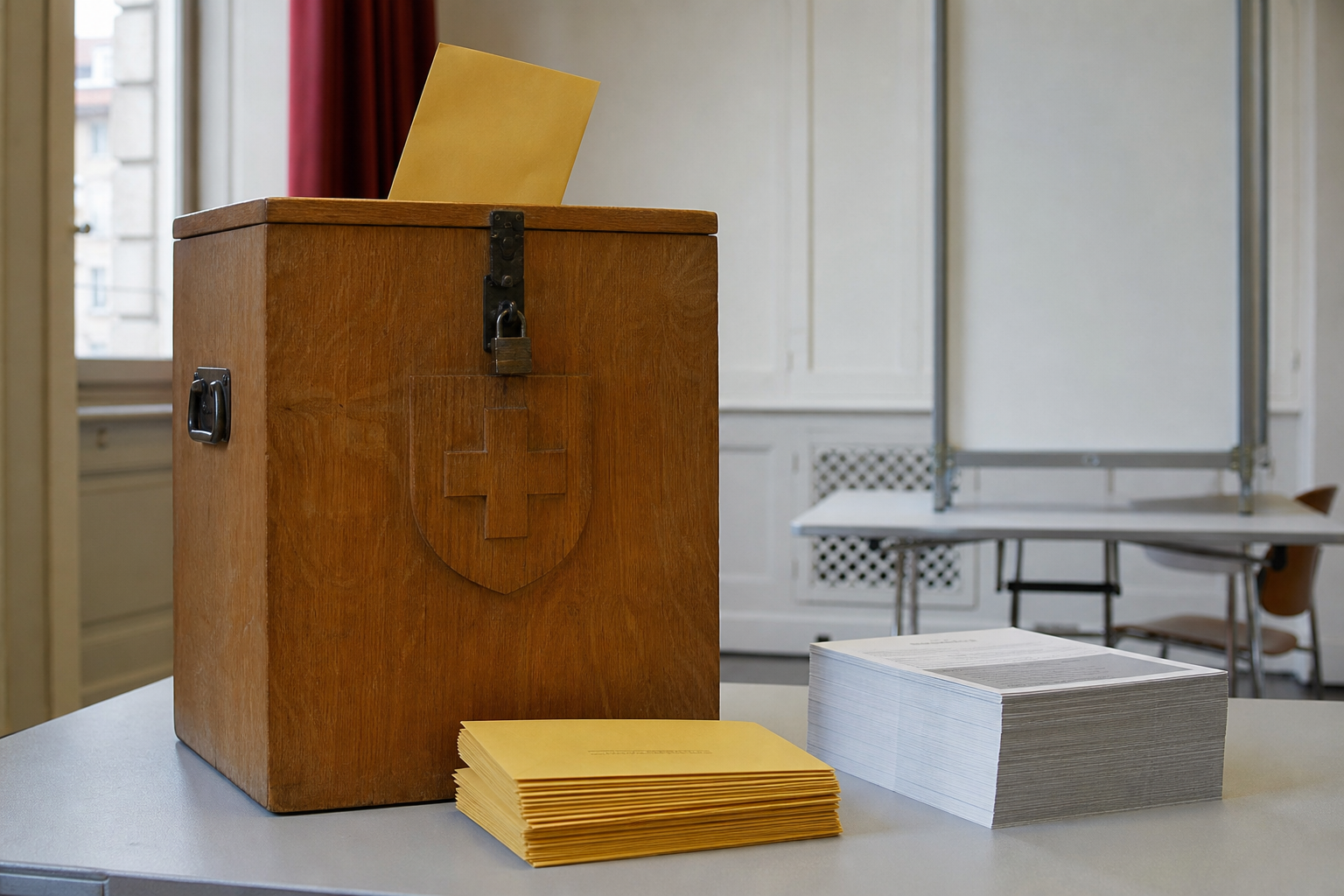
BERN. Postal ballots for the referendums of 27 September begin reaching households on Wednesday, as communes across the country start mailing voting material to Switzerland's roughly 5.5 million eligible voters. Each envelope carries two federal proposals: the neutrality initiative, which would write a stricter definition of neutrality into the constitution, and the food security initiative, which asks the Confederation to encourage the production and consumption of plant based foods.
The mailing is staggered by canton and commune, and most voters will have their envelope by the end of the week. Ballots returned by post must arrive before the weekend of the vote; after that, only the communal counter or the polling station will do. Alongside the ballot papers sits the Federal Council's official pamphlet, already distributed in the four national languages, which recommends rejecting both texts.
The campaigns treat this week as the true start of the contest. The first survey of the season, published on 21 August by the gfs.bern institute, put the neutrality initiative behind: 54 per cent intend to vote No, 42 per cent Yes, with 4 per cent undecided. The food security proposal is statistically tied at 49 per cent against and 47 per cent in favour. In both cases, the votes still winnable are the ones now landing in letterboxes.
The Pro Suisse committee behind the neutrality text began hanging its posters at railway stations on Monday night. Its argument is that only a constitutional lock can stop what it calls an elastic reading of neutrality under foreign pressure. “Every envelope that arrives this week belongs to a voter we can still convince,” the committee's campaign manager said on Tuesday.
The opposing camp, an alliance of the four governing parties and most of the business community, is running the quieter campaign. Its bet is that the government's pamphlet and the editorial pages will do the work that posters cannot. Federal Councillor Ignazio Cassis has framed the choice as one between a neutrality that functions and a neutrality that merely looks tidier on paper.
Communal chancelleries, which run the practical side of Swiss democracy, have spent the summer preparing. Envelopes are checked, signed declarations separated and ballots stored sealed until counting day. Officials remind voters each cycle that the most common reason for an invalid vote remains the unsigned declaration, a mistake made by roughly one voter in every five hundred.
Turnout at September votes has averaged a little under 50 per cent over the past two decades, and political scientists expect this one to land near the top of that range. The neutrality question touches identity, which reliably brings people out. The timing also helps the campaigners: the vote arrives just after the summer holidays, compressing the argument into five weeks rather than letting it drift through the summer.
The food security initiative, overshadowed from the start, is fighting a quieter battle of its own. The farmers' union recommends rejection, consumer organisations are split, and no major party has endorsed the text. Yet the opening poll showed it level, carried by younger voters and by the Swiss Abroad, 58 per cent of whom say they intend to vote Yes.
Analysts at gfs.bern caution that early postal voters tend to be the most decided, so the first week of returns says little about the final Sunday. The campaign's second survey, due in mid September, will show whether the No camp's advantage on neutrality is holding and whether the food security race has broken in either direction. In most communes, as one chancellor put it, the result is decided at the kitchen table, weeks before the count.
Television debates in the national languages are scheduled for the final fortnight, when most ballots will already be cast or committed. It is a peculiarity of the Swiss rhythm that the loudest phase of the campaign coincides with the quiet disappearance of its audience.
By the evening of 27 September, most communes will have counted within hours and the national result should be clear before the late news. Whatever the outcome, the next votes of this legislature, on pension reform in November and beyond, are already queueing behind it.