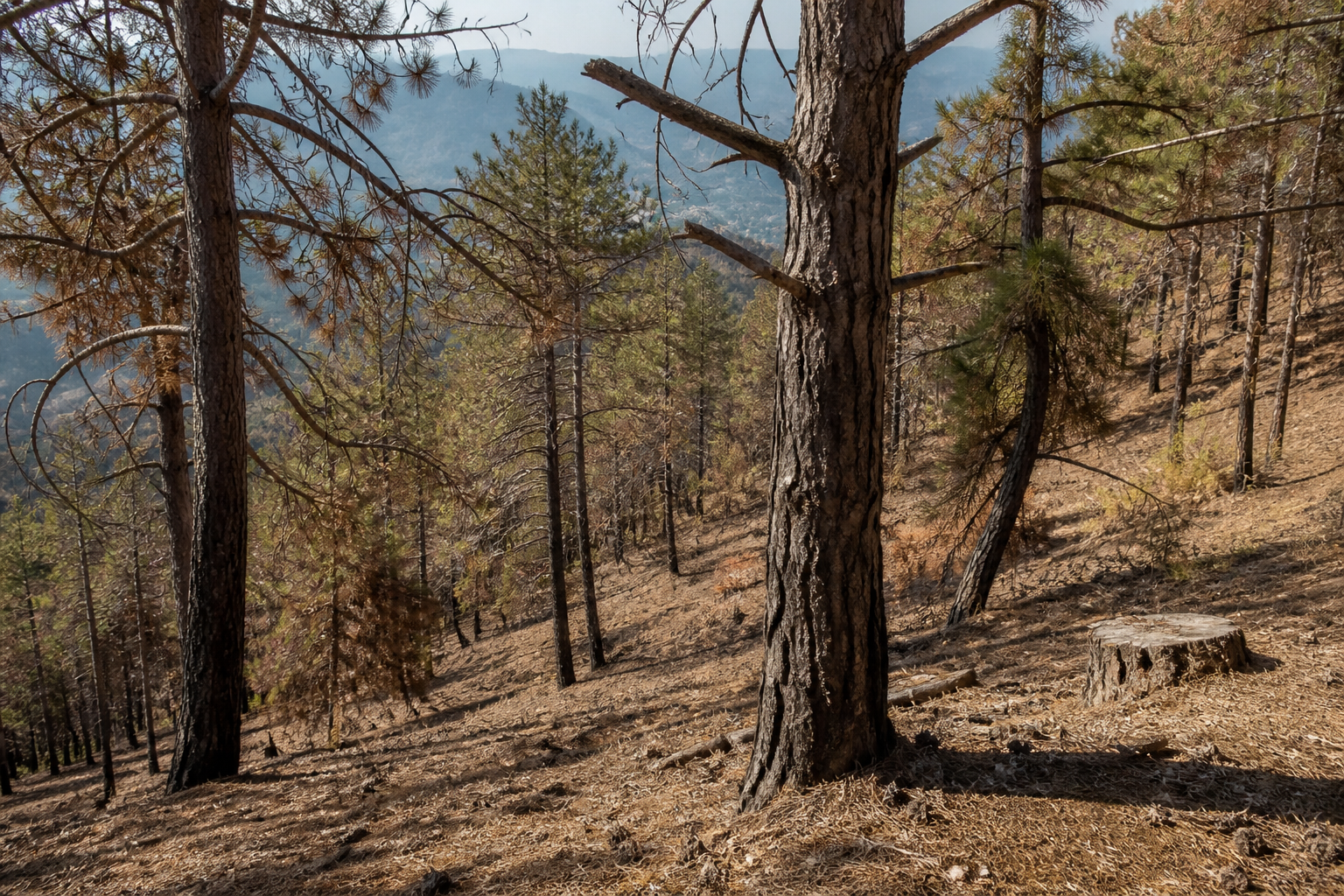
CHUR. The cantons of Grisons and Ticino have extended their open fire bans into September, after the storms that broke the heatwave in the north of the country largely missed the forests south of the Alps. Both cantonal forestry offices confirmed the extensions on Wednesday, citing soil moisture readings that remain at or near the thresholds used to declare extreme fire danger.
The bans cover open fires of all kinds, including barbecues in designated picnic areas, and apply to the whole of Ticino and to the valleys of Grisons south of the Alpine divide. Hikers are being asked to carry cigarette butts out. Municipalities have closed several forest roads that fire engines could not reach in the event of a blaze.
The meteorological story is a simple one of geography. The late August storms tracked along a front that stalled on the northern flank of the Alps, dropping 40 to 80 millimetres of rain on the plateau and the northern valleys. South of the divide, totals were 5 to 15 millimetres, enough to wet the surface and not enough to soak the litter layer where fires start.
Ticino recorded 11 forest fires in July and August, none of them large, all of them extinguished by a combination of ground crews and, in three cases, helicopters from the cantonal civil protection service. Grisons recorded 7. Forestry officials say the numbers are not exceptional for a dry summer, but the fuel load, after three hot years, is.
The extensions run until 15 September in Ticino and 12 September in Grisons, with a review in the second week. Both offices said they would lift the bans as soon as soil moisture recovered, and that they would not wait for a calendar date if the weather cooperated. MeteoSwiss's outlook for the south is drier than for the north through the first ten days of September.
Tourism offices have taken the news with the mixture of resignation and messaging that dry summers now require. Hotels in Lugano and St. Moritz have posted the rules at reception. Mountain restaurants that depend on terrace grills have switched to gas, which the bans still permit under a roof. “The heatwave broke. The tinder did not,” the head of the Ticino forestry office said.
Insurance data, published separately this week by the Swiss Hail Insurance, show that drought related claims on farmland in the two cantons are already the second highest of the past decade, behind only 2022. The fire bans are, in that sense, the visible edge of a broader seasonal stress that the rain in Zurich has not relieved.
The federal forest fire coordination cell, which sits in the Federal Office for the Environment, has kept the national danger map at the second highest level for the south and at moderate for the north. Neighbouring Italian regions, which share the same dry forests, have issued comparable restrictions.
For hikers and residents the instruction is unchanged and will remain so until the soil says otherwise: no fires, no cigarettes in the woods, and a number to call if you see smoke. The ban is a nuisance. The alternative, officials note, is a hillside that takes a decade to grow back.