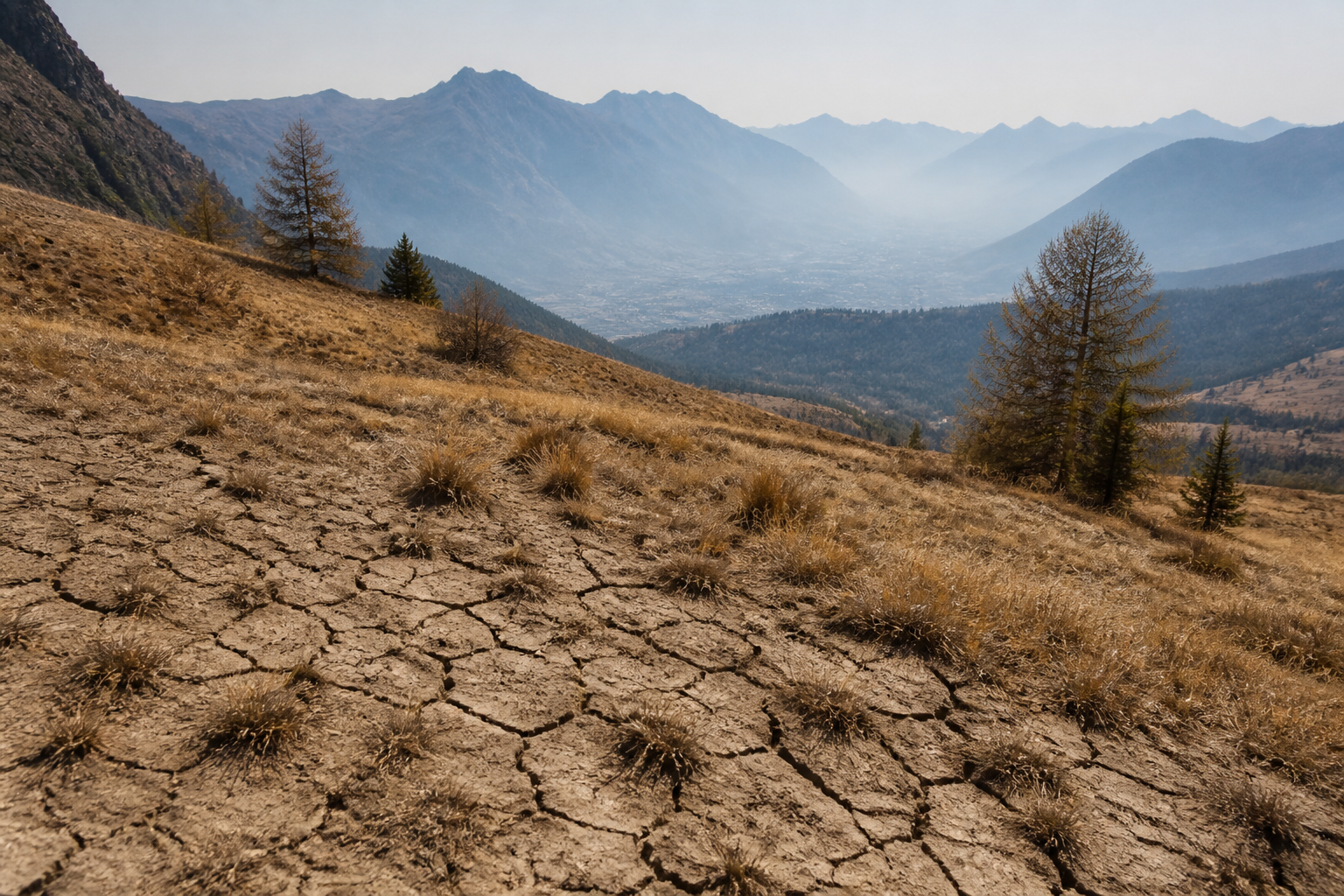
BERN. The Federal Council has assembled a first financial answer to the driest summer in decades: a package worth more than CHF 70 million, split between immediate cash for drought-struck farms and a permanent uplift in the money available to help forests adapt to a hotter climate.
The larger share, CHF 54 million, is a one-off increase in support funding for agricultural businesses in 2026, paid as interest-free operating loans. The loans are aimed at liquidity rather than compensation: the drought has squeezed cash flow on farms that bought in feed as pastures failed, and Bern wants to stop a dry summer becoming a winter of insolvencies.
The second share goes to the forests. The government proposes raising the forestry budget by CHF 17.5 million in 2027, and from 2028 the environment ministry would be able to request the same sum every year. The money is earmarked for climate adaptation: more drought tolerant tree species, more mixed woodland, and fire prevention in the cantons now living at danger level 4 and 5.
Both parts still need parliament, which will take up the funding in the autumn session. The Federal Council also announced a further assessment of the situation by the end of October, with additional measures to follow if the picture demands them. Nothing in the package, officials concede, is final.
Beyond the money, the government is weighing structural steps: standardised heat maps across the country, new frameworks to protect public health during heatwaves, measures for animal health and welfare, and a round table with the agricultural sector on the specific failures this summer exposed.
The context is the summer itself. Switzerland has just recorded its hottest season since measurements began in 1864, open fire bans still cover much of the country, and four cantons spent this week at the maximum forest fire danger level. Alpine reservoirs have recovered to 84 per cent, but the soils beneath them remain dry to a depth rain has not yet reached.
Reaction has split predictably. The farming lobby welcomes the loans while noting that liquidity is not income, and that the CHF 54 million will be claimed quickly. Environmental groups call the forestry money overdue and point out that CHF 17.5 million a year buys adaptation at the pace of a slower climate than the one Switzerland now has.
The politics are delicate in a referendum month. The government is asking parliament to spend on drought relief while recommending rejection of a food security initiative whose supporters cite the same drought as evidence. Officials insist the positions are consistent: act on the emergency, they say, without writing one answer into the constitution.
What happens next is procedural and then meteorological. The finance committees will test the numbers in September; the October assessment will decide whether a second package follows. The forests, meanwhile, will spend another month under the fire indices, waiting for the rain that no funding line can schedule.