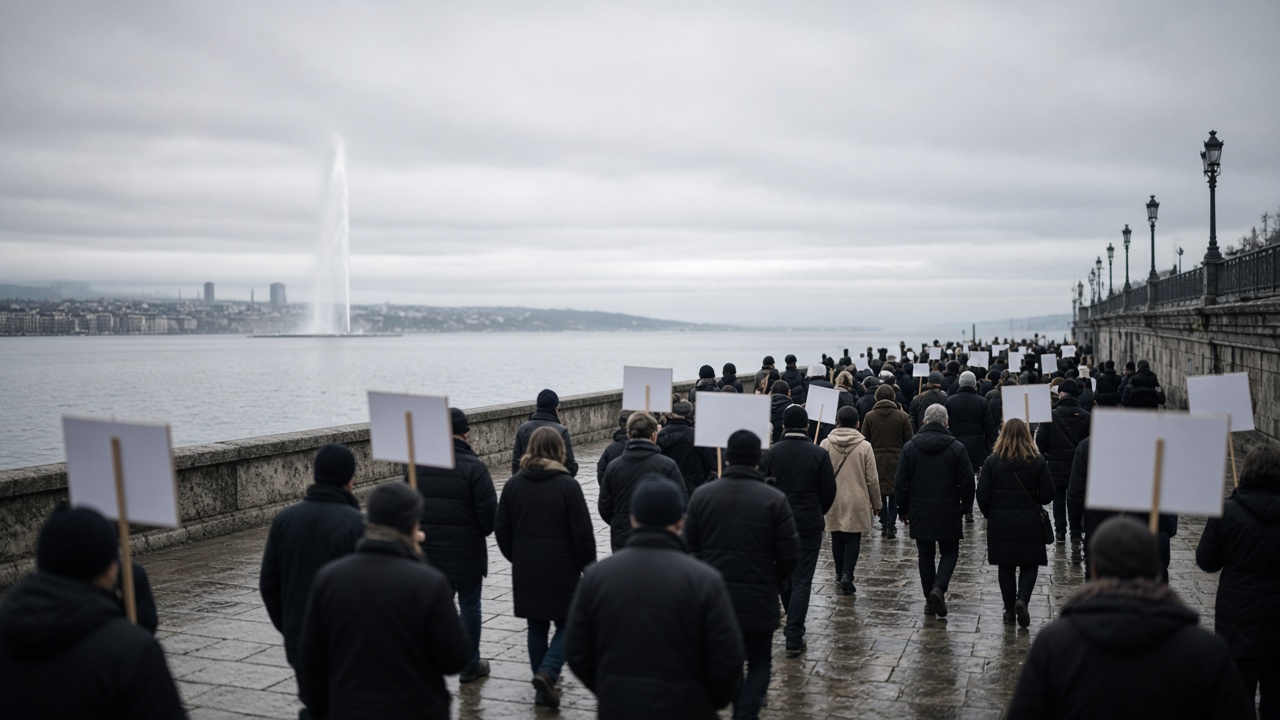
GENEVA. Several thousand people marched in Geneva on Saturday against the canton’s draft budget for 2027. Geneva police put the crowd at about 3,500. The organisers said 6,000 to 7,000. A count by the Keystone-SDA news agency put it at just under 5,000. There were no incidents. The Grand Council is due to debate the package in mid-December. Nothing in the budget has been adopted.
The draft would cut CHF 247.7 million. It includes a 4 per cent reduction in subsidies to associations across the board, and a 5 per cent cut in the service contracts of the Geneva University Hospitals and of the home-care organisation. A coalition of trade unions, associations and left parties called the march and asked for it to stay peaceful. It did.
The route, and who was on it
The procession started in Les Charmilles, crossed the Pont du Mont-Blanc and ended at the headquarters of the Hospice général, the cantonal social-welfare authority, in the Rive district. It closed with a performance by a symphony orchestra of about 50 musicians. Staff from culture, social work, health and education were visibly present, which was the point the organisers wanted the photographs to show: the cuts are not aimed at one office.
Mireille Senn of the Geneva Trade Union Confederation, the CGAS, said she was pleased with the “very good representation within the march”. A spokesperson for the cultural body FRACG warned that culture is essential to the way democracy works and should not be used as a bargaining chip in a budget. Vincent Bircher of the Public Services Union called the rally a first step. An earlier demonstration, in early October, drew about 600 people.
Not only Geneva
Lausanne held a protest against budget cuts on Thursday. A further rally has been announced for 20 November in Neuchâtel. The three cities are not voting on the same document. They are reacting to the same pressure: cantonal accounts that no longer balance without either higher revenue or thinner services, and governments that have chosen the second.
Geneva’s figure is specific. CHF 247.7 million is the austerity total in the draft, not a single line that can be restored by saving one programme. The hospital contract and the home-care contract are among the lines households would notice first, because they are how the canton pays for treatment and for care at home. A 5 per cent cut in a service contract is not the same thing as a 5 per cent cut in a patient’s bill. It is a cut in what the canton pays the provider. Providers then decide what gives.
What is decided, and what is not
Saturday did not change the draft. It changed the politics around it. A march that police, organisers and the wire service all put in the thousands is harder for the Grand Council to treat as a niche complaint from one union. It is also not a vote. The council can still pass the package, amend it, or send it back. Mid-December is the session to watch, not the bridge.
Residents who depend on a subsidised association, on the university hospitals or on home care should read the draft rather than the placards. The useful questions are narrow. Which subsidy line funds the service they use. Whether that line sits inside the 4 per cent cut or the 5 per cent contract cut. And whether their commune or their employer has said, in writing, what it will stop doing if the Grand Council says yes. The march made the scale public. The budget vote is what makes it real.