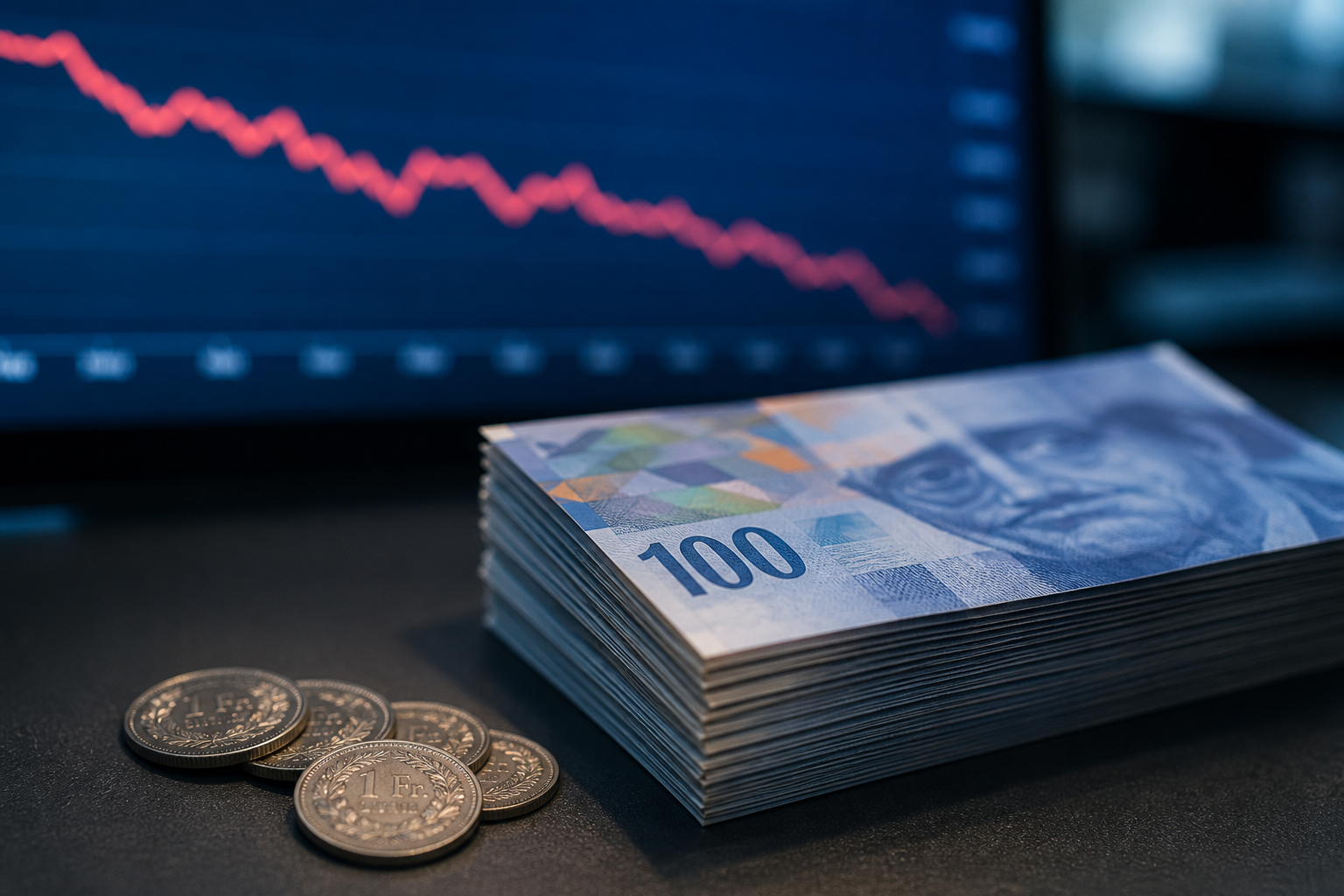
ZURICH. The Swiss franc is likely to spend the autumn on the back foot, as currency markets steadily abandon their remaining bets on a Swiss rate rise while the European Central Bank moves in the opposite direction across the border. Strategists at Commerzbank now expect the euro to stabilise near CHF 0.94 by the end of the third quarter, with the franc recovering only next year.
The logic is interest rates, as it almost always is. The Swiss National Bank has held its policy rate at zero for more than a year, and reports this month suggested its internal forecasts assume no move until the end of 2027. Markets have been slower to give up: futures still price a first increase around the middle of next year, a scenario Commerzbank’s foreign exchange strategist Michael Pfister calls unlikely given how subdued Swiss inflation remains.
The pressure would intensify if the ECB raises its key rate for a second time in September, as Pfister and a growing number of economists expect. Each step wider in the rate gap makes holding francs a little less rewarding and the carry trade a little more tempting. The SNB, for its part, is probably content to see the hike expectations priced out slowly; an orderly slide in the franc does some of the work a rate cut might otherwise have to do.
The domestic economy is giving the central bank no reason to hurry. The ZEW expectations index climbed to 12.1 in August from 10.0 in July, a second consecutive month in positive territory and the second highest reading since early 2025, while the current conditions gauge rose to 8.8. Analysts describe an economy that is recovering without overheating, which is precisely the combination that lets a central bank sit still.
A weaker franc has its uses. Watchmakers, machinery builders and hoteliers have all spent years arguing that the strong currency taxed their exports and their order books; the tourism industry enters the winter booking season with the exchange rate finally helping rather than hindering. The mild import price pressure that follows is, with inflation running well under 1 per cent, a cost the SNB can afford to ignore.
The bank’s own posture supports the calm. At its June assessment it left the rate at zero and restated its willingness to intervene in currency markets against what chairman Martin Schlegel called a rapid and excessive appreciation. The operational asymmetry is deliberate: the SNB is willing to fight a sudden surge in the franc, and largely unworried by a gentle decline.
The medium term looks different, and this is where the strategists add their caveats. Once markets finish pricing out the 2027 hike, the SNB’s tools for weakening the franc further are limited. It is not willing to intervene more aggressively, and with the policy rate at zero its room to cut is constrained. The same forces pressing the franc down this autumn could, by 2027, push it back up.
For households the practical effects arrive slowly and unevenly: slightly dearer imported goods and foreign holidays, slightly better prospects for export sector jobs and winter tourism. For the SNB’s governing board, the calculation is simpler. Growth of around 1 per cent this year and 1.5 per cent next, inflation subdued, and a currency drifting in a helpful direction is a combination no central banker disturbs voluntarily.
The next dates on the calendar are the ECB’s September decision and the SNB’s own quarterly assessment later the same month. Neither is expected to produce drama, which is rather the point. The franc’s autumn slide is a story of differentials and patience, not of interventions, and it will end when inflation, not the calendar, says so.