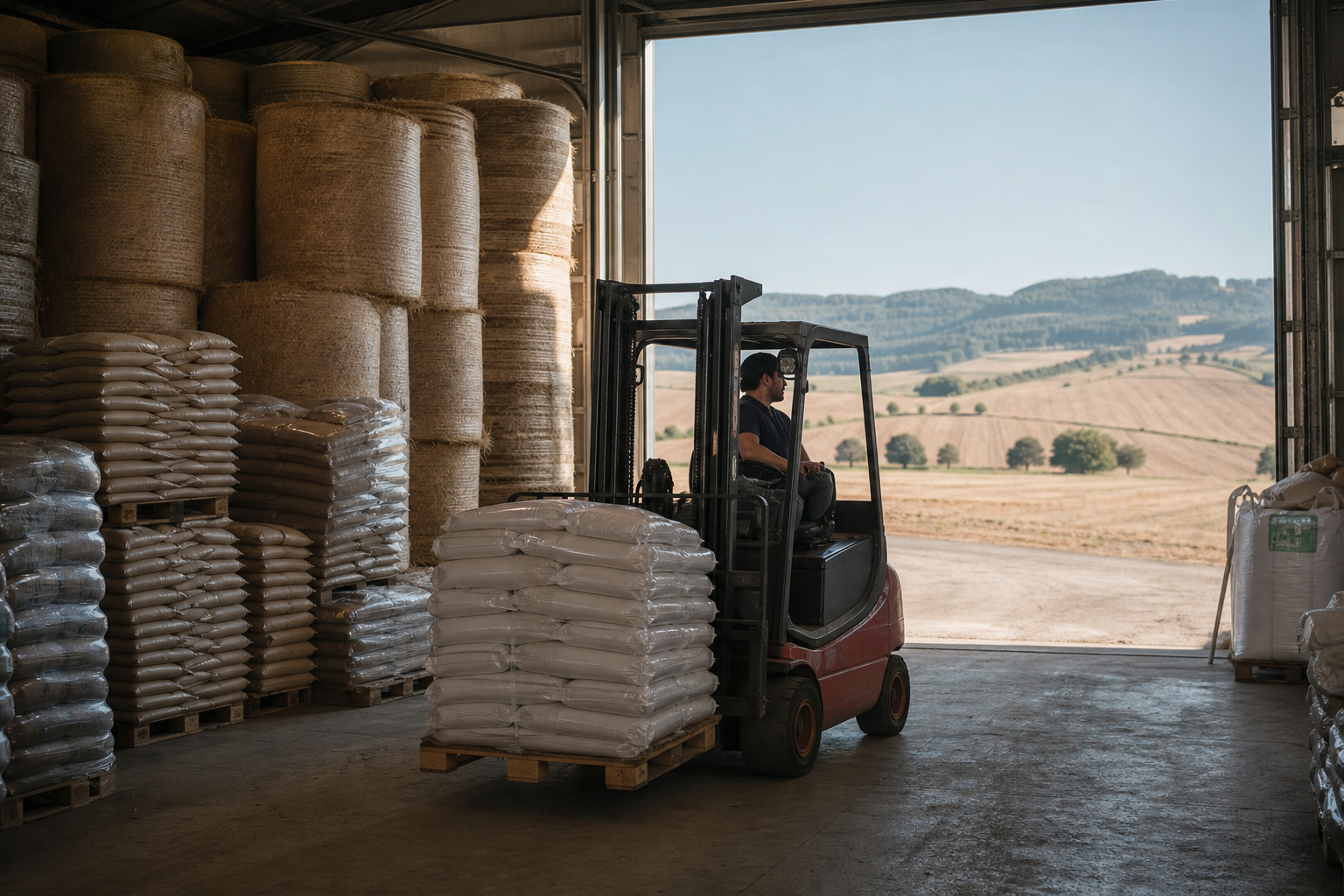
BERN. Switzerland opened its strategic animal feed reserves on Tuesday for only the second time in its history, authorising farmers and feed mills to draw up to 20 per cent of the compulsory stocks of protein rich fodder, almost 16,000 tonnes, between now and the end of February 2027.
The Federal Office for National Economic Supply announced the step on Monday. The decision by Roland Pfister, the delegate for national economic supply, takes the form of a temporary authorisation to fall below the mandated coverage level, and it is a direct consequence of the driest summer since records began and the low water that has throttled shipping on the Rhine and the Danube for weeks.
The bottleneck is transport, not supply. Protein crops such as soya meal, which Switzerland imports almost in their entirety and without which cattle, pig and poultry feed cannot be mixed to standard, are available in normal quantities on world markets. What is missing is draught on the rivers: barges out of the seaports have been running part loaded for weeks, and road and rail capacity into Switzerland is saturated with other goods diverted from the water.
The drought has compounded the import problem at home. The hottest and driest April to July period since 1901 cut the growth of roughage across the plateau, leaving many farms short of their own grass and silage weeks before the usual season. Cantonal agricultural offices have been reporting emergency purchases of feed since mid August.
The compulsory stocks are not state warehouses but a Swiss peculiarity: private importers and cooperatives, organised through the réservesuisse association, are obliged to hold defined quantities of vital goods as a condition of doing business. The protein feed reserve is designed to cover two months of national demand. Tuesday’s release touches only a fifth of it.
If the situation deteriorates, the law allows economics minister Guy Parmelin to release the entire stock by ordinance. Officials in Bern stress that the supply of all other essential goods, from wheat and rice to fuel and medicines, remains secure, and that the feed release is a precaution against a logistics problem, not the sign of a food shortage.
The precedent is recent and reassuring. During the Rhine low water of 2018 the delegate authorised a similar drawdown of protein feed stocks, and in the event no withdrawals were needed because river levels recovered faster than expected. The office is betting that the mere right to draw will steady the market and stop panic buying by feed mills.
Farm organisations welcomed the move while warning about the winter. Dairy cooperatives in the pre-Alps say members are already feeding into stocks normally reserved for December, and that a second dry season in 2027 would turn a logistics problem into a structural one. The Federal Council’s drought package, assembled last week, includes interest free liquidity loans for exactly that scenario.
The rivers decide what happens next. MeteoSwiss expects the dry spell to hold through the first week of September at least, with late summer heat returning to the lowlands and no significant rain in the forecast. The Rhine at Basel is carrying well under half its normal flow for the season, and every dry week pushes the next barge convoy further out.
For a country that plans its security of supply in months of coverage, the release is a measured gesture with a plain message. The reserves exist to be used before the shortage, not after. The last time, the rivers recovered in time. Bern is buying them the weeks to do it again.