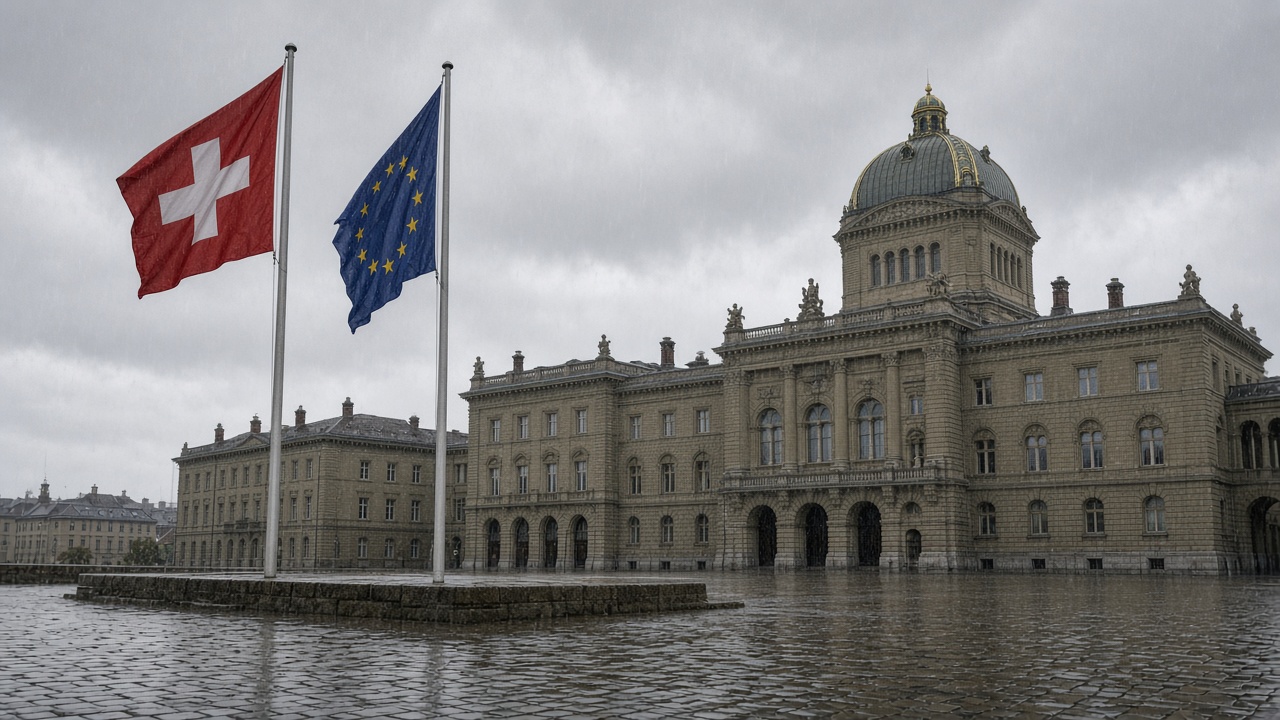
BERN. A National Council committee has voted to put the next package of treaties with the European Union to a double majority: the people, and the cantons. The political institutions committee recommended that course on Monday by 14 votes to 11, and RTS reported the decision on Tuesday morning. If the full house agrees in the winter session, a narrow popular yes would not ratify the package. It would also need a majority of the cantons, which in practice means at least twelve.
The Council of States took the same view at the end of September. The committee is asking the National Council to follow. The winter session is when the lower house debates it. Until that vote, the double majority is a recommendation with a number on it, not a rule. It is already the number that campaigners on both sides will plan around.
What a double majority changes
Switzerland uses a double majority for constitutional amendments. A treaty package is not, on its face, a constitutional amendment. RTS noted that parliament is moving towards a form of referendum the constitution does not set out for this kind of text. Supporters say the institutional reach of the new agreements is the justification: the deals would shape how Swiss institutions work, and that is the sort of change that should clear both hurdles. Opponents of the heavier hurdle hear a different motive.
“It is an SVP manoeuvre to block these bilateral treaties, to shut Switzerland off from the rest of Europe and to close the borders,” said Delphine Klopfenstein Broggini, a Green member of the National Council from Geneva. “And it is working, because the FDP and part of the Centre are ready to go down that road.” Small rural cantons, where the relationship with Brussels splits voters more sharply than it does in the cities, weigh more under a cantonal majority than their population would suggest. That is the point of the argument, and it is why a procedural vote can decide a treaty.
The immigration levy stays open
The same committee refused to take a position on the immigration levy the senators have attached to the file. It said too many questions are still open, and that it did not have enough information for a serious decision. The levy would be triggered if a safeguard clause on immigration were used. Leaving it blank does not remove it. It sends an unresolved tax into the same December debate as the referendum form.
The Federal Council has wanted a lighter path: an optional referendum, and no majority of the cantons. That disagreement is why a ballot once pencilled in for 2027 now looks unlikely before 2028. A committee vote of 14 to 11 does not print a date. It does tell the lower house which way its own committee wants the hurdle to face.
What December has to settle
Three things are firm enough to repeat on Tuesday. The Senate has already asked for a mandatory vote and a cantonal majority. The National Council’s institutions committee has now recommended the same, 14 to 11. The plenary has not spoken, and nothing in the package is in force. What is not firm is the question that will eventually sit on the paper, or the year in which anyone is asked it.
Readers who follow the file should watch the December debate on the form of the vote with as much attention as they give the clauses. A change in the hurdle can matter as much as a change in a paragraph. The hurdle is what the committee just voted on. The paragraph on the immigration levy is what it declined to touch.