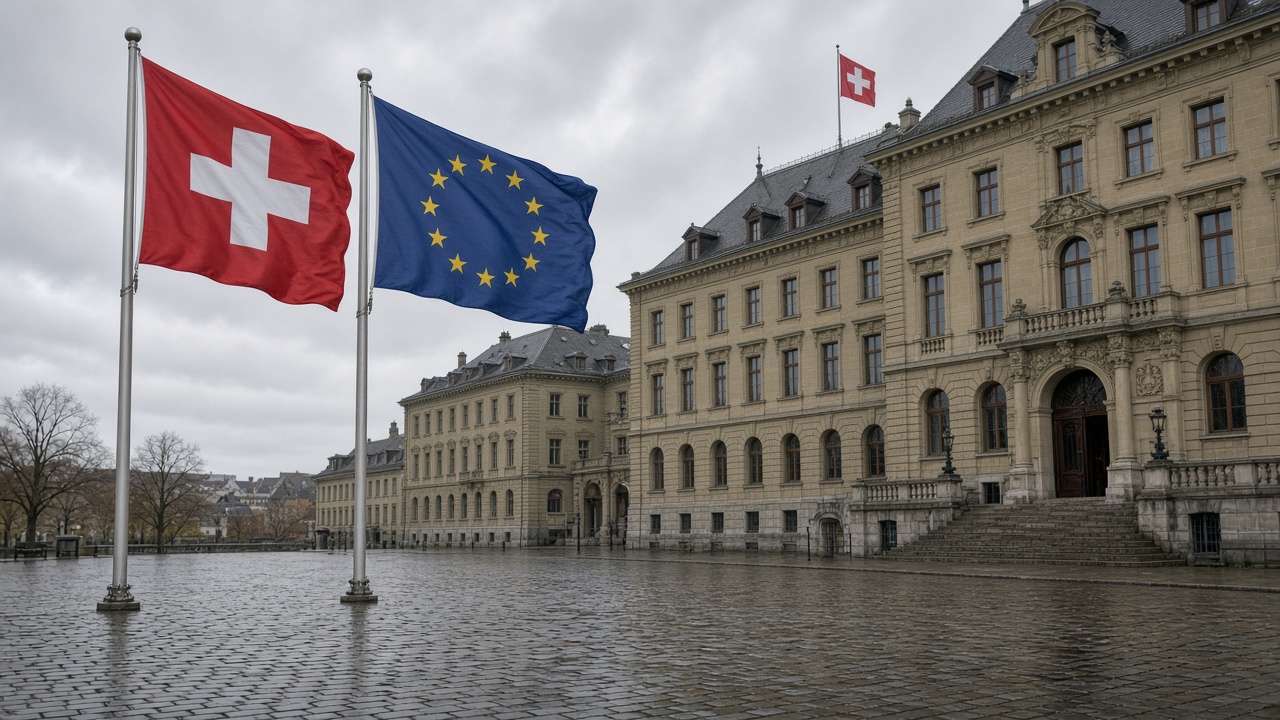
BERN. The next package of agreements with Brussels is unlikely to reach Swiss voters before 2028. The Local reported on Monday that a ballot once pencilled in for 2027 has slipped, because the Council of States and the National Council have still not settled how the question should be put: a mandatory referendum, or an optional one that happens only if opponents collect the signatures. The National Council has yet to take its turn on that point. Until it does, there is no date to announce, only a floor. Not before 2028.
The agreements do not apply on a handshake. They apply when they are ratified, and ratification runs through this argument about the hurdle. A mandatory vote always happens. An optional vote happens if a committee gathers the names in time. Add a majority of the cantons, and a small rural canton weighs more than its population. That is why a procedural fight can move a treaty by a year. The text can be ready and still have nowhere to land.
What the Federal Council has already refused
On Sunday the government asked the Council of States not to take up a committee initiative that would harden the path. It wants an optional referendum, and it does not want a majority of the cantons. That is the line it used for the earlier bilateral packages. Under the constitution as it stands, the government says, the conditions for a mandatory referendum of that heavier kind are not met. The Sunday message to the Senate was to leave the line alone.
Monday’s report does not say the Senate obeyed. It says the two chambers are still apart, and that the lower house has not spoken. A year slipping off the calendar is what an unresolved procedural vote looks like from outside. Campaigners who wanted a 2027 fight, on either side, do not get one by wanting it. The administration cannot print a date the chambers have not cleared.
Why the form of the vote is the substance
People who expect to win a straight popular vote, and people who expect to win in the cantons while losing in the cities, are arguing about different elections. The Federal Council has tried to keep the second election off the table. The committee in the Senate tried to put it on. Until one chamber yields, Bilateral III is a draft with a queue in front of it. Free movement, the family clauses and the wage measures that committees have already praised do not get a public hearing while the queue is about the ballot paper rather than the clause.
None of this ratifies anything this winter. It also does not kill the package. A delay to 2028 is a statement about the calendar, reported on Monday, not a vote to walk away from Brussels. Readers who follow the file should watch the National Council’s decision on the referendum form with as much attention as they give the treaty text. A change in the hurdle can matter as much as a change in a paragraph, and it is the hurdle that is currently eating the year.
What is safe to say this week
Three points are firm enough to repeat. The Federal Council still wants an optional vote and a majority of the people, not of the cantons. The two chambers have not agreed, so a 2027 ballot is no longer the working assumption in Monday’s reporting. And nothing in the package is in force. What is not firm is the eventual question on the paper. When the National Council does take it up, that is the story. Until then, 2028 is a boundary, not a date.