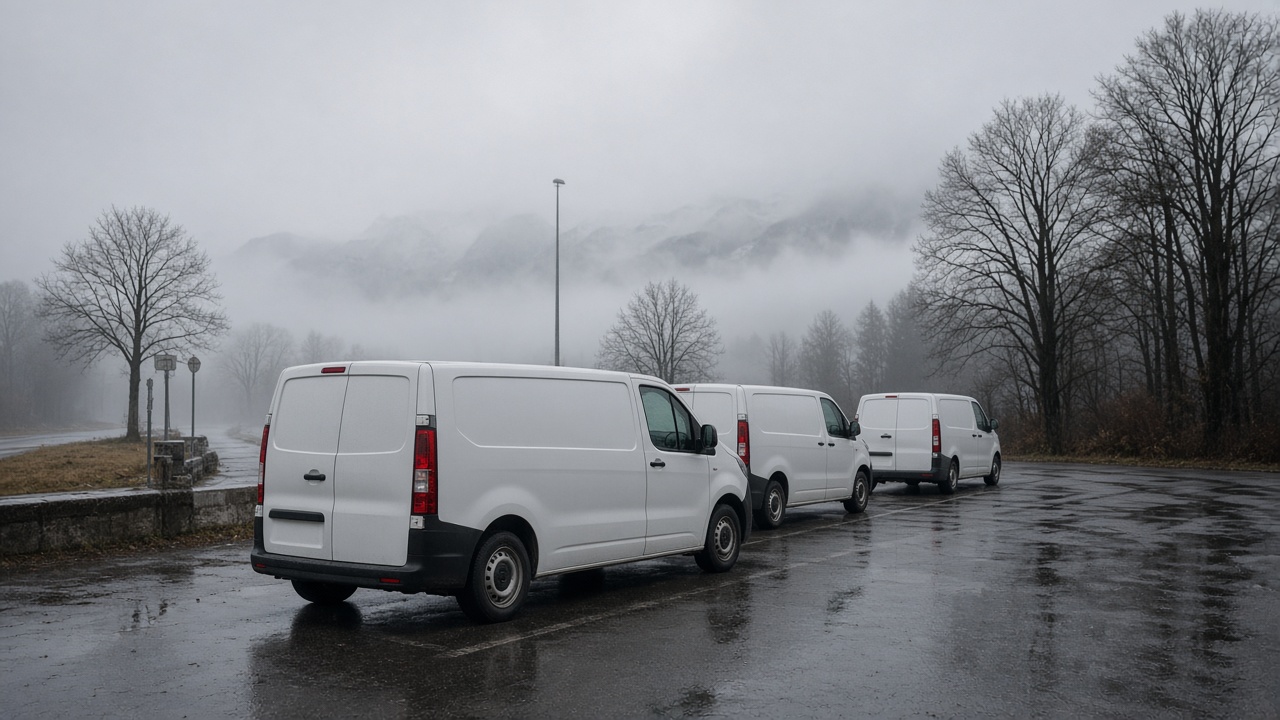
BERN. The Federal Council has opened a consultation that would make the 2030 climate target easier for vans and harder for lorries. For light commercial vehicles first registered from 2030, the CO2 target would rise from 90.6 grams per kilometre to 108.7 grams. That is a loosening, copied from the European Union, and it means importers would have to meet a less strict number than the one in today’s CO2 Act. For heavy commercial vehicles, the target goes the other way. From 2030 their emissions would have to fall by 45 per cent, in line with the EU, rather than the 30 per cent cut that applies now.
Until 2029, the target for new light commercial vehicles stays at 153.9 grams per kilometre. The argument is about the step after that, not about this decade’s vans already on the road. The cabinet sent the amendments to the CO2 Act out for consultation on 4 November, together with a change to the Energy Act that would let Switzerland use the EU’s single vehicle label. Comments run until 18 February 2027.
A three-year window in which a bad year can be offset
Importers of cars and light commercial vehicles would not have to hit the target in every single year from 2030 to 2032. An overshoot in one of those years could be balanced by an undershoot in another. Any sanction would fall due only after 2032. For a fleet manager, that is the most practical sentence in the draft. A single year of delayed electric vans would not, by itself, produce an immediate fine, provided the three-year sum still works. For the climate ledger, it means the 2030 number is a path, not a cliff.
The heavy-vehicle tightening has no such comfort in the government’s summary. A jump from a 30 per cent cut to a 45 per cent cut is a different purchasing cycle: depot charging, hydrogen trials, and the price of a tractor unit all move from the annex of a sustainability report into the tender. Hauliers who have planned around the old target have until the consultation closes, and then until parliament amends or accepts the bill, to say what 45 per cent costs on a Swiss motorway.
One European label, and every electric vehicle in class A
The labelling proposal is the quieter half of the package, and for dealers it may be the more immediate one. The new EU label replaces national stickers that still differ from country to country. A manufacturer would be able to attach it to the vehicle before it reaches the importer. The Federal Council says that simplifies the work for importers, for showrooms and for the offices that enforce the rules. The design also puts every purely electric vehicle in category A. A buyer comparing a van in Basel with a van in Stuttgart would, on this draft, be looking at the same letters.
None of this is law. A consultation open until 18 February is an invitation to importers, cantons, hauliers and environmental groups to mark up the text. A National Council committee has already voted to make split air conditioners easier to install. Heating-oil rules are on their own timetable. Transport is the piece that still has to be written down in grams per kilometre. Thursday’s draft says Switzerland will keep in step with Brussels, including where Brussels has decided to be less severe with vans. The fight in the consultation will be over whether that step, and the harder step for lorries, belong in the same bill.