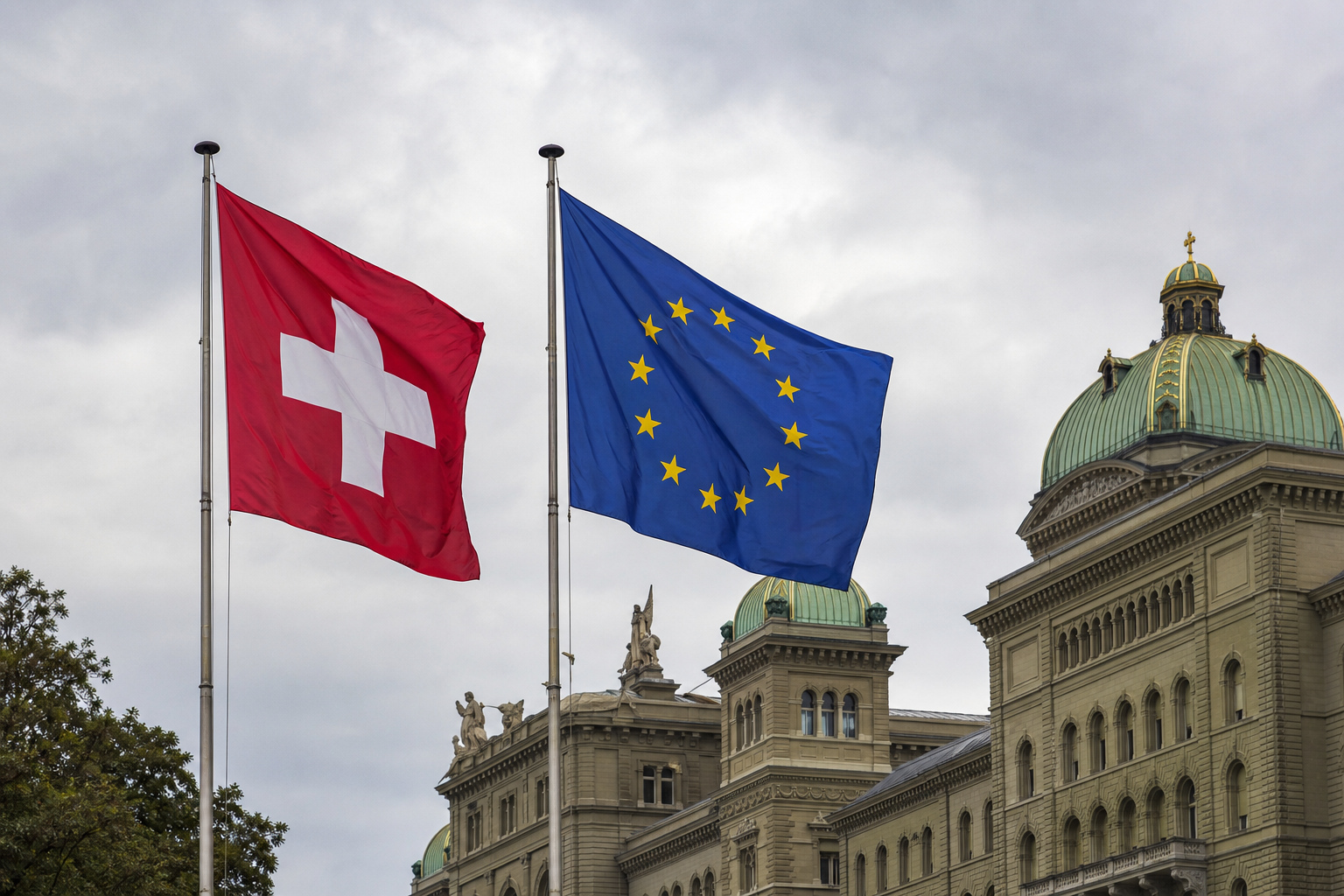
BERN. The parliamentary services have published the programme for the autumn session, and it confirms what Brussels and Bern have been circling toward for months: the Council of States will open its debate on the new treaty package with the European Union on Monday, 28 September, with three days set aside and a night sitting on the first.
The package, called Bilaterals III by the Federal Council, runs to nearly 2,000 pages with explanations and annexes. The opening debate alone, on whether the chamber should even enter into the detail, is expected to last four to seven hours. Three federal councillors will sit through it: foreign minister Ignazio Cassis, economics minister Guy Parmelin and justice minister Beat Jans, who together form the government’s Europe committee.
The substance divides into two parts. The first stabilises five existing market access agreements, on the free movement of persons, land transport, air transport, agriculture and mutual recognition, with binding update rules. The second adds three new agreements on electricity, health and food safety. For Brussels, the package is indivisible: it is ratified whole or not at all.
Parliament’s room for manoeuvre is deliberately narrow. Switzerland cannot renegotiate a word of what its diplomats agreed, so the real arguments will attach to domestic implementation, above all the free movement of persons and the accompanying wage protection measures that guard Swiss pay levels from posted worker competition.
The first skirmish is already visible. The upper house’s economic affairs committee wants to deviate consciously from the negotiated result on the deposit obligation for service providers from EU states, a provision business considers a burden. The foreign affairs committee, which leads the chamber’s work and aims to finish its deliberations on Friday, rejects that course. One supporter of the package calls such deviations explosive charges placed by opponents to sink the whole treaty.
Underneath the detail runs the procedural question that will decide the package’s fate: what kind of referendum does it face. Ratification requires parliament to amend 36 existing laws and pass three new ones, and consultations will drag into 2027, with a popular vote unlikely before 2028. Whether that vote needs a simple majority of voters, or a double majority of voters and cantons, is unresolved and heavily contested.
The Federal Council has made its preference plain. In August it reaffirmed that the package should face an optional referendum, a simple popular majority, and asked the Council of States not to take up a parliamentary initiative that would write a mandatory referendum, with cantonal majority, into the constitution for this case. The small chamber’s own political institutions committee sponsors that initiative, which guarantees the argument will be had on the floor.
The politics are arranged in unfamiliar lines. The business lobby, the unions on wage protection, and most of the centre parties are broadly for the package, each with its own conditions. The People’s Party is against it as a matter of sovereignty, and parts of the left are sceptical about wage safeguards. Nobody expects the chamber to reject the treaties outright; everybody expects it to mark them.
The timing is not accidental. The debate opens the day after the 27 September referendum on the neutrality initiative, a vote Brussels is watching as a measure of the national mood toward entanglement. A heavy No to strict neutrality, as the polls suggest, would hand the package’s supporters a rhetorical gift on the Monday morning.
What begins on 28 September is, in the Swiss manner, only the start. The National Council takes its turn after the upper house, the differences between the chambers go to conciliation, and the people vote at the end of it all. The decade of the bilaterals, which the two sides set out to stabilise, will be settled the Swiss way: slowly, and then all at once on a Sunday.