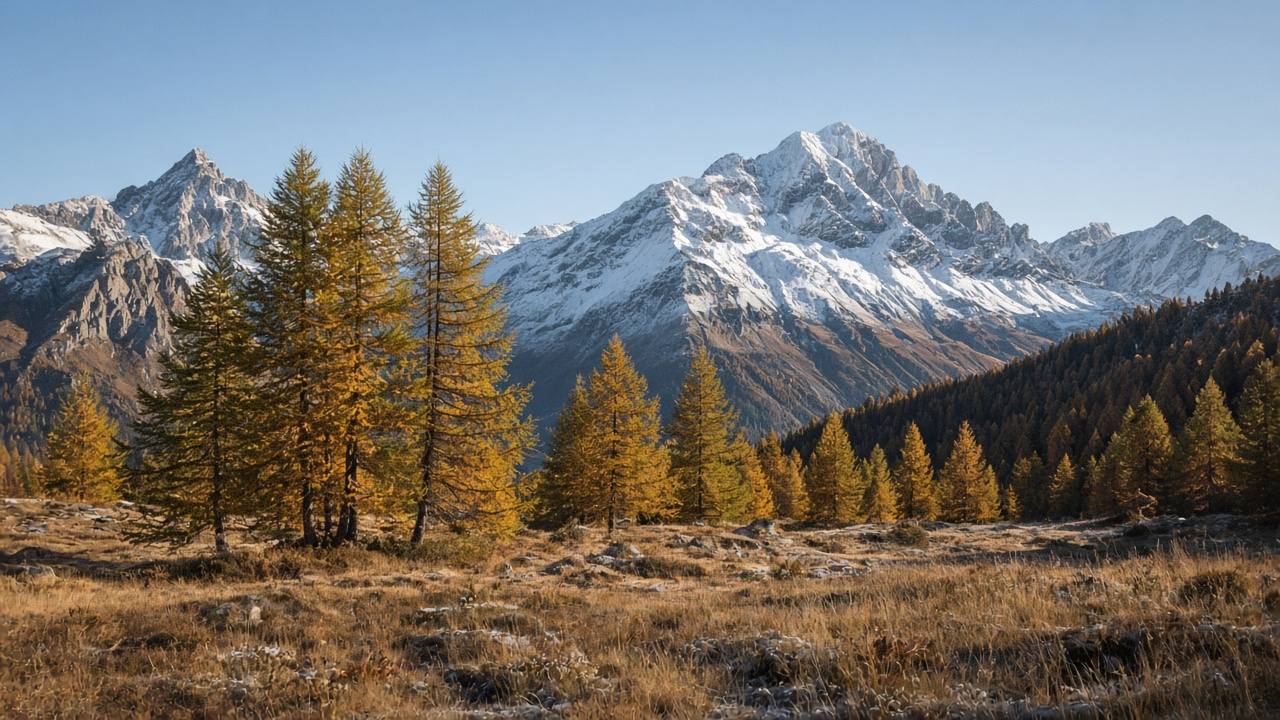
BERN. The cold front that crossed the country overnight has done what no weather system managed since June: it has ended the season. Temperatures fell ten degrees in a day, the first snow of the autumn dusted the peaks above 2,500 metres, and the settled, cooler pattern now building over the Alps is expected to hold the lowlands around 20 degrees into the weekend. The summer of 2026 is over. The accounting of it, published by MeteoSwiss earlier this month, is stark.
The national average for June to August came in at 17.2 degrees, 0.4 degrees above the summer of 2003, which had stood for 23 years as the benchmark of Swiss heat. Against the 1991 to 2020 reference period the anomaly is 3.4 degrees, and in the north west of the country, where the heat was most relentless, a full 4 degrees. Thirty MeteoSwiss stations set new all time heat records this summer. Nearly half of them did so in June, before the summer had properly begun.
The single number that will be quoted for years came on 30 July, when the Basel-Binningen station recorded 39.7 degrees, equalling the highest temperature ever measured north of the Alps, a mark set in Geneva in 2015. Buchs in Aargau reached 38.6, Zurich-Kloten 38.3, Lucerne 36.8. South of the Alps, Biasca hit 39.2 on the same day. The nights offered less relief than in any previously measured summer: 50 tropical nights nationally, eight more than in 2003, with Neuchâtel and Glarus recording 18 more heat days than their previous records.
The heat brought the drought with it, and the drought’s bill is still being counted. Farm losses are estimated at CHF 522 million, with potato output at an all time low and hay down 40 per cent. The federal government opened the compulsory fodder reserves for only the second time in their history, and the Rhine ran so low that shipping and cooling systems strained from Basel to the North Sea. The glaciers, measured at the season’s end, lost ice at nearly twice the rate of the 2010 to 2020 average.
Autumn’s arrival changes the immediate pressures, not the trajectory. The fire bans will lift as the forests take in the rain. The storage lakes, refilled by the late August storms, now stand where the utilities want them for winter. The seasonal outlook, for what it is worth, and MeteoSwiss itself cautions that autumn forecasts for Switzerland carry limited skill, points to a season near or slightly above the temperature norm, which in the new climate means warm by the standards of the old one.
The climate scientists’ framing of this summer is the part that should outlast the weather. Under a scenario of 3 degrees of global warming, Switzerland would experience an average of 45 level three heat alert days a year, including 15 at level four, the category this summer made familiar. On that path, the hottest summer since measurements began in 1864 becomes, within a generation, an ordinary one. The summer of 2026 may yet be remembered as one of the coolest of the century.
The policy response trails the data by the usual distance. Parliament is considering mandatory heat plans for hospitals, care homes and schools, the drought aid package is assembled, and the cantons are rewriting their forest strategies around mixed woodland. Each measure was argued before this summer as prudent. After it, they are argued as overdue. The first snow on the peaks this week is not a rebuttal of any of it. It is the reminder that the seasons still turn, and that what turned this year was the baseline.