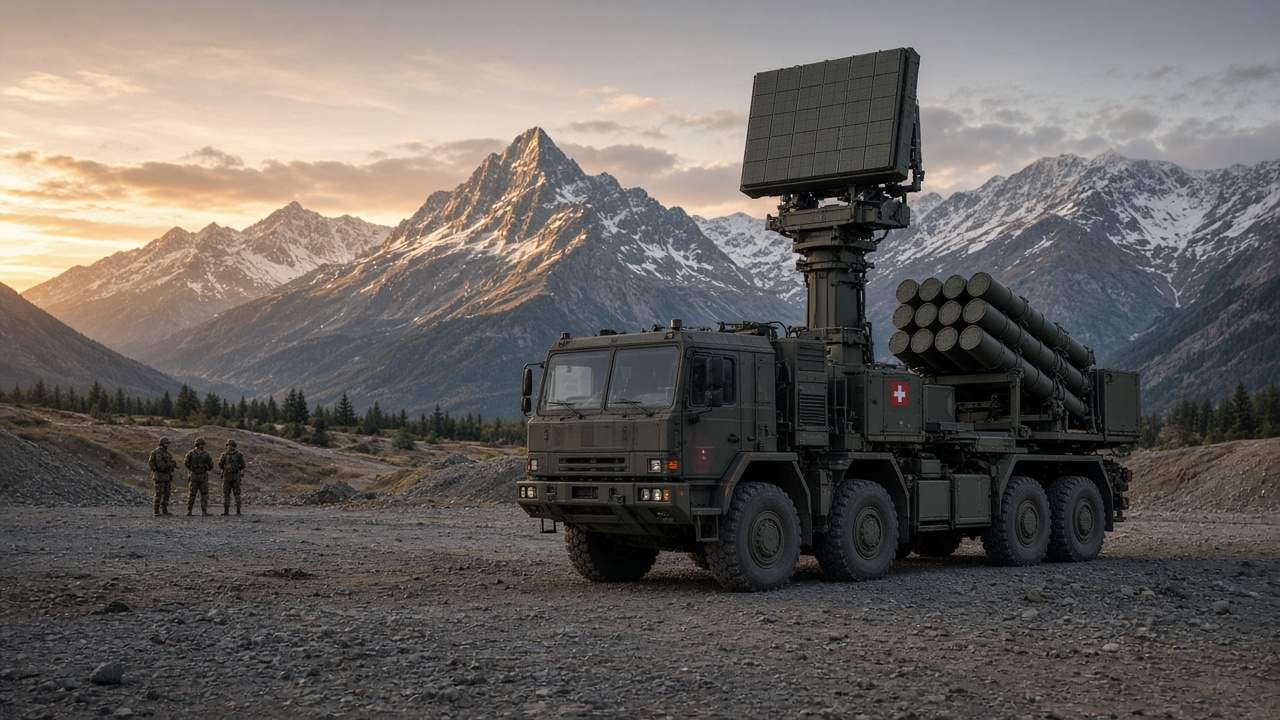
BERN. The Federal Council takes up the procurement it could not postpone forever on Wednesday: a second long range ground based air defence system for the Swiss army. The evaluation report by Armasuisse, the federal armaments office, is finished and lies on the desk of Defence Minister Martin Pfister. According to research by the Tages-Anzeiger, its recommendation points to a system from Israel, a choice that is already causing unrest on the left.
The need is not in dispute. The Patriot systems Switzerland ordered from the United States are not expected to be delivered before 2032, because American production is committed to allies and to the war in Ukraine for years to come. Until then, the country’s protection against ballistic missiles, cruise missiles and drone swarms rests on a single new system and on fighters that cannot be everywhere at once. A second system, from a different supplier, is meant to close that gap and to free Bern from dependence on one manufacturer and one government.
The purchase should have reached parliament months ago. It was delayed by half a year after what one newspaper called an unholy alliance of the SVP and the SP blocked urgent treatment of the dispatch in the December session, each for its own reasons. Pfister withdrew the business, as the Senate’s security policy commission has since confirmed. The defence department says only that the Federal Council will assess the new situation on Wednesday, decide the next steps and inform the public.
The Israeli option
Armasuisse’s recommendation, if confirmed, sets up the most delicate arms purchase in years. An Israeli system would arrive with combat experience that no European competitor can match, and with a political price to match: parts of the left are reluctant to buy weapons from Israel while the Middle East war continues, and the SP has form in blocking exactly this file. The alternative is understood to be the French Italian SAMP/T, the system that would slot most naturally into the European Sky Shield Initiative that Switzerland joined in 2023.
The politics around the hardware
Every path runs through contested ground. Buying American again means waiting until the 2030s. Buying European means explaining why the cheaper, battle tested option was refused. Buying Israeli means a fight with the left at the moment the SP is mobilising for the winter. And the whole debate unfolds six weeks before Switzerland votes on looser arms export rules on 29 November, a campaign in which the army’s own supply problems have become a standing argument of the yes side.
Whatever the Federal Council signals on Wednesday, the dispatch must still survive both chambers, where the security policy commissions have spent the autumn quarrelling over money for the army. The air defence file now returns to that arena six months older, with the threat it was meant to answer more visible than when it was drafted.