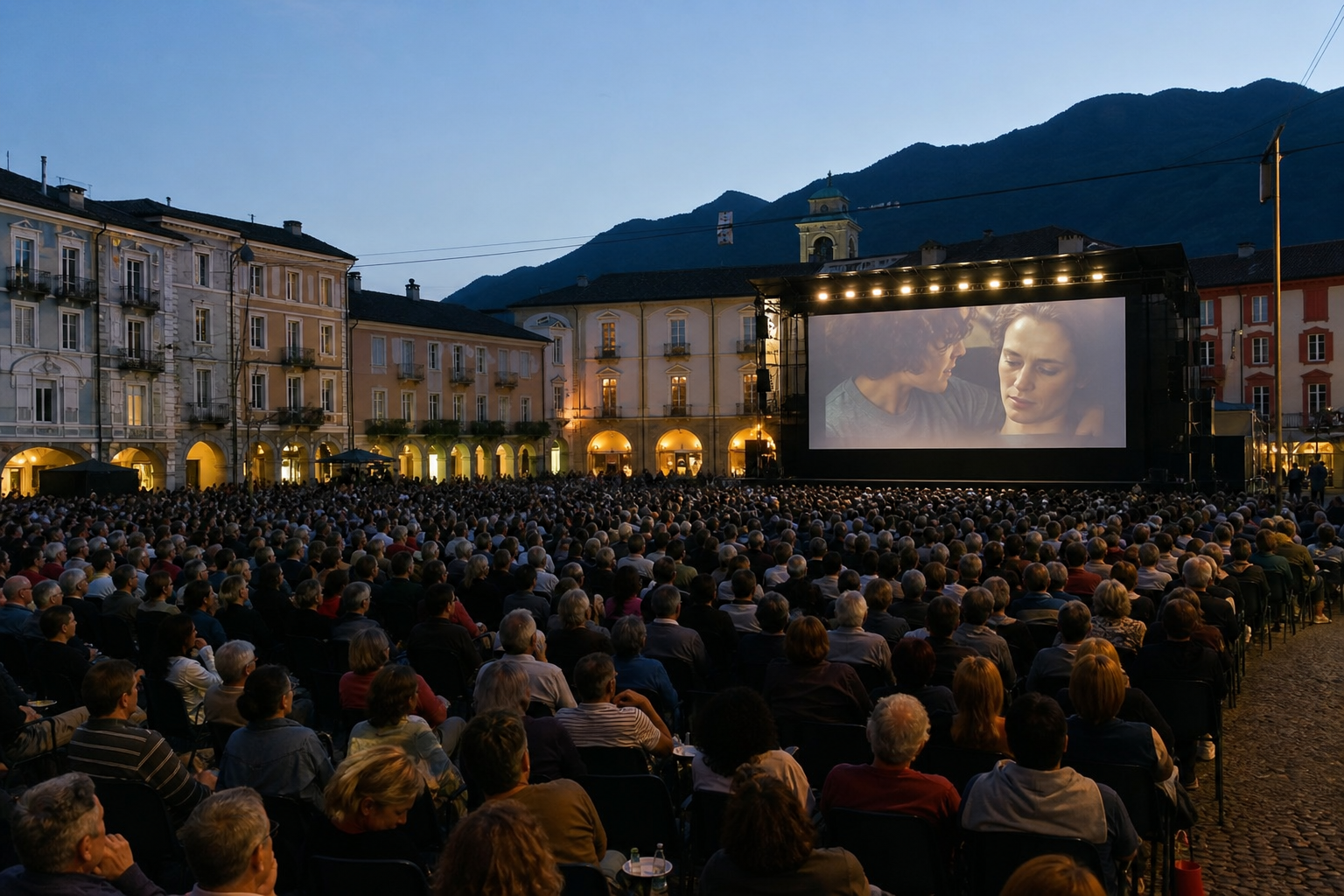
ZURICH. The announcement came, as it always does, with the first skiers still on the slopes: the Verbier Festival's next summer will be the most international in its history, with musicians from more than thirty countries booked into a resort of three thousand permanent residents. For three weeks in July, a Valais village better known for its off-piste will once again operate as one of the capitals of classical music. The scale of the ambition, even by Verbier's standards, has set the music world talking.
The programme justifies the claim. Evening concerts in the Salle des Combins bring a rotation of the world's leading orchestras and soloists up the mountain; mornings belong to masterclasses, afternoons to free recitals in the Église, where the queue forms an hour early. Between them sits the academy, through which a generation of young players passes on its way to the great orchestras of the world.
The festival was founded in 1994 as a chamber gathering with a simple wager: that musicians would come to the mountains if the music was good enough, and that audiences would follow the musicians. Three decades on, the wager has compounded. Verbier now runs its own orchestras of young professionals, a year-round academy, and a network of alumni that reads like the personnel lists of Berlin and Vienna.
The economics are as vertiginous as the setting. Top tickets sell for well above two hundred francs and still vanish within days of release, while a parallel structure of under-thirty pricing, free afternoon events and open rehearsals keeps the mountain honest. The budget rests on private patrons and foundations, corporate partners, the canton of Valais and the ticket office, a funding model closer to an American festival than a European one, and watched with envy across the continent.
The artistic machinery is unique in Switzerland. The Verbier Festival Orchestra, rebuilt each summer from young players chosen by audition, works under conductors who elsewhere front the world's great ensembles. The academy's masterclasses are taught by musicians whose diaries are booked years ahead, and the festival's partnerships with music schools from Shanghai to Philadelphia give the season its genuinely global intake.
The reaction to the announcement ran ahead of itself, as it tends to in Verbier. Several flagship concerts were effectively sold out within the week, the specialist press noted the season's tilt towards Asia and the Americas, and the resort's hoteliers, who measure the festival in full beds during the softest weeks of summer, pronounced themselves well satisfied.
The festival's leadership frames the ambition as a matter of standards rather than scale. “The mountain does not lower the standard, it raises the listening,” says the artistic director. It is the kind of sentence that sounds like a slogan until you are sitting in the Église at a free lunchtime recital, hearing it proved.
The internationalism is real, but the festival remains rooted in its valley. Programmes appear in French and English, the volunteers are largely local, and the audience mixes Geneva lawyers with London bankers, Seoul students with Valais families who have held the same seats for twenty years. For French-speaking Switzerland, Verbier is the summer's answer to Lucerne, and a point of regional pride.
The season now has a before and after as well as a middle. Academy alumni concerts run through the autumn in Geneva and Zurich, a spring residency takes the festival orchestra abroad, and planning for the following summer, with a composer focus yet to be announced, begins before the last marquee comes down.
Verbier's significance lies in what it disproves. Classical music is said to be ageing, urban and subsidised; here is a festival that is young, rural and substantially private, and that has made a destination of a place with no concert-hall tradition at all. In the dense Swiss calendar of Lucerne, Gstaad and the rest, it remains the most improbable, and the most imitated.
On the final night, the applause carries out into the square where the last cable car waits. Somewhere above the rooftops a cowbell answers, indifferent and perfectly in time. The musicians fly home in the morning; the mountain, as the saying goes, stays.