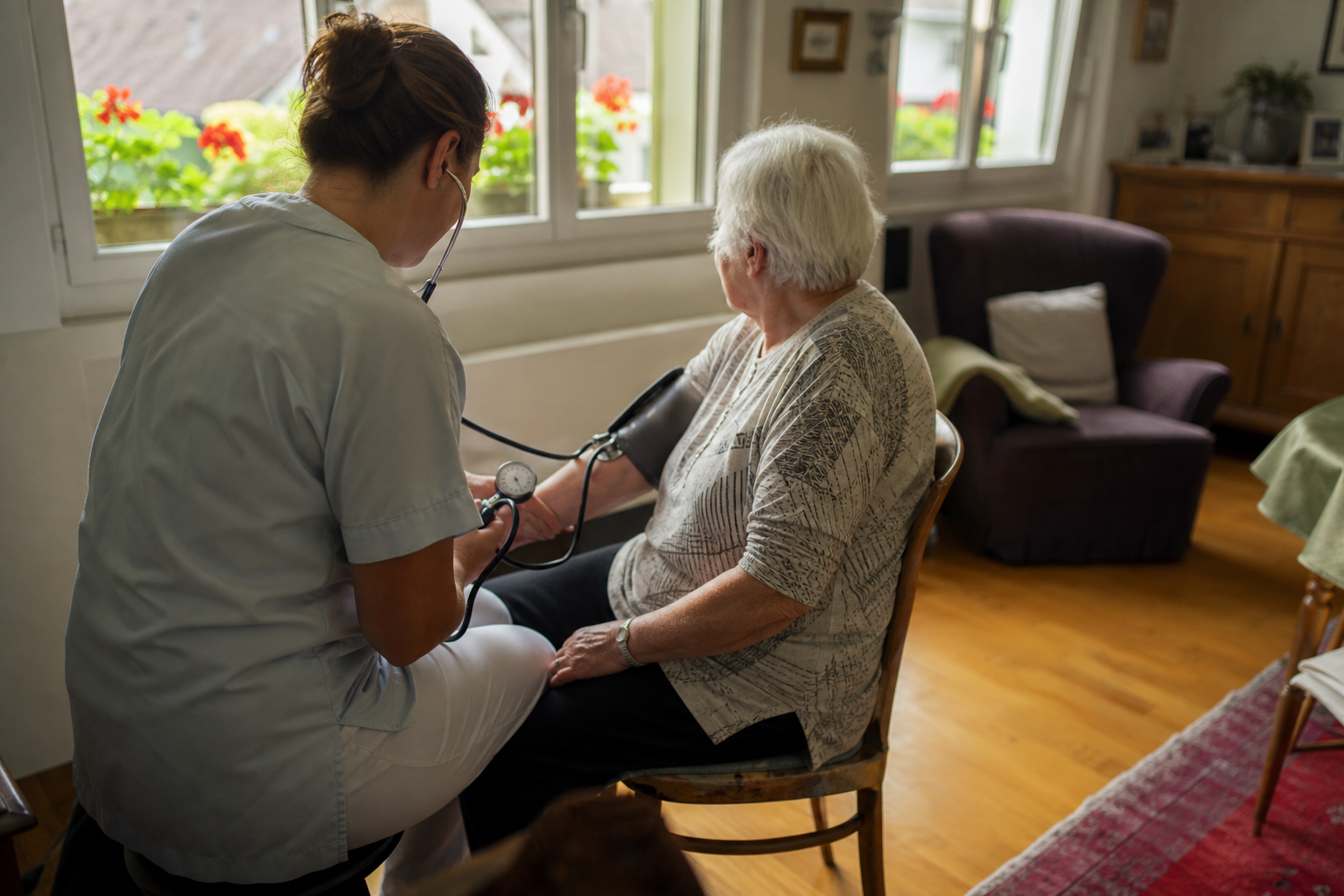
BERN. The Federal Office of Public Health and the cantons have opened this year's winter vaccination campaign with a broader target group and a blunter message than usual: after two mild seasons, forecasters expect a difficult winter, and the protection of previous vaccinations has faded. The campaign combines flu, Covid and, for the first time at scale, RSV immunisation for older adults. The campaign runs from October through January, with the main push before the holiday season.
The recommendations follow the familiar risk based logic. Free vaccination under basic insurance applies to everyone over sixty five, pregnant women, the chronically ill and healthcare workers, covering flu and Covid boosters, while the RSV vaccine is recommended and reimbursed for those over seventy five. Cantons began deliveries to pharmacies and practices this week. The recommendations are issued jointly by the federal vaccination commission and the health office.
The evidence driving the campaign is largely international. Hospitalisation data from the southern hemisphere's winter suggest an early and severe flu season, and waning immunity studies show protection against Covid hospitalisation falling below 50 per cent six months after the last booster in older cohorts. Modelling for the Federal Office of Public Health projects that current uptake targets would prevent roughly 1,500 hospitalisations. Last season's flu vaccine matched the circulating strains well, which kept hospitalisations below the long term average.
The delivery system leans on the quiet revolution of recent years: the pharmacy. More than 1,800 pharmacies now vaccinate without a doctor's appointment, administering the majority of flu doses last season, and several cantons have extended pharmacy authority to the RSV vaccine. Mobile teams will tour nursing homes, where last winter's outbreaks proved deadliest. In canton Zurich, pharmacies administered more flu doses last year than doctors' surgeries did.
Doctors support the campaign while noting its weak point. Family physicians report that the patients most likely to appear for vaccination are those who need it least urgently, the healthy and health literate, while the frail elderly often require active outreach that nobody is formally charged with providing.
A spokesperson for the insurers' association said prevention remained the best bargain in the system. “A vaccination costs about what an hour in an emergency ward costs,” the spokesperson said.
Critics question the campaign's ambition rather than its existence. Public health researchers point out that flu vaccine uptake among the over sixty fives has stalled near 40 per cent, far below the 75 per cent target Switzerland nominally shares with European neighbours, and that cantonal efforts vary from aggressive reminder systems to a single poster in the surgery window. Uptake among healthcare workers, a group with its own recommendation, sits near 50 per cent.
The numbers frame the stakes. Respiratory infections sent roughly 25,000 people to Swiss hospitals last winter, and a severe season can add CHF 300 million in treatment costs, most of it flowing through basic insurance premiums. Each prevented hospitalisation saves, on average, CHF 12,000.
The political path is deliberately quiet this year. Parliament declined to fund a national advertising campaign, leaving communication to the cantons, though a motion for a permanent vaccination registry with automatic reminders has passed one chamber and returns in the winter session. Cantonal health directors have agreed to publish weekly uptake figures for the first time.
For households, the practical guidance is simple. Those in risk groups pay nothing and need only walk into a pharmacy; everyone else pays around CHF 40 for the flu shot, a sum many supplementary policies reimburse. The best protection for an elderly parent, doctors add drily, is a vaccinated family around them.
Switzerland's vaccination debates tend to be loud in theory and quiet in practice. This winter's campaign will be judged not by the argument it generates but by a number published in spring: how many hospital beds stayed empty.
The deeper question is what the pandemic changed. Trust in vaccination rose in some cantons and fell in others, and the campaign's planners have stopped assuming that last year's message will work this year. The weekly uptake figures, they say, will tell them within a month whether this winter's bet was the right one.