BERN. A number that was not on Monday’s agenda is now the one Bern is talking about. Hans-Peter Portmann, a Zurich Liberal who does not sit on the National Council’s economics committee, wants UBS to back its foreign subsidiaries with 75 per cent hard core capital. The government, the National Bank and FINMA want 100. The bank wants 50. The Council of States has already voted for 90. The committee that has to choose is not expected to say so before November.
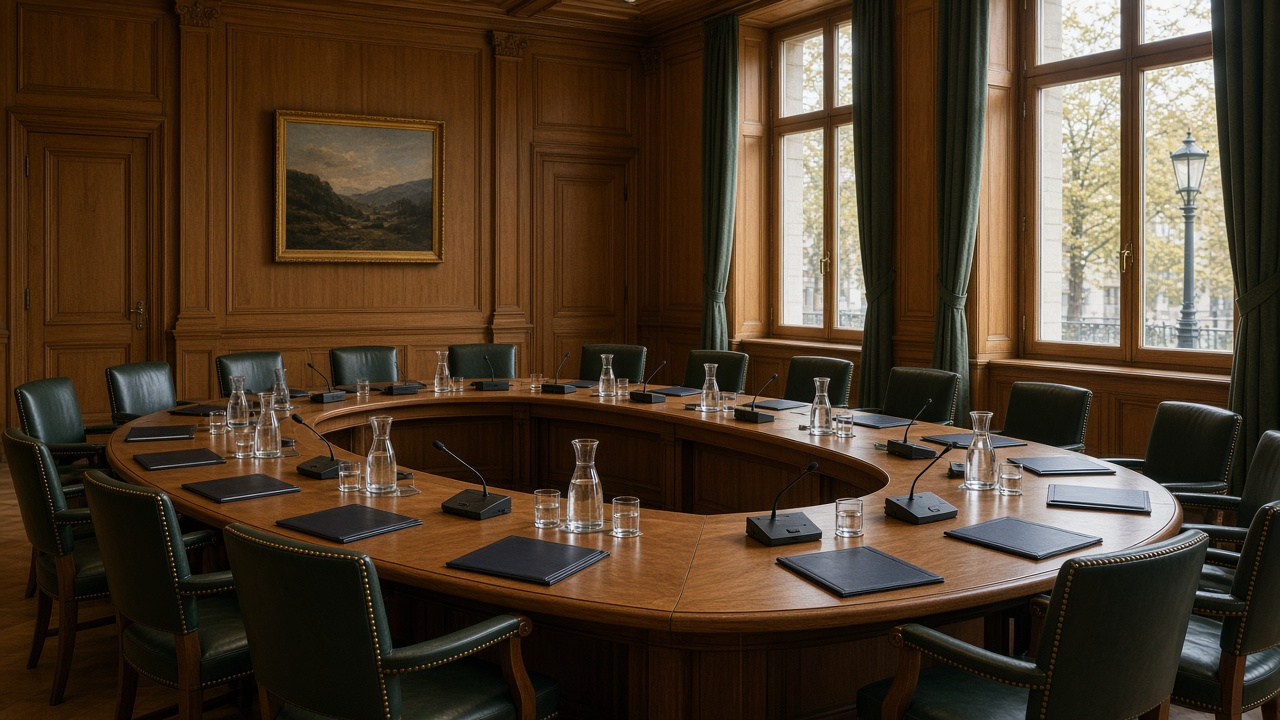
Monday’s hearing was the set piece. Sergio Ermotti, the chief executive, spent about two and a half hours before the committee, with Finance Minister Karin Keller-Sutter, National Bank president Martin Schlegel and FINMA chair Marlene Amstad in the same sitting. Keller-Sutter and Ermotti shook hands before they went in. The chief executive waited in a side room and, a Keystone reporter noted, stayed seated while the others stood. He declined, before the hearing, to say whether a 75 per cent option would be acceptable.
Four numbers, one bank
The law under discussion is the Lex UBS, written after the Credit Suisse collapse so that the foreign units of a systemically important bank are not a hole in the parent’s capital. In practice it catches one institution. Foreign subsidiaries are today backed at about 45 per cent. Keller-Sutter, with the central bank and the supervisor beside her, wants that raised to 100 per cent common equity tier 1, the hardest form of capital. UBS has argued for 50 per cent in that form and up to 50 per cent in AT1 bonds, which convert to equity in a crisis.
The Senate, in September, landed at 90 per cent hard capital, with a free choice on the remaining 10. The Centre wrote that proposal. Most of parliament followed, apart from the Swiss People’s Party, some Zurich representatives and a slice of the Liberals. The Liberals are the awkward party in this fight: they hold the finance portfolio, and they are split. Olivier Feller, a Vaud Liberal on the politics of the bill, said before the sitting that he expected a range of positions. Portmann’s 75 is that range, made into a figure.
Who would vote for 75
Sidney Kamerzin, a Valais Centre member of the committee, told reporters that a 75 per cent proposal, if it is formally tabled, would draw its support mainly from the People’s Party and part of the FDP. Inside the Centre, he said, the preference remains 90. The left is expected to stay with 90 or with the government’s 100. That arithmetic does not yet make 75 a majority. It makes it a bid for the members who think 90 is a slogan and 50 is a retreat.
The staff association has already told the same committee what it thinks the wrong compromise costs. It warned that a relocation, a sale or a merger could put 10,000 to 12,000 Swiss jobs at risk, on top of about 3,000 Credit Suisse cuts already planned. Ermotti’s side of that argument is competitiveness. The government’s side is that a bank larger than the economy cannot be allowed to choose its own cushion.
Wednesday complicates the politics in a useful way. UBS publishes third quarter results on 28 October, while the committee is still collecting positions and before it sends proposals to the full National Council. A strong quarter will be read as proof the bank can afford the stricter rule. A weak one will be read as proof it cannot. Neither reading is the committee’s job. Both will be in the room when it finally picks a percentage.
Readers who want the capital fight and the franc in one Sunday note can {{/index.html#subscribe|sign up for the Investment Briefing}}. The decision itself is not due today. The number everyone is now testing against the others is 75.