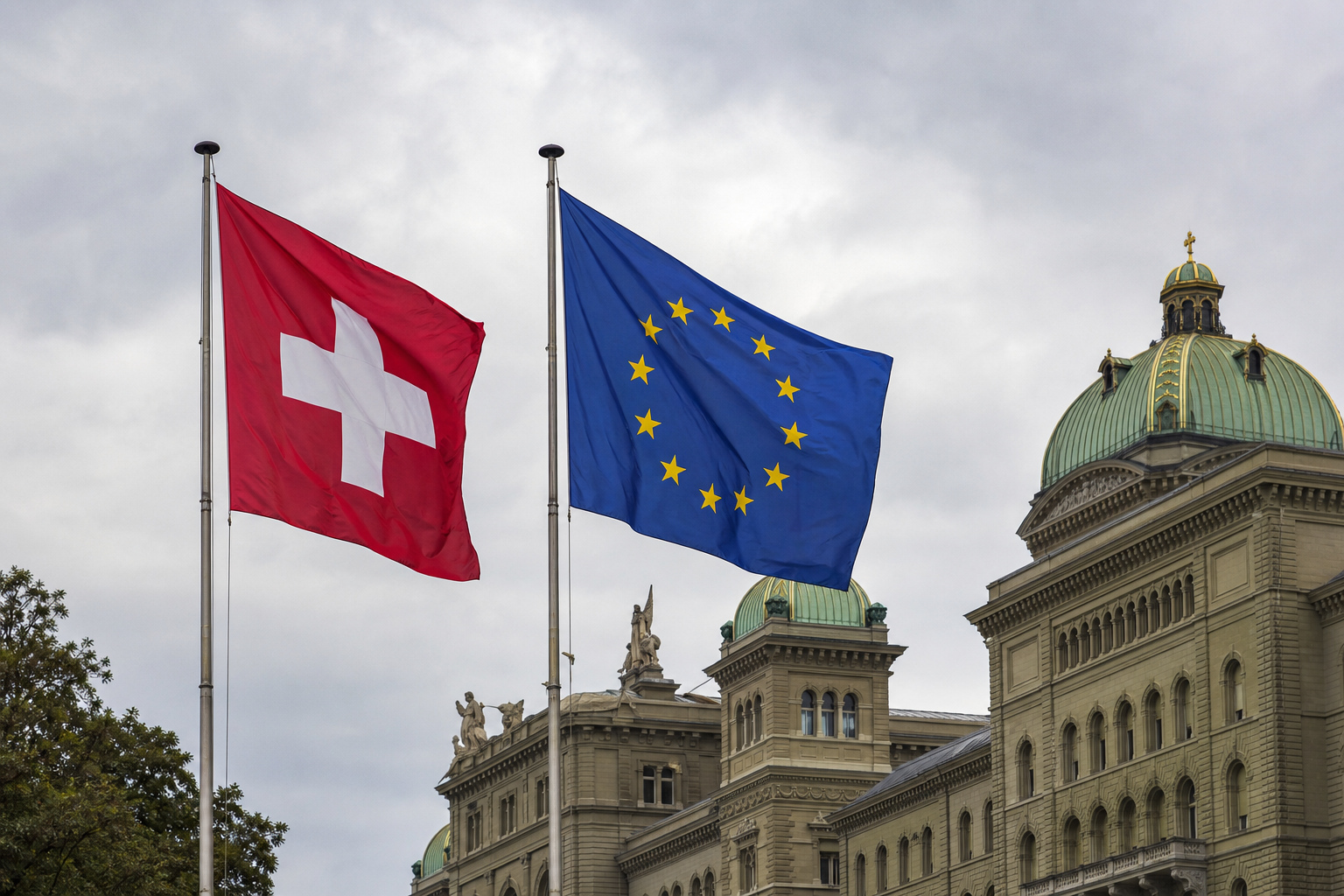
GENEVA. Switzerland's machinery makers, accustomed to selling precision into open markets, are studying a new tariff schedule that lands squarely on their order books. A major trading partner has announced additional duties on industrial equipment, machine tools and robotics components, categories that account for the largest slice of Swiss goods exports. The measures take effect within weeks. Shares of several listed manufacturers slipped on the news before recovering, as analysts modelled how much of the cost could be passed to customers.
The announcement came without the customary warning period, and Bern learned of the final rates only hours before publication. The State Secretariat for Economic Affairs has opened an urgent clarification process, seeking exemptions for goods already in transit and for equipment destined for research facilities. Customs brokers report a surge of queries from firms unsure which tariff line their machines now occupy. First indications, officials say, are not encouraging.
The backstory is a slow erosion. Machinery, electrical engineering and precision instruments have anchored Swiss exports for generations, carried by the assumption that high-value, low-volume goods were beneath the threshold of trade wars. Successive rounds of global tariff escalation have disproved that assumption, and the WTO machinery that once arbitrated such disputes remains impaired. The sector employs more than 300,000 people in Switzerland, many in regions with few alternative industries of comparable pay.
Bern's options are limited, and officials do not pretend otherwise. Switzerland cannot retaliate against an economy many times its size; it can demarche, litigate and diversify. The Federal Council has activated bilateral channels, instructed the embassy in the partner capital to coordinate with other affected states, and asked Switzerland Global Enterprise to fast-track market diversification support for the most exposed firms. The economics ministry has convened its trade crisis group for the first time this year.
Reaction from industry has been blunt. Swissmem, the sector's association, warns that margins in the affected categories are too thin to absorb double-digit duties, and that orders will migrate to competitors whose governments have secured carve-outs. In the machine-building belt from Solothurn to St Gallen, small and medium suppliers fear being squeezed twice: by the tariff and by the strong franc. One cantonal economics minister described the mood in his region as angry but not yet desperate.
The numbers frame the anxiety. Machinery and electronics exports run to roughly 30 billion francs a year, and the market in question takes a significant share of the sector's high-end output. A sustained duty at the announced level, one industry economist estimates, could erase the equivalent of a full year's growth in the category.
“Precision engineering cannot be re-routed as easily as a shipping manifest,” said a senior Swiss trade official. “You do not move a customer relationship of thirty years in a quarter.”
The complications are technical and cumulative. Rules-of-origin tests may capture Swiss machines assembled from multinational components; spare parts, often shipped singly and urgently, face the same rates as complete lines; and firms selling through subsidiaries must now prove where value was added. Insurers have begun asking exporters to certify the end use of dual-capable equipment. Currency markets, unmoved by diplomacy, have added their own surcharge.
The next steps are calendared. A consultation window in the partner country closes within the month, and Swiss firms are filing through both their own counsel and a coordinated industry submission. A delegation of associations is due in the partner capital before the window closes. Guidance on origin documentation is promised within weeks, and Bern has not excluded a WTO dispute, though officials note the remedy's timelines are measured in years.
The significance extends beyond one sector. Switzerland's prosperity rests on the assumption that quality earns exemption from politics, and that assumption is being revised in real time. The tariff front is pushing Bern to accelerate free-trade negotiations elsewhere and to reconsider how much of the national economy should depend on any single market.
Exporters, characteristically, are already adapting: redesigning product lines, repricing contracts and rehearsing conversations with customers they had hoped never to have. Order books remain full for now; it is the horizon that has shortened. The lesson circulating in Bern is austere: in a fragmenting trade order, neutrality does not lower tariffs. Only leverage, diversification and patience do.