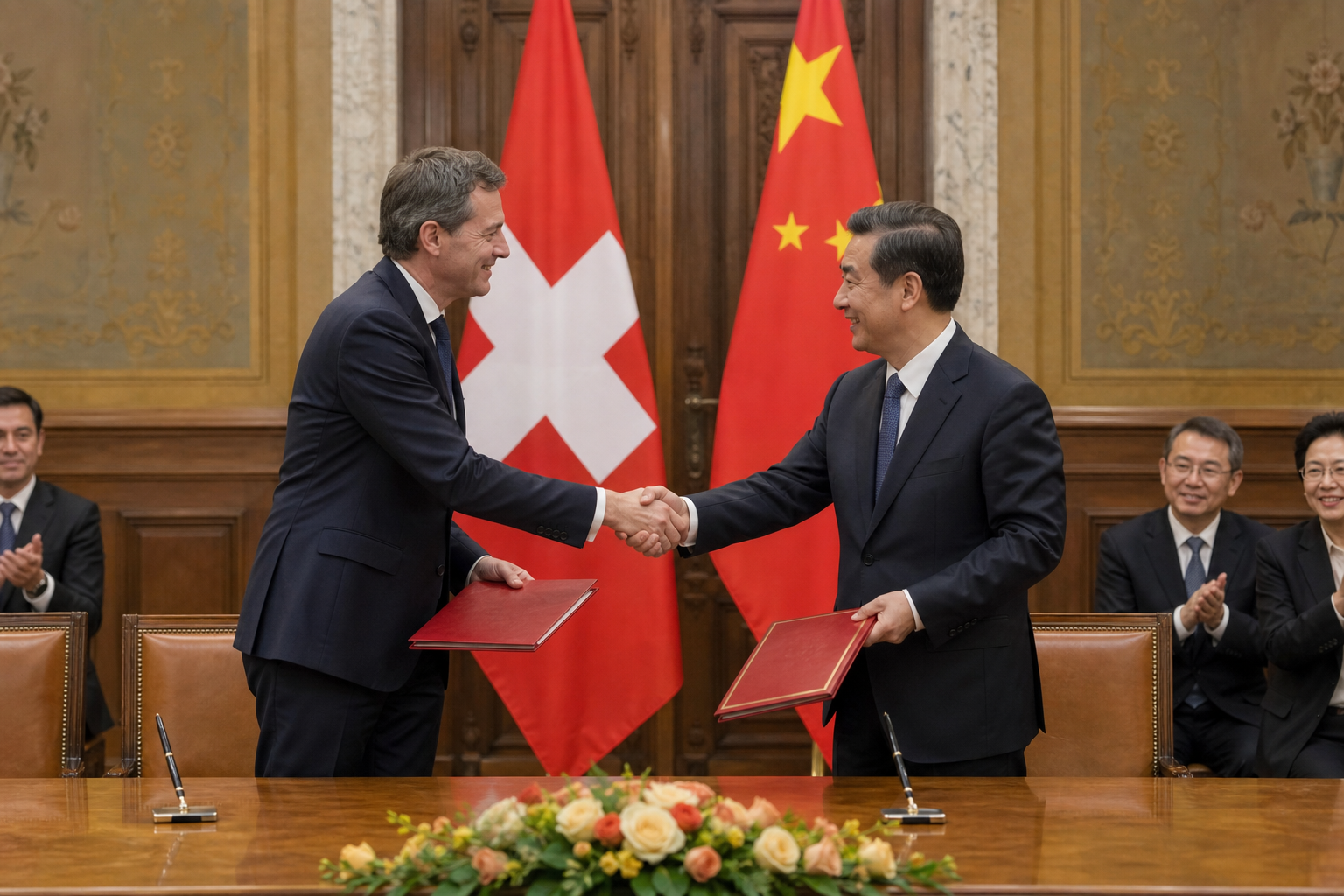
GENEVA. The memorandum signed in Bern last week, upgrading the free trade agreement with China, was presented as routine maintenance of an old relationship. The context makes it anything but. Switzerland’s trade policy is being squeezed from west and east at once, and the China door is the one that still opens.
From Washington, Swiss goods face tariffs of up to 12.5 per cent, a rate higher than many European competitors carry. From Brussels come fresh duties on Swiss steel, and a reminder that access to the EU electricity market now hangs on the unresolved framework conditions of the bilateral package. Old links are not broken, but they are fraying in plain sight.
The China agreement has existed since 2014 and has always underperformed its brochure. Forecast to save Swiss exporters CHF 290 million a year in duties, it was delivering CHF 100 million by 2017. Total trade volume between the two countries has slipped from CHF 36.3 billion in 2022 to CHF 33.5 billion last year.
The upgrade changes the arithmetic. Duty free coverage of Swiss exports would rise from 53.6 per cent today to 99.8 per cent within ten years of entry into force, with watches and pharmaceuticals the conspicuous winners. The economics ministry estimates annual savings of around CHF 244 million once the tariff dismantling is complete.
Swiss firms, for their part, are already diversifying. Machinery, precision instruments and food exporters have spent the tariff summer looking for regional markets that do not change their terms with every election cycle. For many of them, Asia is not a strategy but a necessity.
The geopolitical weather is harder to negotiate than the tariff schedule. Washington’s export controls on advanced technology destined for China come with an expectation of allied compliance, and Switzerland’s position, inside the western economy and outside its alliances, grows more awkward with each round of restrictions.
At home, the deal has a gauntlet to run. Parliament must approve it, and the left has signalled that the labour and environmental chapters will be fought line by line. The threat of a referendum hangs over the file, which would put the question to voters at a moment when China policy divides the electorate along unfamiliar lines.
The Federal Council’s argument is diversification, not alignment: a country that exports half of what it produces cannot afford sentimentality about markets. Its critics answer that dependence does not become safer by being spread more widely, and that a trade policy built on necessity tends to discover new necessities.
Between those two positions sits the machinery of Swiss trade policy, doing what it has always done. When two of your three big doors start closing, you oil the hinges of the third, and you do not ask the door what it believes.